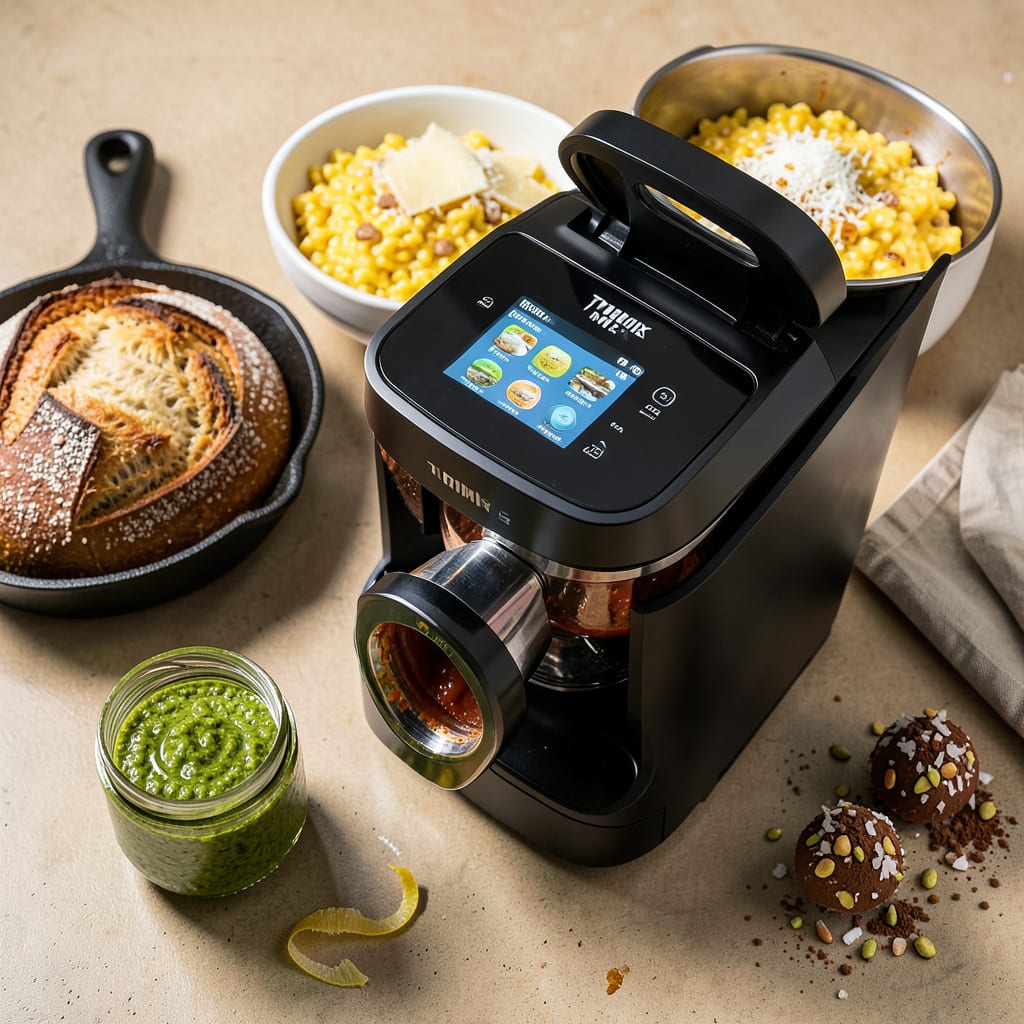
A Thermomix can be worth the investment if you value convenience, precision, and multi-functionality in one appliance. It replaces several kitchen tools but comes with a premium price tag that may not suit casual cooks.
I’ve tested enough kitchen gadgets to know when something truly changes the game. The Thermomix isn’t just another countertop appliance—it’s a guided cooking system that handles everything from weighing ingredients to perfecting temperatures. 🔥 For someone who cooks daily or loves complex recipes, this level of integration can cut meal prep time by 30-40% while eliminating the need for separate scales, blenders, and steamers.
What really stands out is its precision control—something I appreciate after years of French technique training. The built-in scales and temperature sensors take guesswork out of delicate processes like tempering chocolate or making custards. However, if you’re someone who only boils pasta and reheats leftovers, the $1,500+ price tag might feel excessive for your needs. ✨
💡 In This Article
- How a Thermomix Saves Time and Money in the Kitchen
- Thermomix vs. Alternatives: Who Should Buy One?
How a Thermomix Saves Time and Money in the Kitchen
The Thermomix’s efficiency comes from its all-in-one design that eliminates kitchen clutter. Imagine replacing your food processor, blender, scale, steamer, and slow cooker with a single appliance.
The built-in digital scale with 1-gram precision means no more dirty measuring cups, while the guided cooking interface walks you through recipes step-by-step—like having a sous chef whispering instructions. 🔥 This integration cuts prep time dramatically, especially for complex dishes like risotto or soufflés where timing and measurements are critical.
Let’s talk numbers: A quality stand mixer runs $300-$600, a high-end blender $200-$500, and a precision scale $50-$100. Suddenly, the Thermomix’s $1,500 price tag looks different when you calculate replacing 5-6 appliances.
The real savings come from energy efficiency—its induction heating uses 30% less power than conventional stovetops, and the enclosed design reduces cooking times by maintaining consistent temperatures without heat loss. ✨
Time savings become obvious with tasks like making fresh nut butter. Traditional methods require roasting nuts, cooling, then processing in batches—a 45-minute ordeal. The Thermomix handles this in 12 minutes start-to-finish with perfect consistency. Cleanup takes 90 seconds thanks to the self-cleaning function that uses steam and high-speed blending.
For busy families, this means getting dinner on the table 30-40% faster while using fewer dishes. 💫
The magic happens with its temperature control precision. Unlike stovetop cooking where heat fluctuates, the Thermomix maintains exact temperatures (like 180°F for custards or 284°F for caramelization) without burning. This consistency means no wasted batches of failed sauces or desserts. The guided recipes also automatically scale ingredients—need to feed 8 instead of 4?
One tap adjusts everything proportionally, eliminating math errors that waste ingredients. ⚡
Consider the long-term value for health-conscious cooks. The ability to make fresh nut milks, fermented foods, and perfectly textured purees means fewer store-bought alternatives with preservatives. I’ve calculated that making almond milk at home costs about $0.50 per liter versus $5-$7 for organic store versions.
Over a year, that’s $500+ savings for a family of four—nearly a third of the appliance’s cost. 🌟
What most people overlook is the learning curve reduction. The guided recipes teach techniques as you cook—like how to properly emulsify mayonnaise or develop gluten in bread dough. This is particularly valuable for novice cooks who might otherwise waste ingredients through trial-and-error.
The appliance essentially pays for itself by reducing food waste and takeout orders when recipes go wrong. 💛
The cleanup advantage can’t be overstated. Traditional cooking might use 3 bowls, 2 pans, and multiple utensils. The Thermomix contains everything in one vessel, and its 12,000 RPM blades can pulverize stuck-on food during the self-clean cycle.
For someone like me who’s cooked in professional kitchens, this level of efficiency feels revolutionary—it’s the difference between a 20-minute cleanup and a 5-minute rinse. 💫

Trained in classic French technique but raised on slow-cooked ribs and spicy rubs, she blends culinary skill with smoke and soul.
- Recipe for Boneless Pork Chops in Cast Iron Skillet: Sear and Baste to Juicy Perfection - October 3, 2026
- Recipe for Boneless Cross Rib Roast: Slow-Roasted Beef with Herb Crust - October 3, 2026
- Hamburgers in Sauce Recipe Crock Pot: Slow-Cooked Savory Delight - October 3, 2026