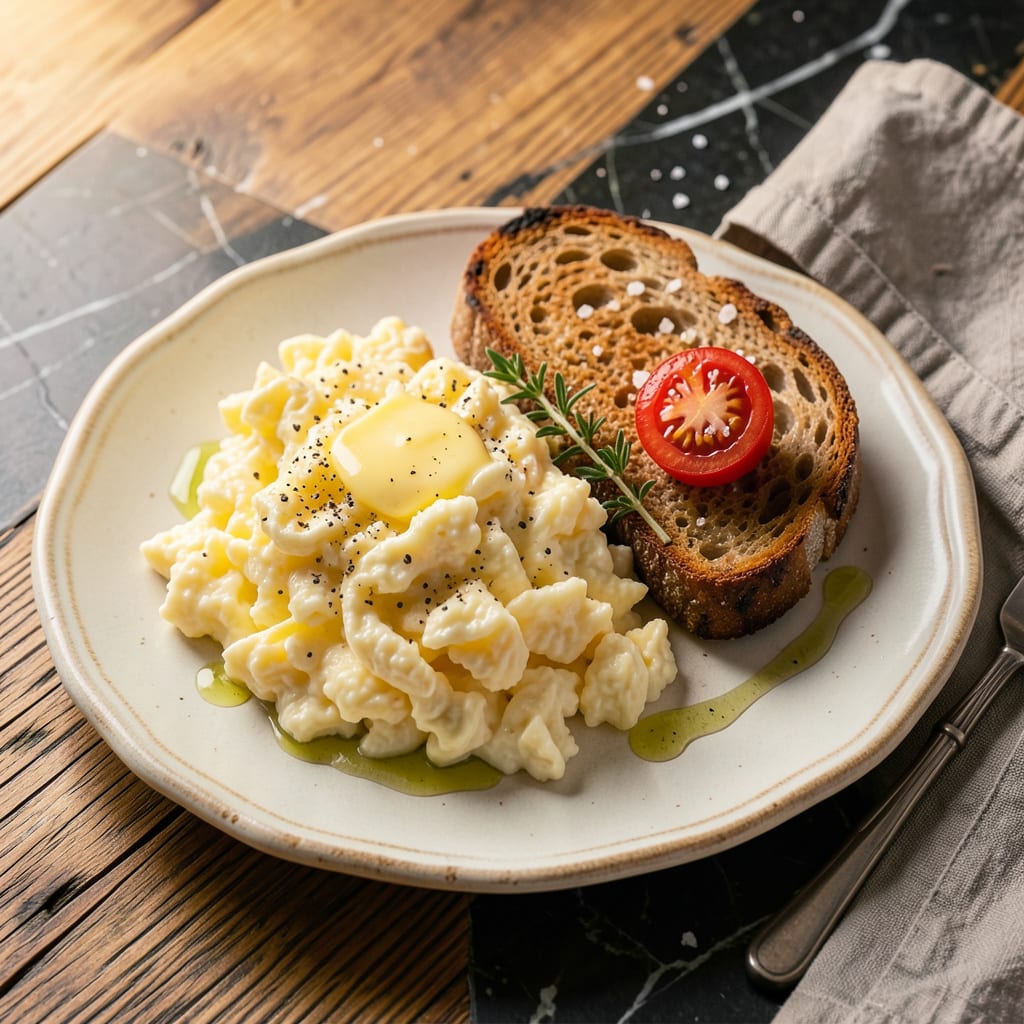
Whisk 2-3 eggs with a splash of milk, salt, and pepper. Cook over medium-low heat in a buttered pan, stirring gently with a spatula until softly set but still slightly runny. Remove from heat just before fully done for creamy, fluffy results.
This method transforms ordinary eggs into something extraordinary by controlling protein coagulation. 🔥 The gentle heat and constant motion prevent the proteins from tightening too quickly, which is what creates that undesirable rubbery texture. I always emphasize pulling the eggs off the heat while they still appear slightly underdone—they’ll continue cooking from residual heat, reaching perfect doneness without overcooking.
What many home cooks overlook is how the fat source impacts the final dish. Butter adds richness and helps carry flavors, while milk introduces steam that makes the eggs lighter. For my French-inspired versions, I’ll sometimes finish with a pat of cold butter stirred in off-heat for extra silkiness. ✨
💡 In This Article
- Science Behind Perfectly Fluffy Scrambled Eggs
- Top Variations and Add-Ins for Scrambled Eggs
Science Behind Perfectly Fluffy Scrambled Eggs
Egg proteins begin coagulating at 144°F, but the magic happens between 150-160°F where they set gently without tightening. Low heat gives you control—too high and the proteins seize up instantly, squeezing out moisture and creating that dreaded rubbery texture.
The constant stirring isn’t just about even cooking; it breaks up the curds as they form, preventing large, dense clumps while distributing the heat evenly throughout the mixture. 🔥
That splash of milk isn’t just for richness—it introduces steam that puffs up the eggs. For every 2 eggs, about 1 tablespoon of milk creates enough steam to separate protein strands slightly, giving that cloud-like texture.
Butter plays double duty: its fat coats the proteins to prevent over-bonding while adding flavor, and its milk solids brown slightly for depth. I’ve tested this with 1 tablespoon butter per 2 eggs as the sweet spot for both texture and taste.
Here’s the critical moment most miss: eggs continue cooking from residual heat after you remove them from the pan. They should look slightly underdone (shiny with soft curds) when you pull them off—this is about 30 seconds before they appear fully set.
The carryover cooking will bring them to perfect doneness without crossing into dry territory. This is why restaurant eggs always seem creamier than home versions!
The spatula technique matters more than you think. Use a heat-resistant silicone spatula and make slow, sweeping motions rather than choppy stirs. This creates wider, thinner curds that cook more evenly.
French technique takes this further by finishing with a cold butter swirl off-heat—try stirring in 1 teaspoon cold butter at the end for an instant silkiness boost. ✨
Salt timing affects texture too. Adding salt before cooking can break down proteins slightly, making them more tender. But add too much too early and you risk drawing out moisture. I recommend 1/8 teaspoon salt per egg whisked in just before cooking begins. The pepper?
Always add that at the end—its compounds can turn bitter with prolonged heat.
For the ultimate test, cut into your eggs with the side of a fork. Perfect scrambled eggs should part cleanly but immediately flow back together, like thick custard. If they hold a sharp edge, they’re overcooked. This visual test never fails me, whether I’m cooking for my family or at competition breakfasts. 💫

Trained in classic French technique but raised on slow-cooked ribs and spicy rubs, she blends culinary skill with smoke and soul.
- Recipe for Boneless Pork Chops in Cast Iron Skillet: Sear and Baste to Juicy Perfection - October 3, 2026
- Recipe for Boneless Cross Rib Roast: Slow-Roasted Beef with Herb Crust - October 3, 2026
- Hamburgers in Sauce Recipe Crock Pot: Slow-Cooked Savory Delight - October 3, 2026