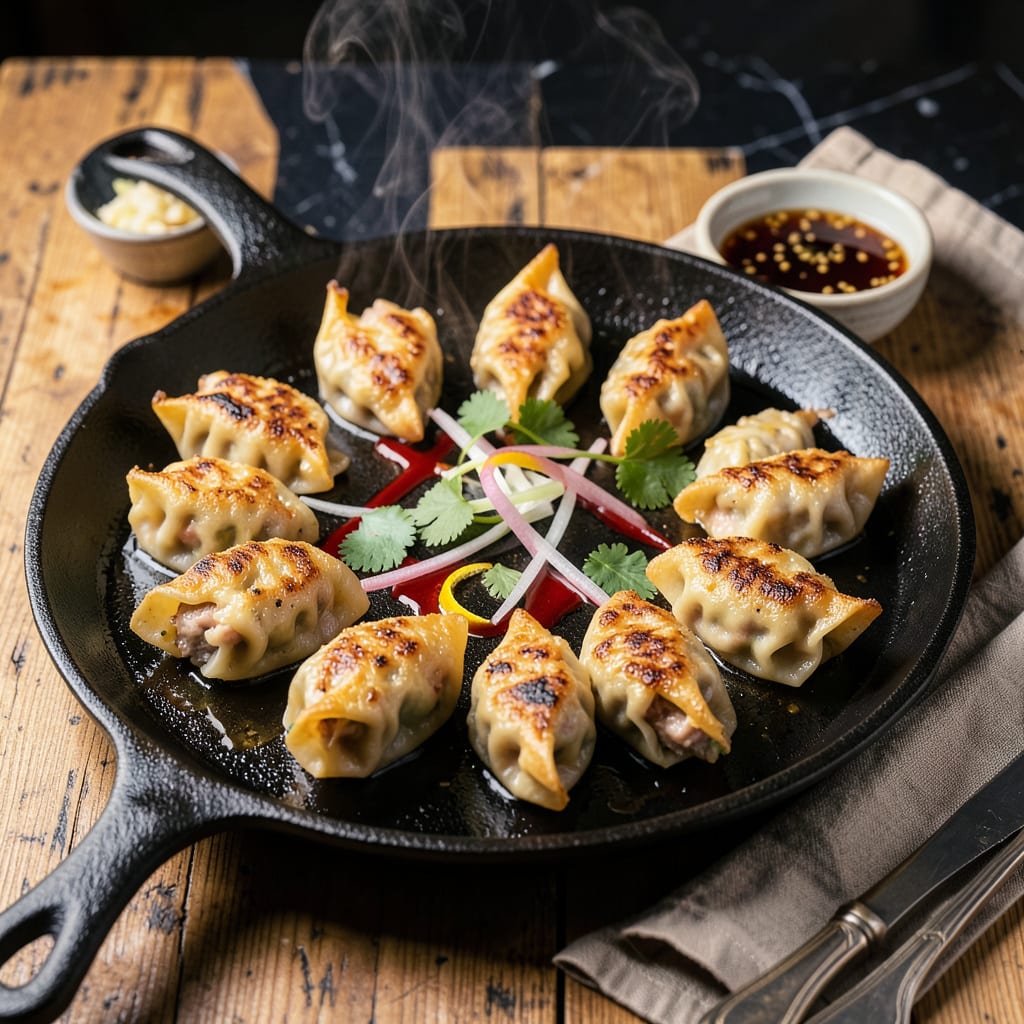
I’ll be real with you—nothing beats the first bite of pan-fried gyoza when you hit that perfect crispy-bottomed texture. That golden lace crust cracking under your chopsticks while juicy filling spills out? Worth every minute at the stove. My shrimp version started as a happy accident when I swapped pork for seafood one night, and now it’s my go-to for pescatarian friends.
Here’s the thing—great gyoza is all about technique, not fancy ingredients. Store-bought wrappers work fine if you handle them right (keep them covered with a damp towel!). The magic happens in the pan: hot oil for initial sear, a splash of water to steam, then lid off to crisp that bottom again. I’ve burned through batches learning the exact moment to add that water—too soon and they steam instead of crisp.
You’ll end up with dumplings that have shatteringly crispy bottoms and tender tops, with filling that stays juicy inside. The shrimp version brings sweetness that balances the savory, while tofu-mushroom keeps vegetarians happy. Serve with a quick soy-vinegar dip or spicy chili oil for contrast.
Fair warning: These disappear fast. First time I made them for a party, I had to double the batch before guests even arrived. Now I always make extra—because that perfect crispy bottom is impossible to resist.
📚 In This Guide
- What You’ll Need
- Instructions
- Tips and Common Mistakes
What Youll Need
- ● Frozen or fresh gyoza (potstickers) – 12–16 pieces (or as many as you’d like to cook!)
- ● Neutral oil – 1–2 tbsp (vegetable, canola, or avocado oil works best)
- ● Water – ¼ cup (for steaming)
- ● Nonstick or cast-iron skillet – 10–12 inches wide (with a lid)
- ● Tongs or spatula – For safe flipping
- ○ Small bowl – To mix oil and water (optional but helpful)
- ○ Dipping sauce – Soy sauce, rice vinegar, chili oil, or store-bought gyoza sauce (optional but highly recommended!)
- ○ Green onions or sesame seeds – For garnish (optional)
Instructions
Here’s how to achieve that perfect crispy bottom and juicy filling every time—just follow these simple steps.
Prepare Your Gyoza for Cooking
Start by arranging your frozen or fresh gyoza on a clean surface. If using frozen, don’t thaw them—cooking from frozen actually helps maintain the shape and prevents the filling from leaking out. I like to work with about 12-16 gyoza at a time for a standard 10-inch skillet, giving them enough room to crisp without crowding.
Have all your tools ready: a nonstick skillet with a tight-fitting lid, cooking oil, and a small bowl of water. The key to perfect gyoza is working quickly once they hit the pan, so preparation prevents any frantic scrambling mid-cook. This is also the time to check that your gyoza aren’t sticking together—gently separate any that are clumped.
Create the Crispy Golden Bottom
Heat 1 tablespoon of neutral oil in your skillet over medium-high heat until it shimmers but isn’t smoking. Arrange the gyoza in a single layer, flat-side down, in a circular pattern. I always start in the center and work outward—this creates that classic restaurant-style presentation.
Let them cook undisturbed for 2-3 minutes until the bottoms turn deep golden brown. You’ll know they’re ready when you hear a steady sizzle and can see the edges turning crispy. Don’t be tempted to peek or move them during this crucial browning stage—patience ensures that perfect crunch we’re after.
Steam for Juicy Perfection
Carefully pour ¼ cup of water into the skillet—it will sizzle violently, so stand back slightly. Immediately cover with the lid to trap the steam. This is where the magic happens: the steam cooks the filling through while preserving that crispy bottom we just created.
Let them steam for 4-5 minutes on medium heat. You’ll hear the sizzling subside as the water evaporates. Resist the urge to lift the lid—each peek releases precious steam and can make your gyoza tough instead of tender. The dumplings are done when the wrappers look slightly translucent and the filling is hot throughout.
Finish and Serve with Finesse
Remove the lid and return the heat to medium-high for 1-2 minutes to evaporate any remaining water and restore crispness to the bottoms. You’ll see the edges start to sizzle again—that’s your signal they’re ready. Turn off the heat and let them rest for 1 minute in the pan.
Use a thin spatula to gently lift the gyoza from the pan, sliding it underneath to preserve that crispy crust. Arrange them on a plate with the golden bottoms facing up—this is the money shot! Serve immediately with your favorite dipping sauce while they’re still piping hot and at their crispiest. The contrast between the crunchy bottom and tender filling is what makes these irresistible.
Tips and Common Mistakes
Perfecting pan-fried gyoza is all about mastering the balance between crispy and tender. Here’s what I’ve learned from making hundreds of batches.
Heat Control: In Step 2, when you’re creating that golden bottom, medium-high heat is crucial. If your oil isn’t hot enough, the gyoza will absorb it and become greasy instead of crisp. I test the oil by flicking a drop of water in—if it sizzles immediately, it’s ready. That 2-3 minute browning window is your only chance to get the crust right, so don’t walk away from the pan.
Steaming Technique: The 4-5 minutes of steaming in Step 3 transforms good gyoza into great ones. Here’s what nobody tells you—when you add that ¼ cup of water, pour it along the edge of the pan, not directly on the dumplings. This prevents the sudden temperature drop from shocking the wrappers. Keep the lid on tight; even a quick peek can add minutes to your cooking time as the steam escapes.
The Equipment Factor: A nonstick skillet with a tight-fitting lid is non-negotiable for this recipe. I ruined three batches before realizing my warped lid was letting steam escape. If you don’t have one, use a baking sheet as a makeshift lid—just be careful of the hot handle. The 10-inch size mentioned in Step 1 gives you enough room to arrange 12-16 gyoza without crowding, which is essential for even cooking.
Visual Cues: Don’t rely solely on the timer for doneness. In Step 4, when you return to medium-high heat for that final 1-2 minutes, watch for two things: the edges should sizzle actively, and the wrappers will develop a slight sheen when they’re perfectly cooked. That one minute of resting time isn’t just for show—it lets the filling set so it doesn’t squirt out when you bite in.
Pro Tips for Pan Fry Gyoza
- Perfecting pan-fried gyoza is all about mastering the balance between crispy and tender. Here’s what I’ve learned fro…
- Heat Control: In Step 2, when you’re creating that golden bottom, medium-high heat is crucial. If your oil isn’t hot …
- Steaming Technique: The 4-5 minutes of steaming in Step 3 transforms good gyoza into great ones. Here’s what nobody t…
Frequently Asked Questions
Can I use a non-stick pan instead of cast iron for frying gyoza?
A non-stick pan works great—just skip the extra oil. Heat it over medium-high and follow the same steps. Cast iron gives a slightly crispier crust, but non-stick ensures easy release and cleanup. Avoid overcrowding to prevent steaming instead of frying.
How do I know when gyoza are fully cooked inside?
Check for two signs: ① The wrappers turn translucent (not doughy) around the edges, and ② the internal temp hits 165°F (74°C) if using a meat thermometer. If unsure, fry 1–2 minutes longer after adding water—steam finishes the cooking! Neutral, high-smoke-point oils like vegetable, canola, or peanut oil work best. Avoid olive oil (low smoke point) or butter (burns easily). For extra flavor, mix 1 tsp sesame oil into your neutral oil—but don’t use it alone! Sticking usually means: ① Not enough oil (use 1–2 tbsp), ② Pan isn’t hot enough (wait until oil shimmers), or ③ Moving them too soon. Let them crisp undisturbed for 2–3 minutes before adding water. If stuck, gently scrape with a thin spatula—don’t force it! Yes, but texture differs! For air-fryer: Brush with oil, cook at 375°F (190°C) for 6–8 mins, flip halfway. For oven: Bake at 400°F (200°C) for 12–15 mins on parchment. Both skip the crispy bottom, so pan-frying wins for authenticity!What’s the best oil for pan-frying gyoza?
My gyoza keep sticking! How do I fix this?
Can I air-fry or bake gyoza instead of pan-frying?
Now you’ve got the secret to golden, crispy gyoza with juicy fillings—every single time! 🥟✨ Whether you’re whipping up a quick snack or impressing guests, mastering the pan-fry method turns simple dumplings into a showstopper. Don’t stop here—experiment with fillings (pork, shrimp, or veggie!) or pair them with a tangy homemade dipping sauce for extra flair.
Ready to level up? Try steaming then frying for double the texture, or freeze a batch for easy meals later. Happy frying—your crispy gyoza adventure starts now! 🔥

Trained in classic French technique but raised on slow-cooked ribs and spicy rubs, she blends culinary skill with smoke and soul.
- Recipe for Boneless Pork Chops in Cast Iron Skillet: Sear and Baste to Juicy Perfection - October 3, 2026
- Recipe for Boneless Cross Rib Roast: Slow-Roasted Beef with Herb Crust - October 3, 2026
- Hamburgers in Sauce Recipe Crock Pot: Slow-Cooked Savory Delight - October 3, 2026