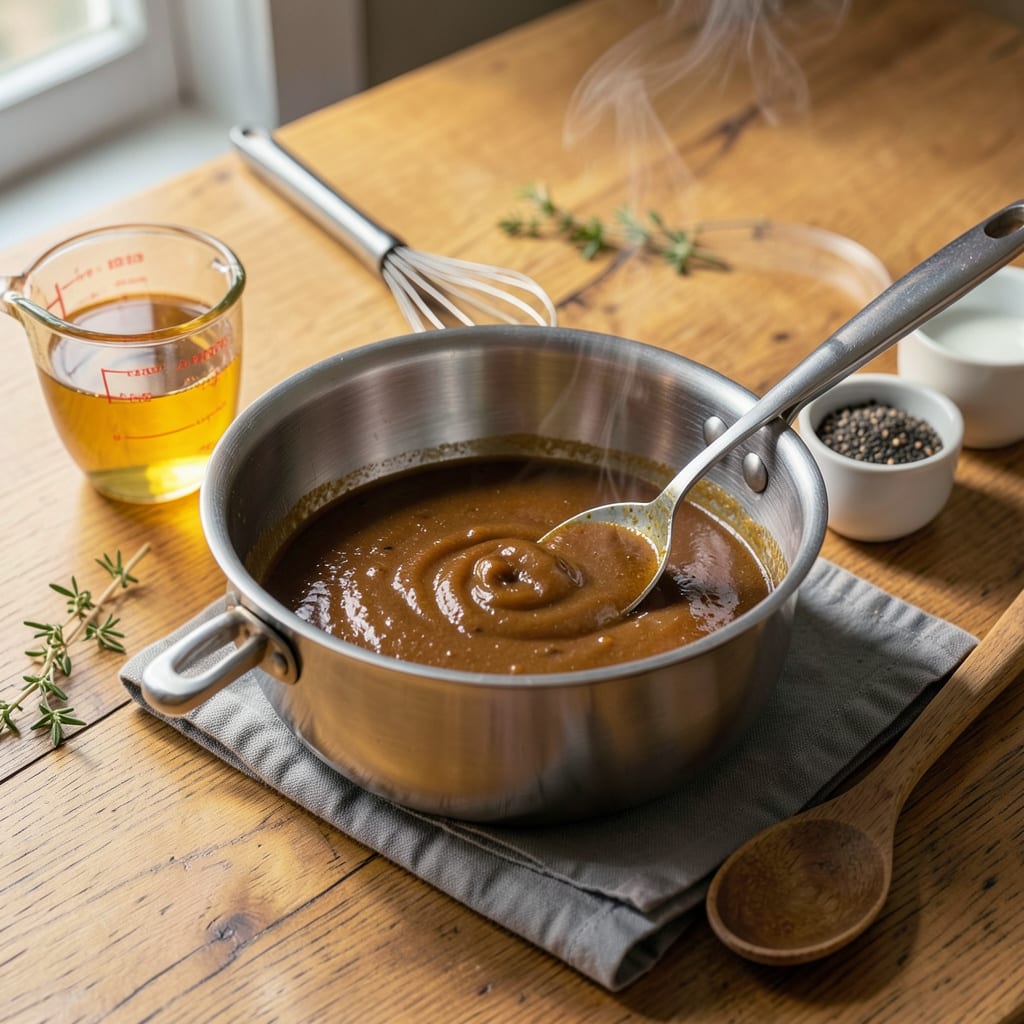
I’ve been there—standing over a pot of gravy that tastes more like ocean water than rich, savory goodness. One heavy-handed salt pour can ruin what should be the star of your meal. But here’s the thing: fixing oversalted gravy isn’t about masking the problem, it’s about balancing flavors the right way.
After burning through more batches than I’d like to admit (including one Thanksgiving disaster that nearly had me ordering pizza), I developed a foolproof method that actually works. The solution isn’t just adding water—it’s about strategic dilution combined with acidity and body adjustments that maintain the gravy’s richness while cutting the salt.
What you’ll end up with is gravy that’s perfectly seasoned, with its velvety texture and deep flavor intact. No watery aftertaste, no weird chemical flavors from quick fixes—just smooth, balanced gravy that makes everything it touches taste better. The best part? These techniques work whether you’re dealing with pan drippings, roux-based gravy, or even store-bought versions that went wrong.
Here’s where it gets interesting—this isn’t just damage control. These are the same balancing tricks professional chefs use to elevate flavors in sauces every day. You’re not just fixing a mistake, you’re learning how to build better gravy from the start.
📚 In This Guide
- What You’ll Need
- Instructions
- Tips and Common Mistakes
What Youll Need
- ● Pre-made gravy – 2+ cups (homemade or store-bought, chilled or room temp works best).
- ● Unsalted butter – 1–2 tbsp (or neutral oil like avocado/vegetable oil).
- ● All-purpose flour – 1–2 tbsp (for thickening).
- ● Low-sodium broth – ½–1 cup (chicken, beef, or veggie, match to gravy base).
- ○ Potato or sweet potato – 1 small (peeled & diced, optional for absorption).
- ○ Heavy cream or milk – ¼ cup (optional, for richness).
- ○ Acidic balance – 1 tsp lemon juice/vinegar (optional, to brighten flavor).
- ● Medium saucepan (non-stick preferred).
- ● Whisk or wooden spoon.
- ● Fine-mesh strainer (if removing potato chunks).
- ● Measuring cups/spoons.
- ○ Optional: Immersion blender (for ultra-smooth texture).
Instructions for Reducing Salt in Gravy
Here’s my foolproof method for fixing overly salty gravy without sacrificing flavor or texture.
Dilute with Unsalted Liquid
The most straightforward solution is to gradually add unsalted broth or water to your gravy. Start with ¼ cup at a time, whisking thoroughly after each addition. I prefer using broth because it maintains the gravy’s depth of flavor while reducing salt concentration.
Taste after each addition—this is crucial. You’re aiming for balance, not dilution to the point of blandness. Remember that flavors intensify as gravy cools, so what tastes perfect hot might be slightly under-seasoned when served. This method works best when you’ve only slightly oversalted your gravy.
Incorporate Acidic Elements
When dilution isn’t enough, I turn to acidity to counterbalance saltiness. Add 1 teaspoon of lemon juice or apple cider vinegar to your gravy and whisk well. The acid doesn’t reduce salt content but creates a more balanced flavor profile that makes the salt less noticeable.
Start conservatively—you can always add more, but you can’t remove acid once it’s in. Taste after each addition and let the gravy simmer for 2-3 minutes to allow flavors to meld. This technique works particularly well with rich, meat-based gravies where a touch of brightness enhances the overall flavor.
Add Starchy Vegetables
For more severely oversalted gravy, I use raw potatoes or carrots as salt absorbers. Peel and dice 1 medium potato or 2 large carrots into small cubes. Add them to your gravy and simmer for 10-15 minutes, then remove with a slotted spoon.
The vegetables will absorb excess salt while releasing their natural starches, which can help thicken the gravy slightly. This method requires more time but effectively reduces salt content without significantly altering the gravy’s volume or basic flavor profile. Discard the vegetables after use—they’ll be overly salty and unappetizing.
Create a Roux-Based Correction
When you need to both reduce salt and maintain proper consistency, make a simple roux with 1 tablespoon butter and 1 tablespoon flour. Cook over medium heat for 2-3 minutes until golden, then whisk in ½ cup unsalted broth or milk.
Gradually incorporate this mixture into your gravy, whisking constantly. The additional liquid dilutes the salt while the roux helps maintain the gravy’s body. This technique gives you more control over both salt levels and final texture, making it ideal for gravies that need significant adjustment without becoming too thin.
Balance with Sweetness (Optional)
For gravies that remain slightly too salty after other adjustments, a touch of sweetness can help balance flavors. Add ½ teaspoon of honey or brown sugar and whisk well. The sweetness doesn’t mask the salt but creates a more harmonious flavor profile.
This works particularly well with gravies that have caramelized onion or meat drippings as their base. Simmer for 2-3 minutes after adding sweetener to allow flavors to integrate fully. Taste carefully—you want balance, not a sweet gravy. This final adjustment often makes the difference between good and perfect gravy.
Tips and Common Mistakes
These subtle adjustments will transform your salt recovery from good to perfectly balanced—just like in professional kitchens.
Precision in Step 1: When adding that ¼ cup of unsalted broth, use a measuring cup rather than eyeballing. I’ve found that even small variations in liquid volume can throw off the balance you’re trying to achieve. Remember, you can always add more, but you can’t remove excess liquid once it’s incorporated. This measured approach gives you complete control over the dilution process.
Timing Nuance in Step 3: For the vegetable absorption method, don’t rush the 10-15 minutes simmering time. I learned this the hard way—removing the potatoes or carrots too soon means they haven’t absorbed enough salt. Let them simmer the full time while stirring occasionally to ensure even salt distribution. The vegetables should feel slightly softened but not mushy when they’re ready to be removed.
Roux Technique Refinement: In Step 4, when cooking your roux over medium heat, watch for the butter and flour mixture to reach a light golden color—this should take exactly 2-3 minutes. The color change indicates the flour has cooked out its raw taste while developing nutty notes that will enhance your gravy’s depth. Stir constantly to prevent burning, which would introduce bitter flavors.
Flavor Layering Insight: For Step 5’s optional sweetness adjustment, consider the base flavors of your gravy before choosing between honey or brown sugar. Honey works beautifully with poultry-based gravies, adding floral notes, while brown sugar complements beef gravies with its molasses undertones. Either way, that 2-3 minutes of simmering after adding the sweetener is non-negotiable—it allows the sweetness to fully integrate rather than sitting on top of the other flavors.
Pro Tips for Reduce Salt In Gravy
- These subtle adjustments will transform your salt recovery from good to perfectly balanced—just like in professional …
- Precision in Step 1: When adding that ¼ cup of unsalted broth, use a measuring cup rather than eyeballing. I’ve found…
- Timing Nuance in Step 3: For the vegetable absorption method, don’t rush the 10-15 minutes simmering time. I learned …
Frequently Asked Questions
Got questions about fixing an overly salty gravy? You’re not alone! Here are the most common concerns—and quick, practical answers to save your dish.
Can I fix salty gravy after it’s already been served?
If the gravy is on the table, dilute it with a splash of unsalted broth, cream, or even mashed potatoes (they absorb salt!). For individual servings, pair with bland sides like rice or bread to balance the flavor. Prevention is key—taste as you cook!
Does adding sugar or vinegar really help reduce saltiness?
Yes, but sparingly! A pinch of sugar (½ tsp per cup) or a dash of vinegar/lemon juice can mask salt by adding contrast. Start small—too much sugar makes gravy sweet, and vinegar can overpower. Best for mild over-salting only.
What’s the fastest way to fix salty gravy without thinning it?
Add a starch! Mix 1 tbsp cornstarch or flour with cold water, stir into gravy, and simmer 2–3 minutes. The starch absorbs excess salt while thickening. For cream gravies, a dollop of unsalted butter or heavy cream works too.
Are there low-sodium alternatives to regular broth or bouillon?
Absolutely! Use homemade unsalted stock, “no-salt-added” canned broth, or mushroom/vegetable broth (naturally lower in sodium). Check labels—some “low-sodium” brands still pack 300+ mg per serving. Bonus: Herbs like thyme or bay leaves boost flavor sans salt!
Why does my gravy taste salty even when I didn’t add extra salt?
Hidden culprits! Store-bought broths, soy sauce, or pre-seasoned meats (like ham) contribute sodium. Even baking soda (in some recipes) can leave a salty taste. Always taste before adding salt, and rinse canned beans/meats if using them in gravy.
Cutting back on salt in gravy doesn’t mean sacrificing flavor—it’s all about balance! With simple tricks like dilution, acidity, or fresh herbs, you can rescue an over-salted batch and still wow your guests. 🌿 Remember, tasting as you go is your best tool for perfect results every time.
Ready to put these tips to the test? Try adjusting your next gravy recipe before it gets too salty—your taste buds (and health!) will thank you. Grab your ingredients and get cooking with confidence! 🍽️

Trained in classic French technique but raised on slow-cooked ribs and spicy rubs, she blends culinary skill with smoke and soul.
- Recipe for Boneless Pork Chops in Cast Iron Skillet: Sear and Baste to Juicy Perfection - October 3, 2026
- Recipe for Boneless Cross Rib Roast: Slow-Roasted Beef with Herb Crust - October 3, 2026
- Hamburgers in Sauce Recipe Crock Pot: Slow-Cooked Savory Delight - October 3, 2026