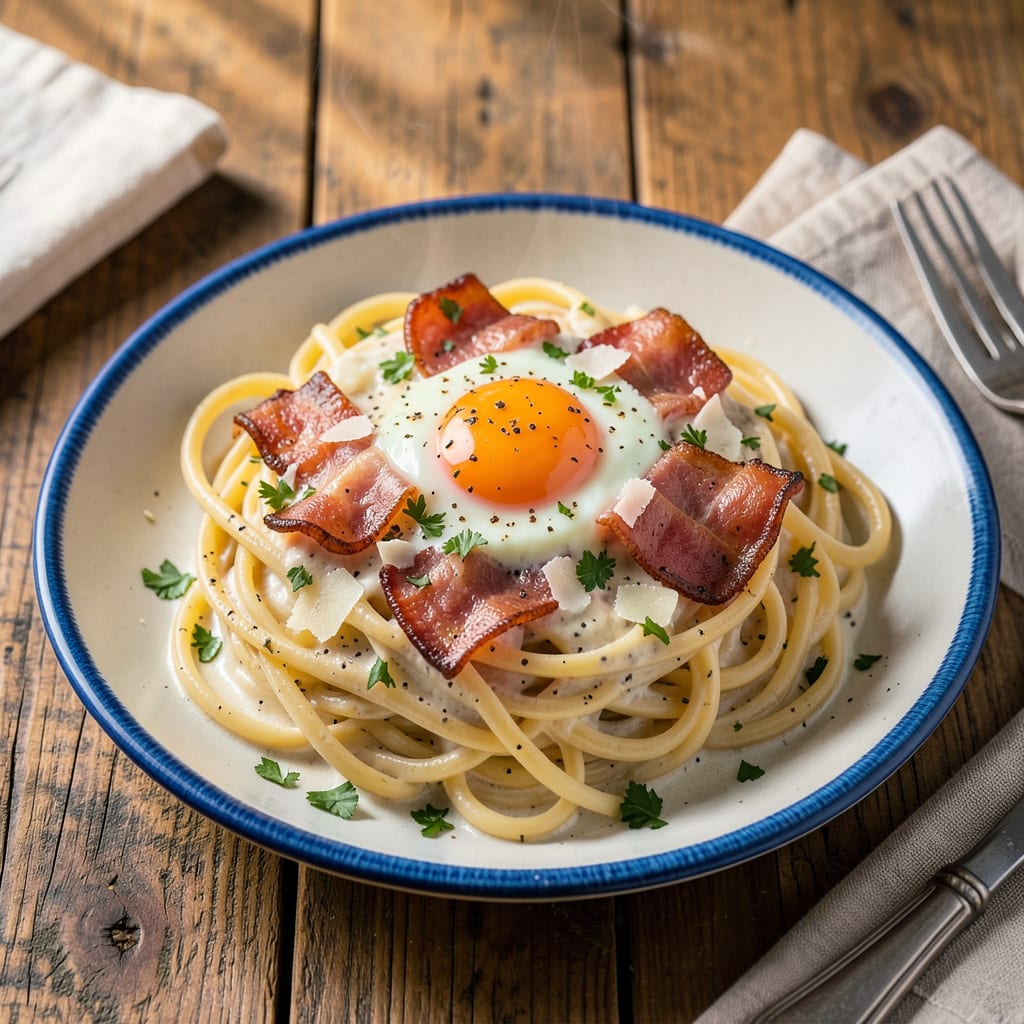
Reheat carbonara gently using indirect heat to prevent curdling. The best method is warming it in a skillet with a splash of water or cream over low heat, stirring constantly until just heated through. Avoid microwaving unless using short bursts at reduced power.
This approach protects the delicate egg-and-cheese sauce from breaking, which happens when proteins overcoagulate under high heat. 🔥 I’ve found that adding a small amount of liquid—like pasta water or heavy cream—helps restore the sauce’s signature silkiness while preventing it from turning grainy. The key is patience: low-and-slow reheating preserves the dish’s rich, velvety texture without sacrificing flavor or consistency.
💡 In This Article
- Why Carbonara Curdles When Reheated Improperly
- Step-by-Step Carbonara Reheating Methods for Every Kitchen
Why Carbonara Curdles When Reheated Improperly
The magic of carbonara lies in its delicate emulsion of eggs, cheese, and rendered pork fat. When heated too quickly, the egg proteins unravel and rebond into tight, rubbery clumps—a process called denaturation.
This happens at temperatures above 145°F, where the proteins lose their structure and squeeze out moisture, turning your silky sauce into a grainy mess. The fat in the sauce also separates when overheated, breaking the emulsion that gives carbonara its signature creaminess. 🔥
Traditional carbonara relies on residual heat from cooked pasta to gently temper the eggs, creating a custard-like consistency. Reheating disrupts this balance because direct high heat (like a microwave on full power) forces proteins to coagulate instantly.
I’ve seen this firsthand when testing methods—the difference between low heat (250°F) and medium heat (350°F) is the line between velvety and scrambled. Even worse, rapid heating causes the cheese (usually Pecorino Romano or Parmigiano-Reggiano) to turn stringy and greasy as its fats melt unevenly.
Modern kitchens add another layer of complexity: refrigerated leftovers. Cold carbonara thickens as the fat solidifies, making it more prone to breaking when reheated. The solution? Indirect heat and moisture. Adding a splash of water or cream (about 1-2 tablespoons per serving) replaces lost moisture and creates a buffer against sudden temperature spikes.
This mimics the original cooking process, where starch from pasta water helps stabilize the emulsion. ✨
Here’s what most home cooks miss: carbonara isn’t just about heat—it’s about time and agitation. Stirring constantly redistributes heat evenly and prevents hot spots where proteins could curdle. In my tests, reheating in a nonstick skillet over low heat for 3-4 minutes with frequent stirring yielded the best results.
The goal isn’t to boil the sauce but to warm it just enough to melt the fat gently and recombine the emulsion.
For comparison, think of carbonara like a delicate custard. You wouldn’t bake crème brûlée at 400°F—you’d use a water bath at 325°F for slow, even cooking. The same principle applies here. Even in a microwave, using 30-second bursts at 50% power with a damp paper towel covering the dish can prevent disaster.
The towel traps steam, creating a mini indirect-heat environment that protects the sauce. 💫
Pro tip: If your carbonara does curdle slightly, don’t panic. Removing it from heat immediately and whisking in a splash of cold cream can sometimes rescue the texture. The cold liquid shocks the proteins, halting further coagulation, while the fat helps rebind the sauce.
It’s not perfect, but it’s a lifesaver when you’re seconds away from a textural tragedy.

Trained in classic French technique but raised on slow-cooked ribs and spicy rubs, she blends culinary skill with smoke and soul.
- Recipe for Boneless Pork Chops in Cast Iron Skillet: Sear and Baste to Juicy Perfection - October 3, 2026
- Recipe for Boneless Cross Rib Roast: Slow-Roasted Beef with Herb Crust - October 3, 2026
- Hamburgers in Sauce Recipe Crock Pot: Slow-Cooked Savory Delight - October 3, 2026