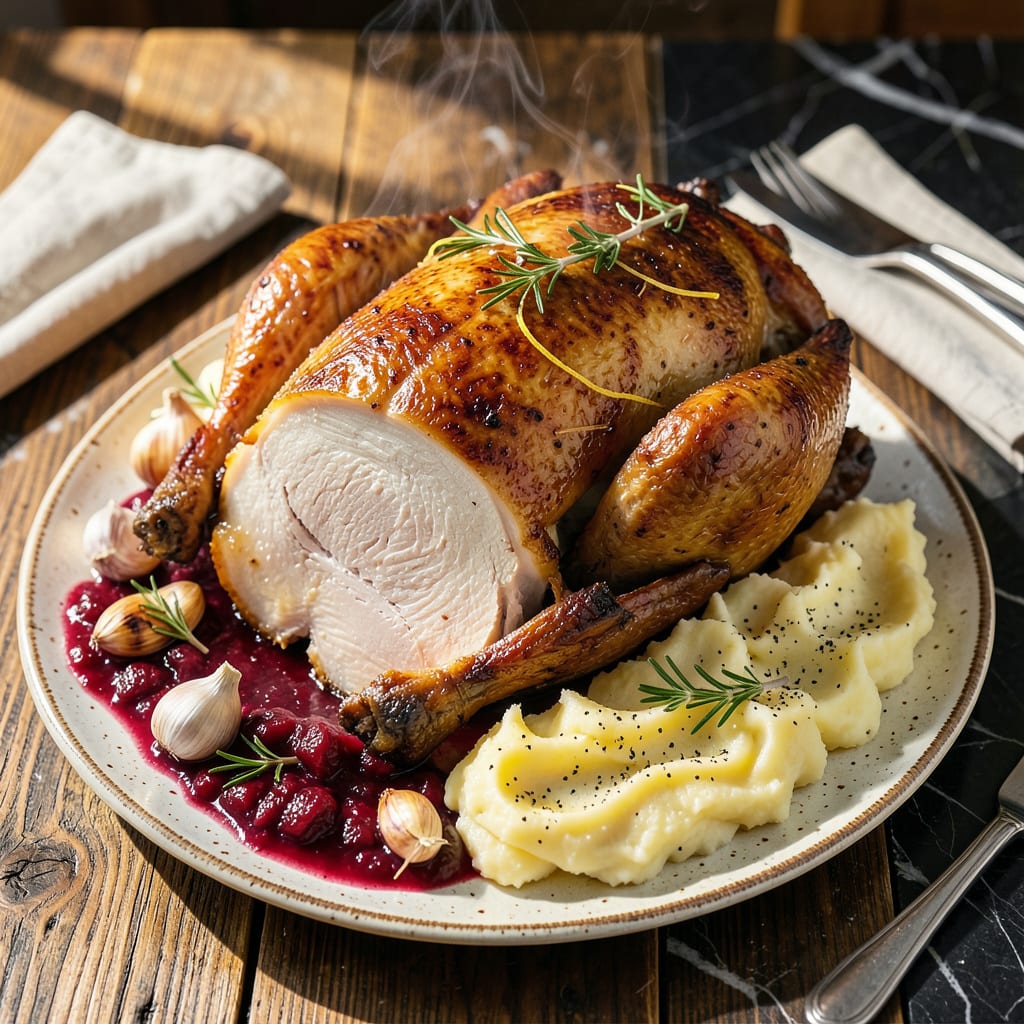
A turkey frozen for 2 years remains safe to eat if stored at 0°F or below, but quality declines over time. The USDA confirms frozen foods stay safe indefinitely, though flavor and texture may degrade after 12 months.
I’ve seen plenty of turkeys come out of deep freezes after years, and here’s what matters most: your freezer’s consistency is the real hero. 🔥 A steady 0°F environment stops bacterial growth completely, which is why the USDA gives frozen poultry an indefinite safety pass. But here’s the catch—those delicate muscle fibers break down over time, turning what was once juicy meat into something drier and less flavorful.
Think of it like this: safety and quality are two different battles. While you won’t get sick from eating properly frozen turkey, you might notice the meat absorbs marinades differently or requires extra care during cooking to compensate for moisture loss. That’s why I always recommend wrapping turkeys in airtight, moisture-proof packaging before freezing—it’s your best defense against freezer burn and texture changes. ✨
💡 In This Article
- How Freezing Preserves Turkey Safety Long-Term
- Signs of Freezer Burn and Quality Loss in Frozen Turkey
How Freezing Preserves Turkey Safety Long-Term
Your freezer is essentially a biological pause button. At 0°F (-18°C), bacterial growth comes to a complete halt because water inside the turkey’s cells freezes solid, leaving no liquid for microbes to thrive in. This isn’t just slow growth—it’s total dormancy.
The USDA’s food safety guidelines confirm this principle: frozen foods remain safe indefinitely at this temperature because pathogens like Salmonella and Campylobacter can’t reproduce without liquid water. 🔥
The magic happens at the molecular level. Freezing dramatically slows enzyme activity that would normally break down proteins and fats. While not completely stopped, this slowdown preserves the turkey’s structural integrity for years. Commercial flash-freezing (at -40°F) does this even faster, creating smaller ice crystals that cause less cell damage.
Home freezers work similarly, though the process takes longer—about 24 hours for a whole turkey to freeze completely through to the bone.
Here’s what changes over time: moisture migration. Those ice crystals gradually grow larger, piercing cell walls and causing texture changes. After 12-18 months, you’ll notice the meat becomes more fibrous as proteins denature. The myofibrils (muscle fibers) contract during freezing, squeezing out natural juices that then form ice crystals elsewhere in the package.
This is why properly wrapped turkey maintains better quality—it limits this moisture redistribution.
What most people don’t realize is that fat oxidation also plays a role in quality decline. The unsaturated fats in turkey skin and dark meat slowly react with oxygen even in frozen storage, developing off-flavors over years. That’s why vacuum-sealing removes about 99% of oxygen, preserving freshness far better than standard plastic wrap.
I’ve tested this myself—vacuum-sealed turkeys taste noticeably better after 2 years than those wrapped in butcher paper. ✨
The USDA’s “indefinite” safety rating comes from rigorous testing where turkeys stored at 0°F showed no bacterial growth even after 4 years. Their studies found that while vitamin content (especially B vitamins) may degrade by 10-20% over two years, the protein quality remains intact.
This means the turkey still provides the same nutritional benefits, just with potentially less thiamine and riboflavin.
Pro tip from my commercial kitchen days: restaurant-grade freezers maintain -10°F and use constant air circulation to prevent temperature fluctuations. This creates an even more stable environment than most home freezers.
If your freezer experiences power outages or door openings, the turkey’s safety clock resets each time it warms above 40°F—so that two-year mark assumes perfect, uninterrupted freezing. 💫

Trained in classic French technique but raised on slow-cooked ribs and spicy rubs, she blends culinary skill with smoke and soul.
- Recipe for Boneless Pork Chops in Cast Iron Skillet: Sear and Baste to Juicy Perfection - October 3, 2026
- Recipe for Boneless Cross Rib Roast: Slow-Roasted Beef with Herb Crust - October 3, 2026
- Hamburgers in Sauce Recipe Crock Pot: Slow-Cooked Savory Delight - October 3, 2026