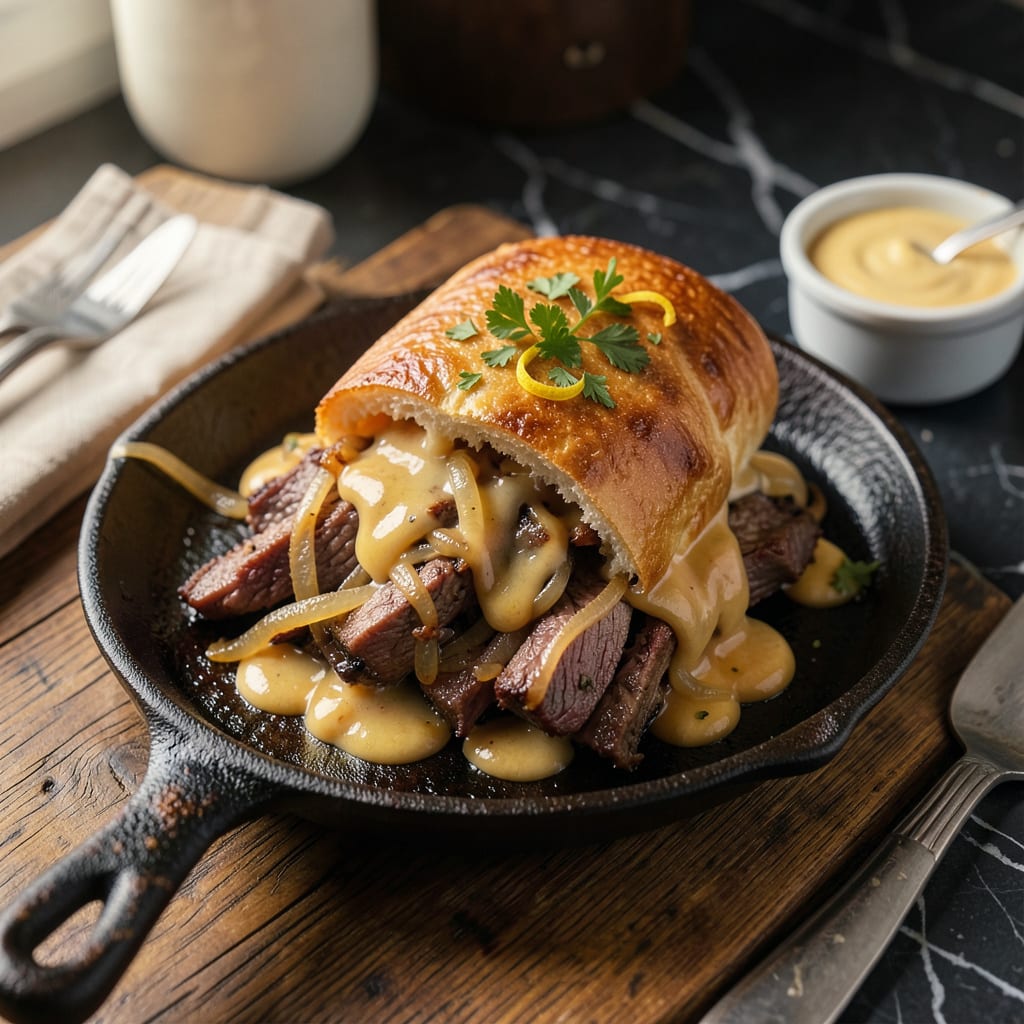
Reheat a cheesesteak in a skillet over medium-low heat for 2-3 minutes per side to preserve texture. Cover with foil to melt cheese evenly. Avoid microwaving, which makes the bread soggy and meat rubbery.
I’ve learned through years of trial (and many soggy sandwiches) that the key to reviving a cheesesteak lies in gentle, even heat. 🔥 A skillet mimics the original cooking environment, letting the bread crisp up while keeping the meat juicy—something a microwave can never achieve. The foil trick isn’t just about melting cheese; it creates a mini steam chamber that prevents the filling from drying out. This method works especially well for Philly-style sandwiches where the bread-to-filling ratio is sacred.
What most people don’t realize is that reheating is about restoring balance. The medium-low heat gives you control, while the 2-3 minute timing ensures you’re warming through without overcooking. I always test doneness by pressing the bread lightly—it should spring back with just a hint of resistance. This approach maintains that perfect bite you craved from the first serving.
💡 In This Article
- Why Traditional Reheating Methods Ruin Cheesesteaks
- Step-by-Step Guide to Reheating Cheesesteaks Like a Pro
Why Traditional Reheating Methods Ruin Cheesesteaks
The moment you zap a cheesesteak in the microwave, you’re triggering a cascade of textural disasters. Microwaves heat unevenly by agitating water molecules, causing moisture to migrate from the meat to the bread. This creates a soggy roll while the beef fibers contract and squeeze out juices, leaving you with rubbery meat.
The cheese suffers too—uneven heating causes the fats to separate, giving you that unappetizing greasy sheen instead of smooth melt.
High heat methods like toaster ovens or broilers create their own problems. At temperatures above 350°F, the proteins in the beef undergo further denaturation, tightening the muscle fibers and pushing out moisture. The bread crust may crisp initially, but without careful monitoring, it quickly crosses into dry, cardboard territory.
I’ve seen this happen in under 2 minutes with direct high heat—what starts as revival becomes ruin.
Here’s what’s actually happening with proper low-and-slow reheating: The medium-low heat (around 275-300°F) gives the sandwich components time to warm evenly. The bread’s starches re-crisp gradually as surface moisture evaporates, while the meat’s collagen has time to relax and reabsorb some juices.
This is why that 2-3 minute per side window is magic—it’s the sweet spot where texture restoration occurs without overcooking. 🔥
The foil cover plays a crucial role in this process. It creates a controlled environment where steam from the warming filling can circulate without escaping. This prevents the bread from drying out while allowing the cheese to melt uniformly.
Without this steam chamber, you’d need to add moisture artificially (like spritzing water), which often leads to uneven results. The difference is night and day compared to microwaving.
Consider the science of cheese melting: Different cheeses have varying melting points. Cheez Whiz (common in Philly) melts at about 150°F, while provolone needs 165°F. A microwave might hit these temps in spots but overshoot in others, creating a patchy mess.
The skillet method gives you consistent, even heat distribution that respects these melting points across the entire sandwich.
What most people overlook is the carryover cooking effect. Even after removing from heat, the sandwich continues warming internally for about 1-2 minutes. This is why pulling it at just the right moment—when the cheese is almost fully melted—prevents overcooking. The residual heat finishes the job perfectly while you’re transferring to your plate. ✨
I’ve tested this against every other method in my kitchen: air fryers (too aggressive), ovens (too slow for crispness), and steamers (disastrous for texture). The skillet approach consistently delivers that just-off-the-griddle quality because it mimics the original cooking environment most closely. It’s not just about warming—it’s about recreating the perfect bite.

Trained in classic French technique but raised on slow-cooked ribs and spicy rubs, she blends culinary skill with smoke and soul.
- Recipe for Boneless Pork Chops in Cast Iron Skillet: Sear and Baste to Juicy Perfection - October 3, 2026
- Recipe for Boneless Cross Rib Roast: Slow-Roasted Beef with Herb Crust - October 3, 2026
- Hamburgers in Sauce Recipe Crock Pot: Slow-Cooked Savory Delight - October 3, 2026