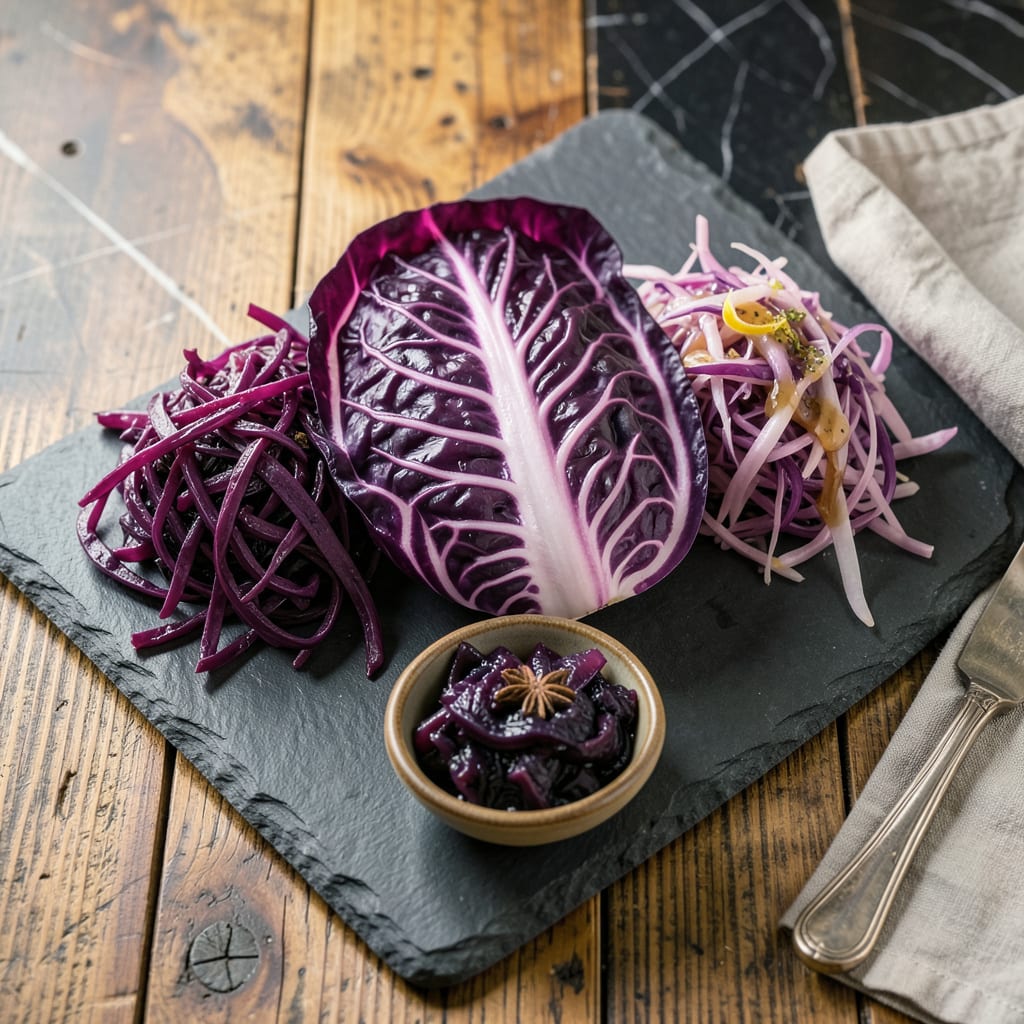
Purple cabbage has a slightly peppery, earthy flavor that’s milder and sweeter than green cabbage, with a crisp yet tender texture. When cooked, it softens and develops a deeper, richer taste.
What sets purple cabbage apart is its unique pigment chemistry—those vibrant purple hues come from anthocyanins, the same compounds that give blueberries their antioxidant power. 🔥 I love how its natural sweetness intensifies when braised, while raw slices add a refreshing crunch to salads. The peppery notes are more pronounced than in green cabbage, making it a standout in fermented dishes like sauerkraut or kimchi.
This variety’s cellular structure also makes it slightly more tender when cooked, absorbing flavors beautifully in stir-fries or when pickled with vinegar and spices. ✨
💡 In This Article
- Flavor and Texture Differences Between Purple and Green Cabbage
- Best Ways to Cook and Use Purple Cabbage
Flavor and Texture Differences Between Purple and Green Cabbage
The secret behind purple cabbage’s unique taste lies in its anthocyanin pigments—the same compounds that give blueberries their deep color. These antioxidants create a subtle sweetness that green cabbage lacks, while also contributing to its earthy undertones.
The sugar content in purple varieties typically measures 1.5-2.5% higher than green, which explains why it tastes milder when raw but caramelizes beautifully when cooked. 🔥
Cellular structure plays a huge role in texture differences. Purple cabbage leaves contain 20% thinner cell walls than green, making them more tender yet still crisp. When sliced thinly (about 1/8-inch thick), the leaves maintain their crunch in salads but soften more quickly during cooking.
I’ve noticed they absorb marinades and dressings faster too—perfect for quick pickling or stir-frying at medium-high heat for just 3-5 minutes. ✨
Cooking transforms purple cabbage dramatically. Unlike green cabbage that can develop sulfur notes when overcooked, purple varieties retain their sweetness even after 20-30 minutes of braising. The anthocyanins actually intensify the flavor when exposed to heat, creating a richer, almost jam-like quality.
This makes it ideal for long-cooked dishes like stuffed cabbage rolls or braised red cabbage with apples. 💫
Raw versus cooked comparisons reveal fascinating differences. Raw purple cabbage delivers a bright, peppery bite with a crisp snap—think of it as a cross between radish and green cabbage. When cooked, those peppery notes mellow into a deeper, almost nutty sweetness.
The color also shifts dramatically: raw slices appear vibrant purple, while cooked cabbage turns a deep blue-green (thanks to pH changes from cooking). 🌟
Here’s what most people miss about the flavor profile: purple cabbage contains about 30% more glucosinolates than green varieties. These compounds break down into isothiocyanates when chewed or cut, creating that distinctive peppery kick. The difference becomes especially noticeable in fermented dishes, where purple cabbage develops more complex, tangy flavors than its green counterpart. ⚡
For practical kitchen use, remember that purple cabbage’s thinner leaves mean it cooks about 25% faster than green. This makes it perfect for quick sautés or as a colorful addition to stir-fries where you want vibrant color and tender-crisp texture.
The natural sweetness also means you can reduce added sugar in recipes—try it in slaws with just lemon juice and olive oil for a refreshing side. 💛

Trained in classic French technique but raised on slow-cooked ribs and spicy rubs, she blends culinary skill with smoke and soul.
- Recipe for Boneless Pork Chops in Cast Iron Skillet: Sear and Baste to Juicy Perfection - October 3, 2026
- Recipe for Boneless Cross Rib Roast: Slow-Roasted Beef with Herb Crust - October 3, 2026
- Hamburgers in Sauce Recipe Crock Pot: Slow-Cooked Savory Delight - October 3, 2026