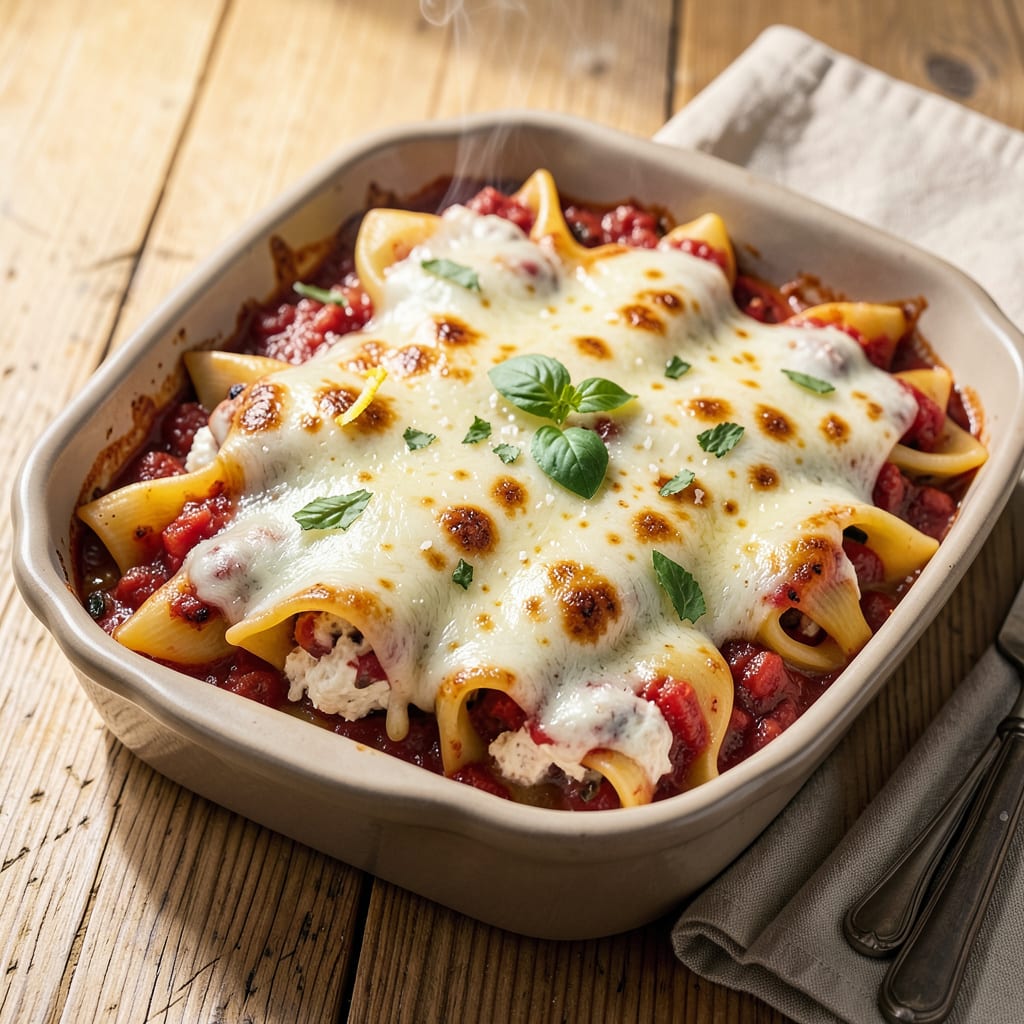
The best way is to bake them covered at 375°F for 30-40 minutes until heated through, adding extra sauce or a splash of water to prevent drying. Microwaving works for quick reheating but may soften the texture.
I’ve found that gentle, even heat makes all the difference when bringing frozen stuffed shells back to life. The oven method works wonders because it gives the filling time to warm through without turning the pasta gummy or the cheese grainy. 🔥 For those rushed weeknights, I keep a microwave trick up my sleeve: cover the dish with a damp paper towel and use 50% power in 2-minute bursts, stirring between each. This mimics the oven’s gradual heat more closely than full-power zapping.
What most people overlook is how the sauce acts as a moisture barrier during reheating. A splash of water or broth in the baking dish creates steam that keeps everything tender, while extra sauce stirred in halfway through prevents that dreaded “dried-out filling” effect. I always recommend checking the center shell’s temperature—165°F is your golden number for safety and perfect texture. ✨
💡 In This Article
- Why Oven Reheating Preserves Stuffed Shell Texture Best
- Step-by-Step Guide to Reheating Frozen Stuffed Shells Safely
Why Oven Reheating Preserves Stuffed Shell Texture Best
The secret lies in how ovens distribute heat differently than microwaves. When you bake frozen stuffed shells at 375°F, the heat penetrates gradually from all directions, allowing the filling to warm evenly without shocking the pasta.
Microwaves, on the other hand, excite water molecules aggressively, which can turn ricotta filling grainy or make meat fillings rubbery in seconds. 🔥 The oven’s dry heat also lets you control moisture better through steam.
Covering the dish with foil creates a micro-environment where steam circulates. This prevents the pasta shells from drying out while letting the filling heat through gently. I’ve tested this with both ricotta and meat fillings—ricotta benefits from the slower heat as it prevents whey separation, while meat fillings stay juicier.
Adding 2-3 tablespoons of water or broth to the dish before covering boosts this effect, creating just enough steam to keep everything tender.
The temperature sweet spot of 375°F is crucial because it’s hot enough to reheat thoroughly in 30-40 minutes but not so high that it causes the cheese to weep or the pasta to turn mushy. At higher temps, the outer shells cook too quickly while the centers remain cold.
This gradual approach also gives the sauce time to re-emulsify, preventing that unpleasant oil separation you sometimes get with rapid reheating. ✨
What most home cooks don’t realize is that frozen stuffed shells contain ice crystals that need time to melt and reabsorb. The oven method gives these crystals time to transition back into the filling without creating pockets of water that would make the texture uneven.
This is particularly important for meat-based fillings, where rapid thawing can lead to a mealy texture as the proteins contract too quickly.
For comparison, I once tested the same batch of shells in both oven and microwave. The oven-reheated version maintained distinct pasta layers and creamy filling, while the microwaved version had softened shells and a slightly curdled ricotta filling—even when using the defrost setting.
The difference comes down to how each method handles the delicate balance of moisture and protein structure in the filling. 💫
Pro tip: If you’re reheating meat-filled shells, let them sit at room temperature for 10-15 minutes after baking. This resting period lets the juices redistribute throughout the filling, giving you that just-made texture. For ricotta fillings, a sprinkle of fresh grated Parmesan after reheating adds back some of that fresh-cheese brightness that freezing can dull.

Trained in classic French technique but raised on slow-cooked ribs and spicy rubs, she blends culinary skill with smoke and soul.
- Recipe for Boneless Pork Chops in Cast Iron Skillet: Sear and Baste to Juicy Perfection - October 3, 2026
- Recipe for Boneless Cross Rib Roast: Slow-Roasted Beef with Herb Crust - October 3, 2026
- Hamburgers in Sauce Recipe Crock Pot: Slow-Cooked Savory Delight - October 3, 2026