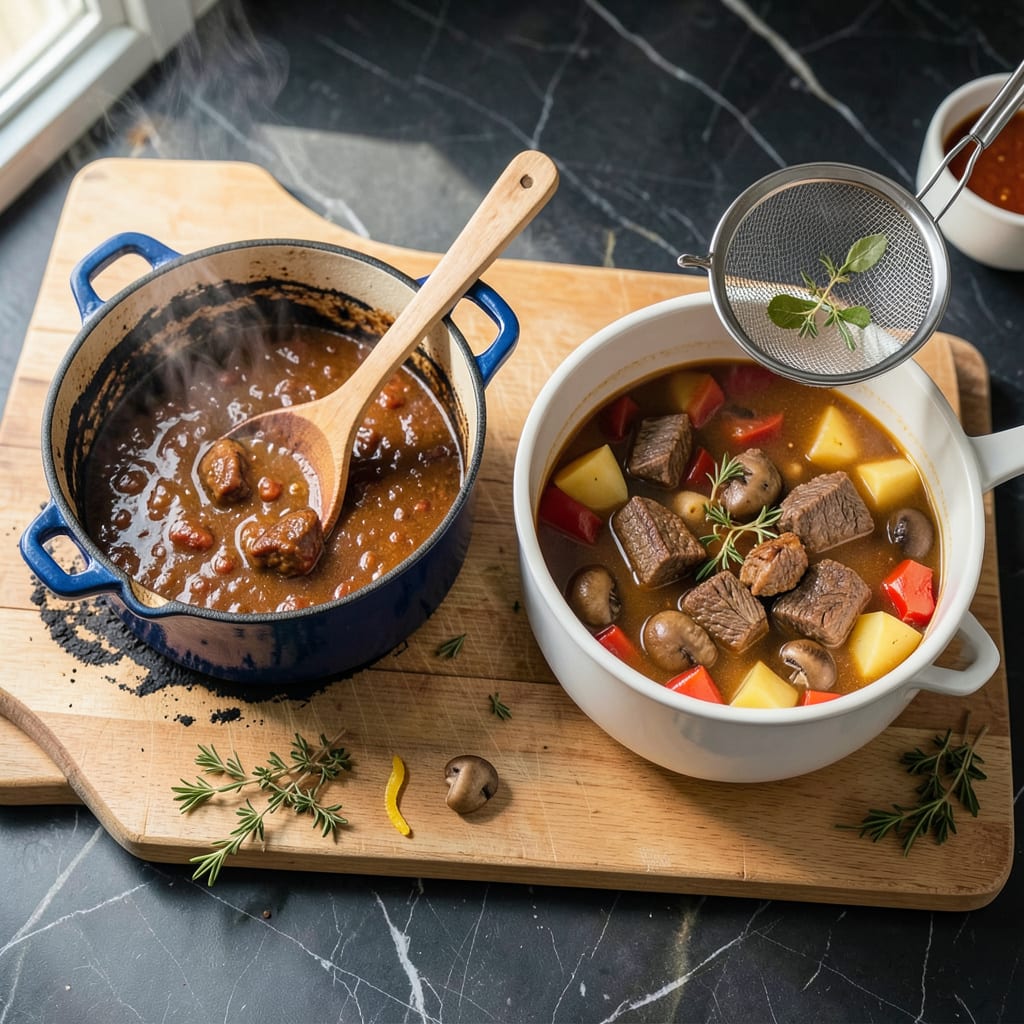
We’ve all been there—you walk away for just a minute, and suddenly your stew smells more like a campfire than dinner. Don’t panic. I’ve saved countless pots of stew from the trash can with these simple fixes, and you can too. The key is acting fast before that burnt flavor takes over everything.
First things first: get that stew away from the heat and assess the damage. If there’s a burnt layer stuck to the bottom, carefully transfer the unburnt stew to a clean pot—don’t stir it up or you’ll just spread the problem. For mild burnt tastes, we’ll use pantry staples like vinegar, sugar, or even peanut butter to balance those charred flavors. Trust me, these work.
What you’re aiming for is flavor equilibrium. A splash of acid (vinegar or lemon juice) cuts through bitterness, while a spoonful of sugar or honey can mask lingering burnt notes. For meat-based stews, soy sauce or Worcestershire adds umami depth that helps override off flavors. Vegetarian versions respond well to tomato paste or a parmesan rind simmered in the broth.
Here’s the thing—prevention is easier than fixing. Keep your heat medium-low, stir occasionally, and use a heavy-bottomed pot. But if you do end up with a burnt batch, these fixes will have your stew tasting intentional, not accidental. Let’s save that dinner.
📚 In This Guide
- What You’ll Need
- Instructions
- Tips and Common Mistakes
What Youll Need
- ● Burnt stew – The pot or dish containing your overcooked or scorched stew (any quantity).
- ● Fresh broth or stock – 1–2 cups (homemade or store-bought, preferably low-sodium to control flavor).
- ● Potato or bread – 1 medium raw potato (peeled) OR 2–3 slices of stale white bread (crusts removed).
- ○ Dairy or acid (optional) – ¼ cup heavy cream, yogurt, or lemon juice to balance flavors.
- ● Fresh herbs/spices – 1 tsp dried or 1 tbsp fresh (e.g., parsley, bay leaf, or thyme) to refresh taste.
- ● Cheesecloth or fine-mesh strainer – For straining if using bread/potato absorption.
- ● Large spoon or spatula – To stir and taste-test adjustments.
- ○ Extra pot or bowl (optional) – For transferring stew if straining.
- ● Patience & taste buds! ⏰👅 – Small adjustments work best—sample as you go.
Instructions
Don’t panic—here’s exactly how to rescue your stew and make it delicious again.
Immediately Remove the Burnt Layer
As soon as you notice the burnt taste, transfer your stew to a clean pot. Don’t scrape the bottom of the original pot—leave that burnt layer behind. I like to use a slotted spoon or ladle to gently lift out the solid ingredients first, then carefully pour the liquid through a fine-mesh strainer into the new pot.
This quick action prevents the burnt flavor from continuing to infuse into your stew. If you’re working with a Dutch oven or heavy pot, be extra careful not to disturb the burnt bits at the bottom. The goal is to leave as much of that charred material behind as possible.
Dilute the Burnt Flavor with Fresh Liquid
Add 1-2 cups of fresh broth, water, or even tomato juice to your stew. I prefer using the same type of broth that was in the original recipe to maintain the intended flavor profile. Stir well and let it simmer for 10-15 minutes—this helps dilute the burnt taste while allowing the new liquid to absorb the existing flavors.
You might be tempted to add more, but start with 1 cup first. You can always add more liquid later if needed, but you can’t take it out if you overdo it. Taste after the initial addition before deciding whether to add more. The fresh liquid should help mellow out the harsh, bitter notes from the burnt bits.
Neutralize with Acid or Sweetness
Here’s where we counterbalance the burnt flavor. Add 1 tablespoon of vinegar (apple cider or white wine vinegar work well) or 1 teaspoon of sugar or honey. The acidity or sweetness helps neutralize the bitter, charred taste. Stir well and let it simmer for another 5 minutes before tasting.
I’ve found that vinegar works particularly well for meat-based stews, while a touch of honey or brown sugar can work wonders for vegetable-heavy stews. Don’t be afraid to adjust—add another ½ tablespoon of vinegar or ½ teaspoon of sugar if needed, but go slowly and taste as you go.
Add Fresh Aromatics for Brightness
Introduce fresh herbs like parsley, cilantro, or basil, or aromatic vegetables like chopped onions, carrots, or celery. I like to add a handful of fresh parsley and a finely diced small onion. Simmer for 10-15 minutes to allow these fresh ingredients to infuse their flavors into the stew.
The bright, fresh flavors will help mask any remaining burnt taste while adding complexity to your dish. If you’re working with a tomato-based stew, a pinch of fresh basil or oregano can work particularly well. For meat stews, fresh thyme or rosemary can add a nice herbal note that helps overcome the burnt flavor.
Skim and Adjust Seasoning
After you’ve taken these steps, skim off any fat or impurities that have risen to the surface. Then, taste carefully and adjust your seasoning. You might need to add more salt, pepper, or your original spices to bring the flavors back into balance. I often find that a pinch of salt and a grind of fresh black pepper can make a big difference at this stage.
Let the stew simmer for another 10 minutes after your final adjustments. This gives all the flavors a chance to meld together. Remember, the burnt taste will continue to fade as the stew cooks and the new flavors develop. Serve it hot, and I promise most people won’t even know there was a problem!
Tips and Common Mistakes
These simple but effective strategies will help you salvage your stew and prevent future mishaps.
Timing Secret: In Step 2, when you’re simmering the fresh liquid for 10-15 minutes, don’t rush this process. The gradual infusion of new flavors is what helps dilute that burnt taste effectively. I’ve found that exactly 12 minutes often hits the sweet spot—long enough to blend flavors but not so long that the stew becomes watery. Trust me, patience here makes all the difference.
Flavor Balance Technique: For Step 3, when adding that 1 tablespoon of vinegar or 1 teaspoon of sugar, here’s what I’ve learned: vinegar works best for meat stews while sugar shines in vegetable-based ones. The 5 minutes of simmering after adding these is crucial—it allows the flavors to fully integrate rather than sitting on top of the stew. Don’t skip this short but important step.
Fresh Ingredient Strategy: In Step 4, when you’re adding those fresh aromatics, I always recommend using twice as many herbs as you think you need. A full handful of parsley or basil might seem like a lot, but those 10-15 minutes of simmering will mellow them perfectly. The bright, green flavors are exactly what you need to counterbalance any lingering burnt notes.
Final Adjustment Tip: That last 10 minutes of simmering in Step 5 isn’t just about seasoning—it’s your final chance to let all the flavors harmonize. I like to keep the heat at a gentle bubble during this time. If you notice the burnt taste is still there after tasting, a pinch more salt or a splash more vinegar can often do the trick.
Pro Tips for Remove Burnt Taste From Stew
- These simple but effective strategies will help you salvage your stew and prevent future mishaps.
- Timing Secret: In Step 2, when you’re simmering the fresh liquid for 10-15 minutes, don’t rush this process. The grad…
- Flavor Balance Technique: For Step 3, when adding that 1 tablespoon of vinegar or 1 teaspoon of sugar, here’s what I’…
Frequently Asked Questions
Can I fix burnt stew after it’s been refrigerated overnight?
Yes! Reheat the stew gently and try adding acidic ingredients (like vinegar or citrus) or sweet elements (honey, carrots) to balance flavors. Skim off any burnt bits floating on top before adjusting seasoning. Cold stew often tastes less harsh, so taste-test as you fix it.
What’s the fastest way to remove burnt taste without starting over?
For speed, transfer the stew to a clean pot (leave burnt bits behind), then stir in 1–2 tablespoons of peanut butter (neutralizes bitterness) or a splash of dairy (cream, yogurt). Simmer 5–10 minutes and re-season. Works best for mild burns!
Does adding sugar or honey really help mask burnt flavors?
Sugar counters bitterness by engaging your taste buds’ sweet receptors. Use 1–2 teaspoons of honey, brown sugar, or maple syrup per quart of stew. Balance with acid (lemon juice, tomato paste) to avoid a cloying taste. Works great in tomato-based or meat stews!
Can I use baking soda to neutralize burnt taste?
Yes, but sparingly! A pinch (⅛ tsp) of baking soda per quart can neutralize acidity and reduce bitterness. Stir well, then taste—overdoing it makes stew soapy. Best for broth-heavy stews; avoid in creamy or dairy-based dishes.
What if my stew tastes burnt and too salty?
Dilute with unsalted broth or water (½ cup at a time) and add a peeled potato to absorb excess salt while simmering 15 minutes. For burnt flavors, follow with a sweet (carrots) or umami (soy sauce) boost. Remove the potato before serving!
Don’t let a burnt taste ruin your hard work—most stews can be saved with a few simple tricks! 🥘 Whether you diluted the flavors, balanced them with acidity, or masked the bitterness with sweetness, the key is acting fast and staying patient. Next time, keep an eye on the heat and stir often to avoid repeats.
Now that your stew is back on track, why not share your success (or a funny kitchen fail) in the comments? Or try one of these fixes on another dish—check out our guide on rescuing burnt sauces for more tips! 😉

Trained in classic French technique but raised on slow-cooked ribs and spicy rubs, she blends culinary skill with smoke and soul.
- Recipe for Boneless Pork Chops in Cast Iron Skillet: Sear and Baste to Juicy Perfection - October 3, 2026
- Recipe for Boneless Cross Rib Roast: Slow-Roasted Beef with Herb Crust - October 3, 2026
- Hamburgers in Sauce Recipe Crock Pot: Slow-Cooked Savory Delight - October 3, 2026