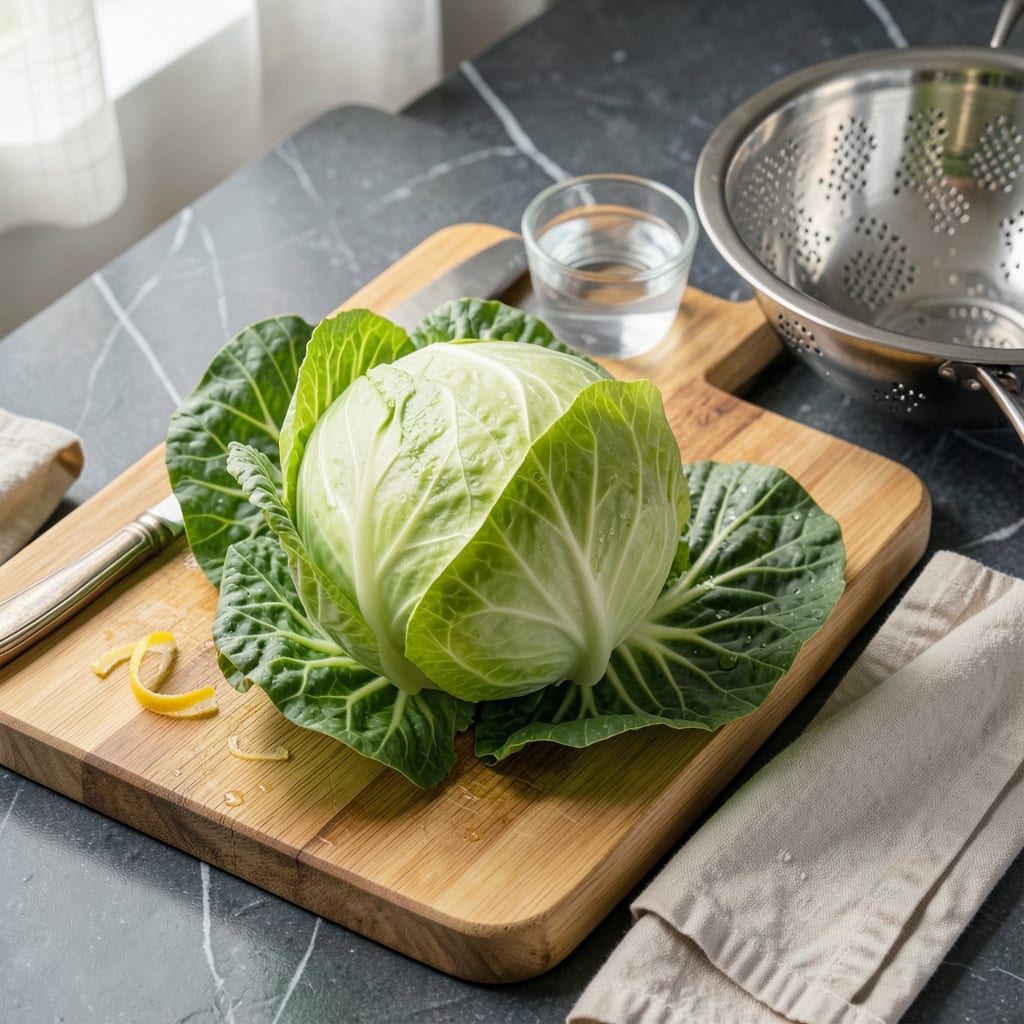
Mastering the art of softening cabbage leaves transforms this humble vegetable into a versatile canvas for countless dishes. The technique itself is deceptively simple, yet the difference between stiff, unyielding leaves and perfectly pliable ones can make or break recipes like stuffed cabbage rolls or delicate wraps. I’ve refined this method through years of testing—both in professional kitchens and at home—because proper preparation ensures your final dish holds together beautifully without tearing or overcooking.
What makes this process foolproof is understanding that cabbage leaves require gentle coaxing rather than aggressive cooking. Whether you choose boiling, steaming, or the microwave method, the goal remains consistent: soften the leaves just enough to make them workable while preserving their structure and natural sweetness. The technique works equally well for green, savoy, or red cabbage, though each variety responds slightly differently to heat and moisture.
The applications extend far beyond traditional stuffed cabbage. Perfectly softened leaves create elegant wraps for grain bowls, sturdy vessels for Asian-inspired spring rolls, or even delicate layers in vegetarian lasagna. Since the softening process uses only water and heat, it remains completely vegan—though your final filling choices will determine the dish’s dietary classification. The method’s simplicity belies its importance: this single preparation step elevates cabbage from supporting player to star ingredient.
Timing proves critical here. Over-softened leaves become mushy and difficult to handle, while under-processed ones crack when rolled. The ideal window—typically between 2 to 5 minutes depending on method—produces leaves that bend without breaking and hold fillings securely. This precision separates good cabbage dishes from exceptional ones, where each bite maintains perfect texture and presentation.
📚 In This Guide
- What You’ll Need
- Instructions
- Tips and Common Mistakes
What Youll Need
- ● 1 head of green or savoy cabbage – Fresh, firm, and medium-sized (about 2–3 lbs). Avoid wilted or yellowing leaves. 🥬
- ● Large pot or Dutch oven – At least 6-quart capacity, with a lid (stainless steel or enamel works best).
- ● Water – Enough to fill the pot halfway (roughly 8–10 cups, depending on pot size).
- ○ Salt – 1–2 tablespoons of kosher or sea salt (optional, for flavor and texture).
- ● Tongs or a slotted spoon – For safely handling hot leaves.
- ● Sharp chef’s knife – To trim thick stems if needed.
- ● Cutting board – Large enough to hold a whole cabbage head (12″x18″ recommended).
- ● Colander or strainer – For draining and cooling leaves quickly.
- ○ Ice bath (optional) – A large bowl filled with ice water to shock leaves for extra tenderness.
- ● Paper towels or clean kitchen towel – For patting leaves dry post-softening.
- ○ Lemon juice or vinegar (optional) – 1–2 tablespoons to preserve bright color.
Step-by-Step Instructions for Softening Cabbage Leaves
This method ensures perfectly pliable leaves every time, ideal for stuffing without tearing or cracking.
Select and Prepare the Cabbage Head
Begin with a firm, fresh head of cabbage. I recommend green or Savoy varieties for their flexibility and mild flavor. Remove any loose outer leaves and rinse the head under cool water to eliminate dirt or debris. Pat it completely dry with paper towels—residual moisture will steam the leaves unevenly during the softening process.
Using a sharp chef’s knife, carefully cut around the core at a slight angle to remove it without separating the leaves. This creates a conical hole about 1½ inches deep. The intact core acts as a natural anchor, preventing leaves from detaching prematurely during blanching.
Blanch the Whole Cabbage Head
Fill a large stockpot with water, leaving enough room for the cabbage to submerge completely without overflow. Bring to a rolling boil over high heat. The water volume should be sufficient to maintain a vigorous boil when the cabbage is added—this ensures even heat distribution.
Using tongs, lower the prepared cabbage head core-side down into the boiling water. The outer leaves will begin to soften and separate within 2-3 minutes. Monitor closely—you want the leaves pliable enough to peel away easily but not so soft they lose structural integrity. Test by gently pulling on an outer leaf; it should release with minimal resistance.
Peel and Trim the Leaves
Transfer the blanched cabbage to a colander and run under cold water for 30 seconds to halt the cooking process. This prevents over-softening while you work. Place the cabbage core-side up on a cutting board. Beginning with the outermost leaves, carefully peel them away one at a time using a gentle rocking motion.
Lay each leaf flat and use kitchen shears to trim the thickest part of the stem to about ¼ inch from the base. This creates a flat edge for rolling while maintaining the leaf’s structural integrity. Discard any leaves with significant tears or holes. You should yield 12-16 usable leaves from a standard head, depending on size.
Optional Secondary Softening for Thick Leaves
For particularly thick or stubborn leaves (common with winter cabbage varieties), arrange them in a single layer on a microwave-safe plate. Cover with a damp paper towel and microwave on high power for 20-30 seconds. This targeted steam treatment softens the fibrous veins without overcooking the delicate leaf edges.
Alternatively, return the leaves to the boiling water for an additional 30-45 seconds, then shock in ice water. Test for doneness by folding a leaf—it should bend without cracking along the spine. Be cautious not to oversoften; the leaves will continue to soften slightly as they cool and absorb filling moisture.
Prepare for Immediate Use or Storage
Lay the softened leaves between damp paper towels and stack them on a plate. Cover with plastic wrap if not using immediately—this prevents dehydration while maintaining pliability. For optimal results, use the leaves within 2 hours of preparation. The residual heat and moisture create the ideal conditions for rolling.
If storing longer, refrigerate the stacked leaves for up to 24 hours. To revive refrigerated leaves, dip them briefly in warm water for 10-15 seconds before using. This restores their flexibility and makes them easier to work with when assembling stuffed cabbage rolls or other wrapped preparations.
Tips and Common Mistakes for Perfectly Softened Cabbage Leaves
Mastering the technique for pliable yet sturdy cabbage leaves requires attention to detail at each critical stage. Here’s what I’ve learned through years of perfecting this process.
Blanching Precision: The 2-3 minute blanching window in Step 2 is non-negotiable for optimal results. I recommend setting a timer for exactly 2 minutes, then testing leaf pliability by gently tugging an outer leaf. If it releases cleanly without tearing, proceed immediately to the ice water shock. This brief but critical exposure to high heat softens the fibrous structure just enough while preserving the leaf’s integrity for rolling. Over-blanching by even 30 seconds can lead to limp leaves that tear during assembly.
Core Removal Technique: When executing Step 1’s core removal, use a chef’s knife with a slight rocking motion rather than a straight downward cut. This creates the recommended 1½-inch conical depression while maintaining the head’s structural integrity. A poorly removed core can cause leaves to detach prematurely during blanching, resulting in uneven softening and wasted leaves. I’ve found that holding the cabbage at a 45-degree angle on the cutting board provides the best control for this precise cut.
Post-Blanch Handling: The 30-second cold water shock in Step 3 serves two critical functions: halting the cooking process and preserving the leaves’ vibrant color. Use a colander with large holes to ensure thorough drainage, then immediately transfer to a clean kitchen towel. Gently patting the leaves dry at this stage prevents excess moisture from diluting your filling flavors later. For particularly stubborn winter cabbage varieties, I extend this shock to 45 seconds to fully arrest the cooking process before peeling.
Storage Strategy: When preparing leaves in advance as mentioned in Step 5, the damp paper towel method is essential for maintaining pliability. Stack no more than 6 leaves between each towel layer to prevent compression damage. For refrigerated storage beyond the initial 2-hour window, I’ve developed a revival technique: place the stacked leaves in a sealed container with a damp (not wet) paper towel on top, which maintains ideal humidity levels for up to 24 hours without compromising texture.
Pro Tips for Soften Cabbage Leaves
- Mastering the technique for pliable yet sturdy cabbage leaves requires attention to detail at each critical stage. He…
- Blanching Precision: The 2-3 minute blanching window in Step 2 is non-negotiable for optimal results. I recommend set…
- Core Removal Technique: When executing Step 1’s core removal, use a chef’s knife with a slight rocking motion rather …
Frequently Asked Questions
How long does it take to soften cabbage leaves?
Most methods take 3–10 minutes—boiling or steaming is fastest (3–5 minutes), while baking or microwaving may need 8–10. Check tenderness with a fork; leaves should bend easily without tearing. Over-softening makes them mushy, so keep an eye on them!
Can I soften cabbage leaves without boiling them?
Absolutely! Try these no-boil methods:
- Steaming: 5–7 minutes in a basket (retains more nutrients ).
- Microwaving: 2–3 minutes with a damp towel (quick fix!).
- Freezing: Thaw frozen leaves for 10 minutes—they’ll soften naturally.
Why are my cabbage leaves still tough after boiling?
Common culprits:
- Undercooking—try 1–2 extra minutes.
- Old cabbage—fresh heads soften faster.
- Crowded pot—boil in batches for even heat.
Do I need to remove the cabbage core before softening?
Yes! The core is too tough to soften evenly. Use a sharp knife to cut a cone-shaped wedge from the stem end, then separate leaves. Pro tip: Freeze the whole head for 24 hours first—leaves will peel off effortlessly after thawing!
Can I soften cabbage leaves ahead of time?
Yes, but store them properly:
- Fridge: Keep in airtight containers for 1–2 days (dab dry first).
- Freezer: Blanch, cool, and freeze for up to 3 months (great for meal prep!).
Now you’ve got the secret to perfectly tender cabbage leaves—whether you’re rolling, stuffing, or sautéing! 🥬✨ With just a little prep (and the right technique), you can say goodbye to tough, chewy leaves and hello to dishes that melt in your mouth. Ready to put your new skills to the test? Try whipping up a batch of classic stuffed cabbage rolls or experiment with a crispy stir-fry. Your taste buds will thank you!

Trained in classic French technique but raised on slow-cooked ribs and spicy rubs, she blends culinary skill with smoke and soul.
- Recipe for Boneless Pork Chops in Cast Iron Skillet: Sear and Baste to Juicy Perfection - October 3, 2026
- Recipe for Boneless Cross Rib Roast: Slow-Roasted Beef with Herb Crust - October 3, 2026
- Hamburgers in Sauce Recipe Crock Pot: Slow-Cooked Savory Delight - October 3, 2026