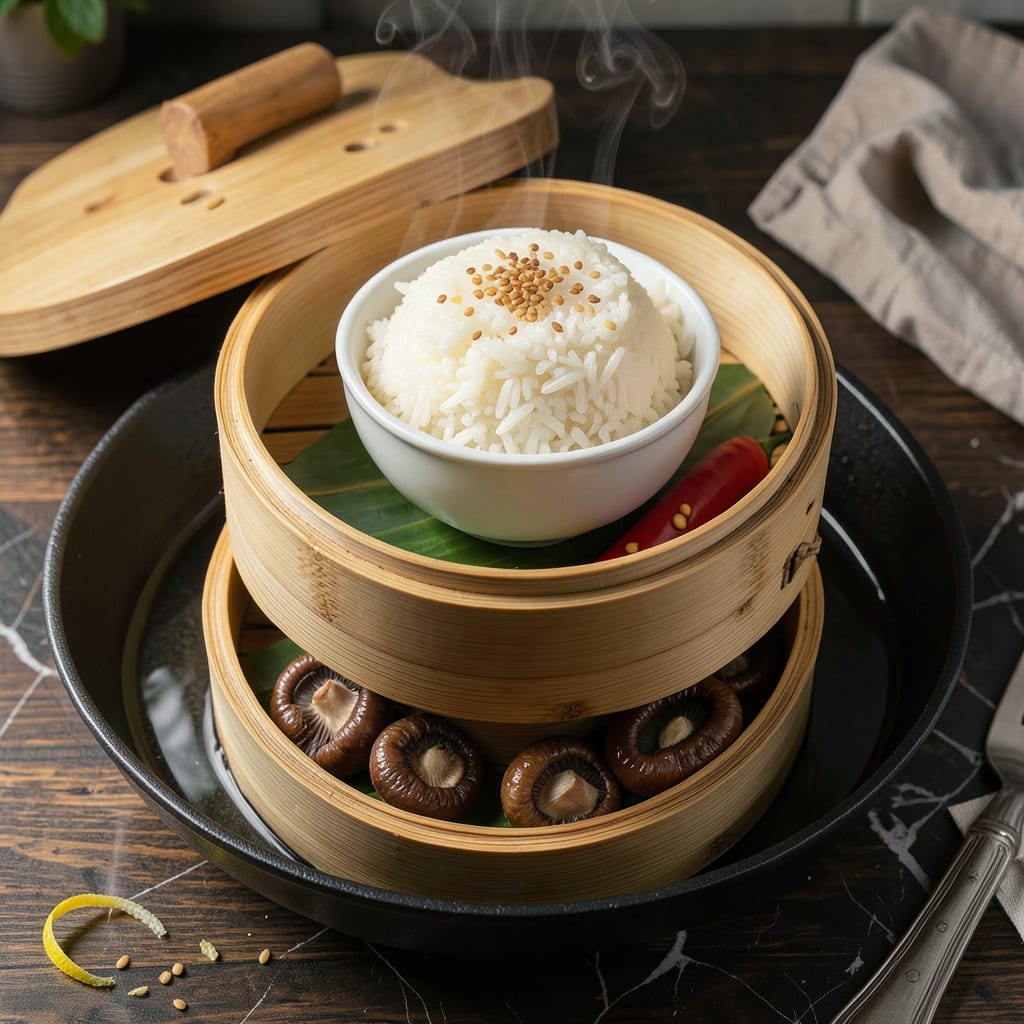
I’ll be real with you—steaming rice in a bamboo steamer changed my whole approach to cooking grains. There’s something about that gentle, even heat that transforms ordinary rice into perfectly fluffy, aromatic perfection. No more gluey bottoms or undercooked centers, just tender grains that separate beautifully every single time.
Here’s the thing—this method isn’t just traditional, it’s foolproof when you know the right steps. I learned the hard way that soaking the rice first makes all the difference, and lining your steamer properly prevents sticky disasters. The bamboo itself adds a subtle earthy note that you just can’t get from electric cookers.
What you’re after is that ideal texture: grains that hold their shape but yield easily to the bite, with just enough moisture to feel luxurious. The first time I pulled back that steamer lid and saw those perfect little rice pyramids, I knew I’d never go back to my old methods.
Best part? This works for any rice variety—from fragrant jasmine to sticky glutinous rice. Once you master the basics, you can start playing with flavor infusions like pandan leaves or citrus zest. Let me walk you through exactly how to get it right.
📚 In This Guide
- What You’ll Need
- Instructions
- Tips and Common Mistakes
What Youll Need
- ● Bamboo steamer (8–12 inches in diameter, with a lid)
- ● Rice (1–2 cups, jasmine or short-grain recommended)
- ● Water (enough to fill a pot/wok 1–2 inches deep for boiling)
- ● Large pot or wok (wide enough to fit the steamer without touching the sides)
- ○ Cheesecloth or parchment paper (optional, to line the steamer and prevent sticking)
- ● Kitchen towel or heat-resistant gloves (for handling the hot steamer)
- ● Timer (or smartphone) to track steaming time
- ● Rice paddle or fork (to fluff the rice after steaming)
- ○ Steamer liner leaves (optional, like lotus or banana leaves for extra aroma)
Instructions
Steaming rice in a bamboo steamer is simpler than you might think—just follow these steps for perfect results.
Prepare the Bamboo Steamer and Water
Start by soaking your bamboo steamer in warm water for 10-15 minutes. This prevents the bamboo from absorbing moisture from the rice and potentially cracking during steaming. While it soaks, fill a pot or wok with 2-3 inches of water—enough to create steam but not so much that it touches the steamer when placed inside.
Bring the water to a rolling boil over high heat. You want vigorous steam production before adding the rice. I like to place a heatproof plate or banana leaf in the bottom of the steamer to prevent any rice from falling through the slats—this makes cleanup easier too.
Rinse and Soak the Rice
While the steamer soaks, rinse your rice under cold water until the water runs clear. This removes excess starch that could make your rice gummy. For most white rice varieties, I use a 1:1 rice-to-water ratio by volume, but check your specific rice package for guidance.
After rinsing, let the rice soak in fresh water for 20-30 minutes. This hydration step ensures even cooking and fluffier results. Drain the rice completely before transferring it to the steamer—any excess water will dilute the steam and affect the texture.
Arrange the Rice in the Steamer
Spread the drained rice evenly in the bamboo steamer, leaving about 1 inch of space around the edges. This allows steam to circulate freely. For best results, don’t pack the rice down—keep it loose so each grain cooks evenly.
If you’re cooking a large quantity, you can stack multiple steamers, but make sure to rotate their positions halfway through cooking. Place the steamer over the boiling water, then immediately cover with the bamboo lid. The tight seal traps steam, which is essential for even cooking.
Steam to Perfection
Steam the rice over medium-high heat for 20-25 minutes. Resist the temptation to peek—every time you lift the lid, you lose valuable steam and extend the cooking time. You’ll know it’s done when the rice is tender and the individual grains separate easily when fluffed with a fork.
If you’re unsure, taste a few grains—they should be fully cooked with no chalky center. For firmer rice, check at the 20-minute mark; for softer rice, let it go the full 25 minutes. The exact time depends on your rice variety and personal preference.
Rest and Serve
Once cooked, turn off the heat but leave the steamer covered for an additional 5 minutes. This resting period allows the rice to absorb any remaining steam and finish cooking gently. It also makes the grains less likely to stick together when serving.
Use a fork to gently fluff the rice before serving. The grains should be distinct, glossy, and perfectly tender. Serve immediately while hot, or transfer to a covered bowl to keep warm. Properly steamed rice will stay fluffy for up to 30 minutes if kept covered.
Tips and Common Mistakes
Mastering bamboo steamer rice is all about understanding the small details that make a big difference.
Steamer Preparation: Don’t rush the 10-15 minute soaking time for your bamboo steamer in Step 1. I learned this the hard way when my first steamer cracked from dryness. The warm water bath prevents the bamboo from absorbing moisture from your rice, which could leave you with undercooked grains. While it soaks, use that time to prep your rice—it’s the perfect window for rinsing and soaking.
Rice Hydration Secret: The 20-30 minute soak in Step 2 might seem optional, but it’s crucial for even cooking. I’ve tested this with and without soaking, and the difference is dramatic—soaked rice cooks uniformly with no chalky centers. Just be sure to drain it completely; any excess water in the steamer will create a soggy bottom layer rather than perfectly fluffy grains.
Heat Management: When you reach Step 4, maintaining that medium-high heat is key. Too high and you’ll boil off your water before the rice cooks; too low and you’ll get uneven results. I like to keep a kettle of hot water nearby to quickly replenish the pot if needed. Remember, the 20-25 minute cooking time assumes consistent steam—any heat fluctuations will affect your timing.
Resting Period: That final 5-minute rest in Step 5 isn’t just for show. I used to skip this until I noticed my rice would sometimes stick together when serving. This brief covered rest allows the grains to absorb any remaining steam and firm up slightly, making them easier to fluff. It’s the difference between good rice and restaurant-quality rice that stays perfectly separate.
Pro Tips for Steam Rice In A Bamboo Steamer
- Mastering bamboo steamer rice is all about understanding the small details that make a big difference.
- Steamer Preparation: Don’t rush the 10-15 minute soaking time for your bamboo steamer in Step 1. I learned this the h…
- Rice Hydration Secret: The 20-30 minute soak in Step 2 might seem optional, but it’s crucial for even cooking. I’ve t…
Frequently Asked Questions
How long does it take to steam rice in a bamboo steamer?
Typically, white rice takes 20–25 minutes, while brown rice needs 40–45 minutes. Soak white rice for 15–30 minutes beforehand to speed up cooking. Check doneness by tasting—grains should be tender with no crunch!
Can I use a metal steamer instead of bamboo?
Yes! A metal steamer works fine, but bamboo absorbs excess moisture, giving rice a subtly sweeter flavor. If using metal, line it with cheesecloth or parchment to prevent sticking. Bamboo also adds a rustic touch!
Why is my rice sticky or mushy after steaming?
Overcrowding or excess water is usually the culprit. Use a 1:1 rice-to-water ratio (soaked), spread rice in an even layer, and avoid packing it down. For fluffier grains, rinse rice until water runs clear before soaking.
Do I need to oil the bamboo steamer before use?
Nope! Bamboo steamers are naturally non-stick when seasoned (rub with oil and heat before first use). For stubborn residue, scrub gently with hot water and a soft brush—never soap! A quick vinegar rinse keeps it fresh.
What’s the best rice type for bamboo steaming?
Jasmine or short-grain white rice (like sushi rice) work beautifully—they absorb steam evenly for a light, slightly sticky texture. Avoid long-grain basmati unless you prefer drier grains. For variety, try steaming black or red rice (add 5–10 extra minutes)!
Steaming rice in a bamboo steamer is simpler than you think—just soak, layer, and let the steam work its magic! 🍚 With the right technique, you’ll get perfectly fluffy, aromatic rice every time, without sticky messes or burnt bottoms. Now that you’ve mastered the basics, why not experiment with jasmine, black, or even sushi rice for fun new flavors?
Ready to level up? Try steaming veggies or dumplings alongside your rice for a full bamboo-steamed feast! 🥢

Trained in classic French technique but raised on slow-cooked ribs and spicy rubs, she blends culinary skill with smoke and soul.
- Recipe for Boneless Pork Chops in Cast Iron Skillet: Sear and Baste to Juicy Perfection - October 3, 2026
- Recipe for Boneless Cross Rib Roast: Slow-Roasted Beef with Herb Crust - October 3, 2026
- Hamburgers in Sauce Recipe Crock Pot: Slow-Cooked Savory Delight - October 3, 2026