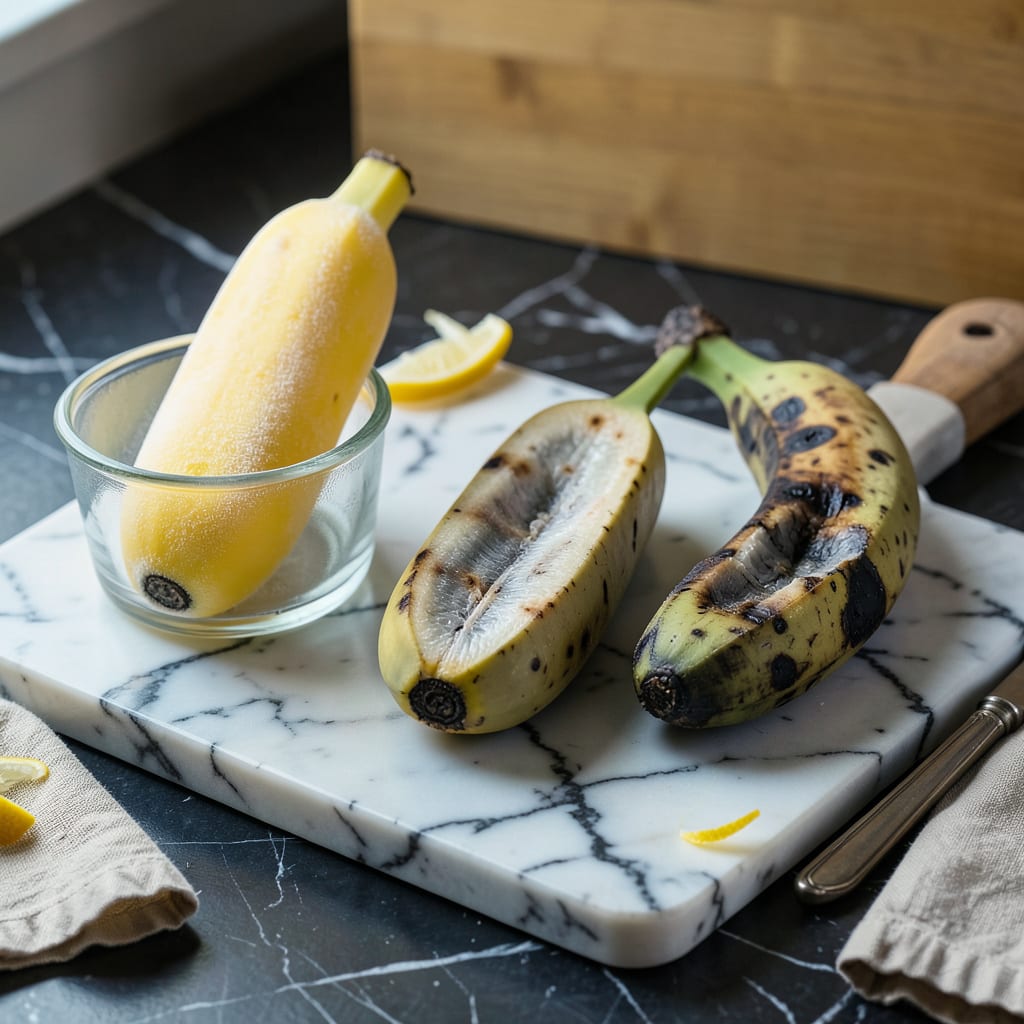
Frozen bananas are bad if they develop ice crystals with a sour or fermented smell, mushy texture when thawed, or visible dark brown/black spots beyond normal freezing discoloration. Toss any with mold or an off-putting odor.
Freezing bananas can extend their shelf life, but it doesn’t stop all deterioration. The cell walls break down over time, which is why thawed bananas sometimes turn mushy—this happens faster if they weren’t properly prepped before freezing. 🔥 I always recommend peeling and slicing them first to minimize air exposure, which slows oxidation (that’s what causes the unappetizing brown spots). Even in the freezer, enzymes remain active, so trust your nose: any sharp or alcoholic scent means bacteria have taken over, and it’s time to toss them.
💡 In This Article
- Visual and Sensory Signs of Spoiled Frozen Bananas
- Safe Storage and Thawing Tips for Frozen Bananas
Visual and Sensory Signs of Spoiled Frozen Bananas
When bananas freeze, their cell walls rupture from ice crystal formation, which is why they turn mushy upon thawing. This process also exposes the fruit’s sugars to air, accelerating oxidation—the same reaction that makes sliced apples brown.
🔥 The difference is that freezing slows (but doesn’t stop) this chemical reaction, so you’ll often see dark brown or black patches that weren’t there before freezing. These are normal to some extent, but if the discoloration spreads beyond the peel’s original spots, it’s a red flag.
The real danger comes from microbial growth. While freezing halts most bacteria and mold, it doesn’t kill all spores. If your frozen bananas develop a sour, vinegary, or alcoholic smell, that’s fermentation in action—yeasts and bacteria breaking down sugars into acids and gases.
💫 A healthy frozen banana should smell neutral or slightly sweet when thawed. Any ammonia-like or sharp odors mean proteins are decomposing, which happens when enzymes remain active in improperly stored fruit.
Texture changes tell a critical story. Freshly thawed bananas should feel soft but still hold their shape—like overripe fresh bananas. If they collapse into a watery, grainy mush or have ice crystals that don’t dissolve during thawing, the cell structure has broken down too far.
This often happens when bananas were frozen at their peak ripeness (when enzymes are most active) or stored beyond 3 months. The mushy texture also creates pockets where bacteria can thrive, even in cold temperatures.
Watch for these specific warning signs:
- Surface crystals: Large, white ice formations that don’t melt during thawing indicate freezer burn and potential contamination
- Sticky residue: A slimy film when thawed suggests bacterial growth—especially if it has a glossy sheen
- Color shifts: Greenish-black spots (not just brown) may indicate mold spores taking hold
- Bubbles: Tiny gas pockets in the flesh mean fermentation is producing carbon dioxide
Here’s what most people miss: freezing doesn’t reset the clock on spoilage—it just presses pause. If your bananas were already overripe with soft spots before freezing, those areas will deteriorate faster.
🌟 I always recommend freezing bananas at their “just ripe” stage (yellow with minimal brown spots) and using them within 2-3 months for best quality. The longer they stay frozen, the more their texture and flavor degrade, even if they’re technically “safe” to eat.
The freezer environment itself matters too. Temperature fluctuations cause ice crystals to form and melt repeatedly, which physically damages cell walls. This is why bananas stored in freezer door shelves (where temps vary most) spoil faster than those kept in the back.
✨ For reference, commercial frozen fruit is typically stored at a constant -10°F to minimize this damage—far colder than most home freezers which usually hover around 0°F.

Trained in classic French technique but raised on slow-cooked ribs and spicy rubs, she blends culinary skill with smoke and soul.
- Recipe for Boneless Pork Chops in Cast Iron Skillet: Sear and Baste to Juicy Perfection - October 3, 2026
- Recipe for Boneless Cross Rib Roast: Slow-Roasted Beef with Herb Crust - October 3, 2026
- Hamburgers in Sauce Recipe Crock Pot: Slow-Cooked Savory Delight - October 3, 2026