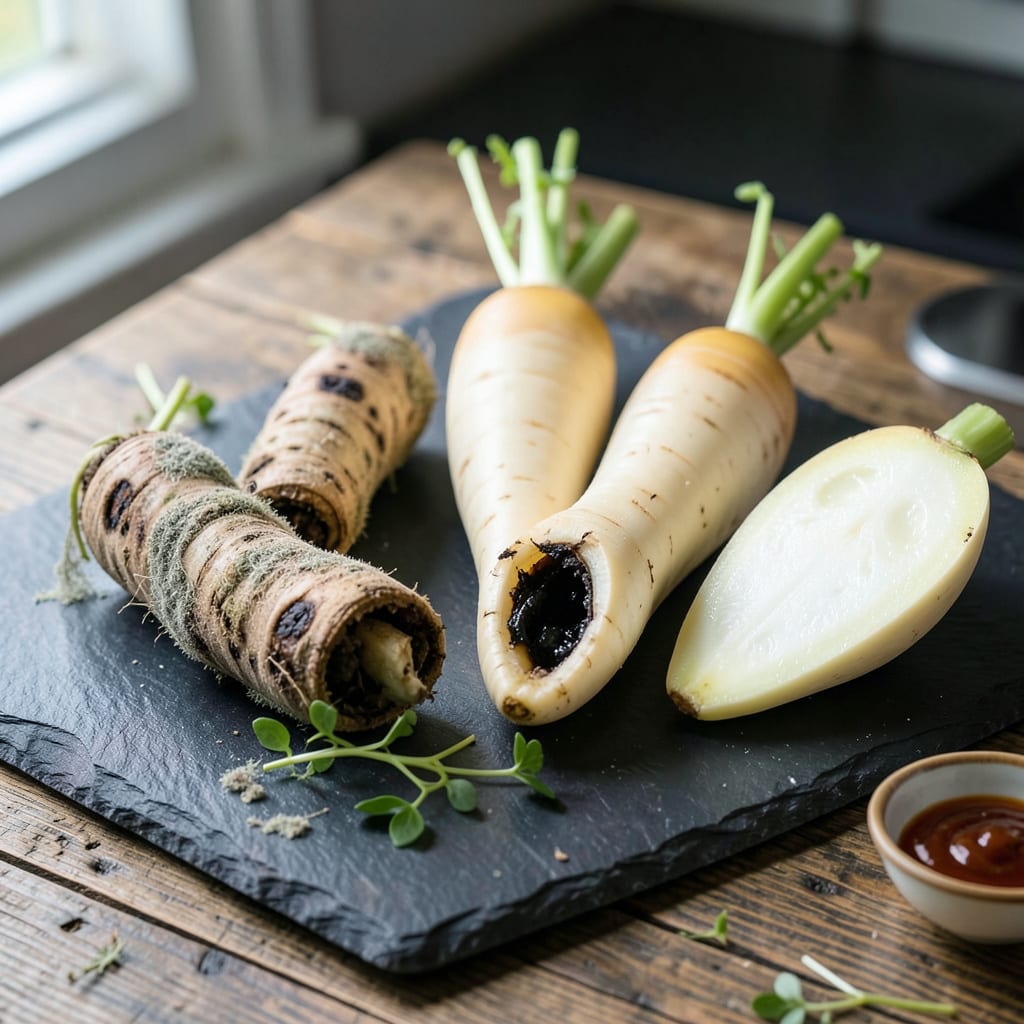
Bad parsnips become soft, mushy, or slimy to the touch, develop dark brown or black spots, and emit a sour or musty odor. Fresh ones should be firm, pale beige, and smell earthy but not unpleasant.
I always check parsnips like I would potatoes—they share similar spoilage patterns but with a more delicate structure. 🔥 The earthy aroma should remind you of freshly turned soil; if it smells sharp or fermented, that’s your first red flag. What many don’t realize is that parsnips degrade faster when stored near ethylene-producing fruits like apples or bananas, which accelerate the softening process. I’ve found that even slightly wrinkled skin can indicate dehydration, while true sliminess means bacterial growth has started.
💡 In This Article
- Visual and Textural Signs of Spoiled Parsnips
- Storing Parsnips to Extend Freshness and Avoid Waste
Visual and Textural Signs of Spoiled Parsnips
Fresh parsnips have a crisp, fibrous texture similar to carrots but with a slightly woody core. As they degrade, the cell walls break down due to enzymatic activity, causing the flesh to lose its turgor pressure.
Early spoilage shows as subtle softening at the tips or where the root was cut—press your fingernail into the surface and watch for indentations that don’t bounce back. This is caused by pectin degradation, which normally gives parsnips their firm structure.
Discoloration follows a predictable pattern. Surface spots start as light brown (oxidation from cut surfaces), then darken to black as phenolic compounds react with oxygen. 🔥 Advanced decay shows grayish streaks in the flesh—this is vascular browning from microbial invasion.
Compare this to fresh parsnips, which should be uniform pale beige with maybe a hint of green at the crown. A cross-section of spoiled parsnips often reveals a watery, translucent ring just under the skin, indicating cellular breakdown.
The texture progression is telling. Stage 1: Slightly bendy but still snaps cleanly. Stage 2: Rubbery with no crisp resistance. Stage 3: Mushy enough to dent with gentle pressure. Stage 4: Slimy surface film from bacterial colonies.
I once stored parsnips next to apples for a week—they went from firm to rubbery in just 4 days due to ethylene gas exposure, proving how sensitive they are to storage conditions.
Moisture loss creates wrinkled, shriveled skin—different from the smooth, slightly waxy surface of fresh roots. This happens when the root loses 10-15% of its water content. Mold appears as fuzzy white or green patches, usually at the crown where moisture collects. The most dangerous sign?
A hollow core when sliced—this indicates advanced internal rot that isn’t visible from the outside.
Here’s what’s happening chemically: As parsnips spoil, starches convert to sugars (making them sweeter but softer), while cell membranes rupture. This releases enzymes that create off-flavors. The musty odor comes from geosmin and 2-methylisoborneol—compounds produced by soil bacteria that proliferate as the vegetable decomposes.
Fresh parsnips should smell like damp earth with a hint of anise; spoiled ones smell like wet cardboard or sour milk.
Pro tip: Cut off the top 1/2 inch of suspect parsnips. If the exposed flesh is still crisp and white, the rest is likely fine. But if you see gray streaks or feel any grittiness (from crystallized sugars), the entire root should be discarded.
I’ve found that parsnips stored at 32-35°F with 90% humidity last 3-4 weeks, while those kept at room temperature decline within 5-7 days. ✨

Trained in classic French technique but raised on slow-cooked ribs and spicy rubs, she blends culinary skill with smoke and soul.
- Meat Loaf Recipe With Beef And Pork: Homestyle Blend With Rich Gravy - October 3, 2026
- Hamburger Patty Recipe No Egg: Juicy Bind With Breadcrumbs and Milk - October 3, 2026
- Recipe for Oven Baked Halibut: Buttery White Fish with Zesty Lemon Topping - October 3, 2026