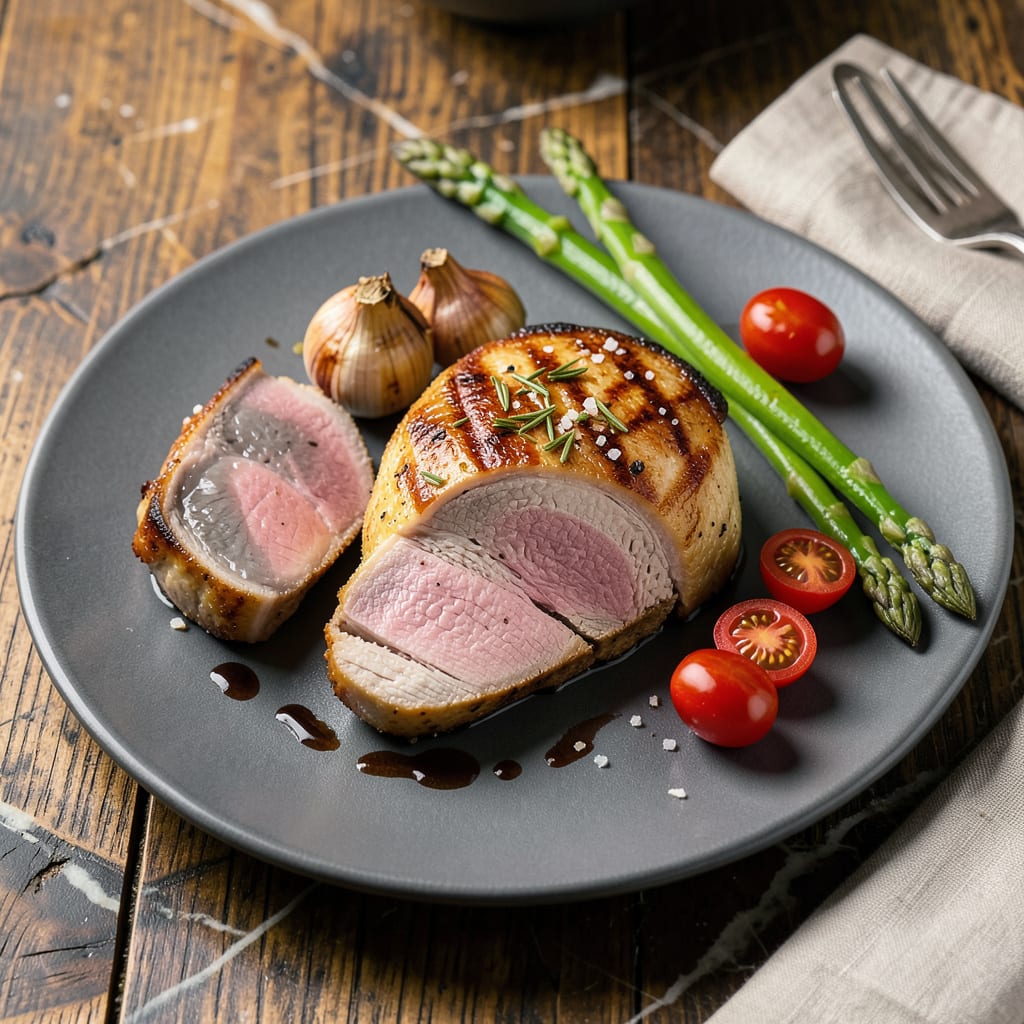
Undercooked pork appears pinkish or reddish inside, releases clear or bloody juices when cut, and feels soft or rubbery to the touch. Always use a meat thermometer—safe internal temperature is 145°F for whole cuts and 160°F for ground pork.
I’ve seen countless cooks get fooled by pork’s tricky appearance—what looks done on the outside can still be raw inside. 🔥 The color test alone isn’t reliable because pork can turn white before reaching safe temps, especially with lean cuts like tenderloin. That’s why I always double-check with a thermometer, even when the juices run clear. Remember, pork continues cooking after you pull it from heat, so factor in a 3-5 minute rest time for carryover cooking to hit that perfect doneness.
What many don’t realize is that different cuts behave differently—shoulder stays pinker longer than loin, and ground pork needs higher temps because grinding distributes bacteria throughout. ✨ I learned this the hard way judging BBQ competitions where appearance can be deceiving. The thermometer doesn’t lie, and neither does that telltale rubbery texture when you press undercooked meat with tongs.
💡 In This Article
- Visual and Physical Signs of Undercooked Pork
- Using a Thermometer to Test Pork Doneness Accurately
Visual and Physical Signs of Undercooked Pork
Let me walk you through what I’ve learned from years of judging BBQ competitions—pork’s appearance changes dramatically by cut. A pork loin turns from deep pink to ivory when fully cooked, while shoulder stays slightly rosy even at safe temps due to its higher fat content.
The real giveaway is the juice color: undercooked pork releases clear or slightly bloody liquid when pierced, while properly cooked meat shows light amber juices with no red tinge. 🔥
Texture tells the full story. Press the meat with tongs—undercooked pork feels soft and spongy, almost like raw chicken breast, while perfectly cooked pork offers firm resistance that springs back. Shoulder cuts are trickier because their collagen breaks down slowly; they might feel tender when undercooked but lack that “pull-apart” quality of properly rendered meat.
I always compare it to the difference between pressing a raw steak versus a medium-rare one. ✨
The fiber structure changes dramatically during cooking. At 120-130°F, pork fibers are still tightly bound, creating that rubbery resistance. As temps climb past 140°F, proteins coagulate and fibers separate, which is why properly cooked pork slices cleanly while undercooked meat tears.
Ground pork presents special challenges—its exposed surface area means bacteria distribute throughout, requiring that higher 160°F threshold for safety. 💫
Here’s what most home cooks miss: color varies by pH and diet. Heritage breed pork often stays pinker than commercial pork due to different muscle structure. The same cut from a pasture-raised hog might appear underdone at safe temps compared to grain-fed pork.
That’s why I always recommend checking multiple spots—especially near bones where heat penetrates slower. The area closest to the bone is typically the last to cook through. ⚡
For visual learners, imagine this comparison: undercooked pork looks like rare beef with glossy, translucent fibers, while properly cooked pork resembles the texture of cooked chicken breast but with finer grain. The juices should coat the back of a spoon without separating into water and fat layers.
When in doubt, make a small test cut—the center should appear uniform in color without any gradient from pink to white. 🌟
Pro tip from my competition days: shine a flashlight at an angle across the cut surface. Undercooked pork will show iridescent rainbow sheen from light refracting through moist fibers, while properly cooked meat appears matte. This trick works especially well with darker cuts like shoulder where color changes are more subtle.
The light test reveals what your eyes might miss in normal kitchen lighting. 💛

Trained in classic French technique but raised on slow-cooked ribs and spicy rubs, she blends culinary skill with smoke and soul.
- Recipe for Boneless Pork Chops in Cast Iron Skillet: Sear and Baste to Juicy Perfection - October 3, 2026
- Recipe for Boneless Cross Rib Roast: Slow-Roasted Beef with Herb Crust - October 3, 2026
- Hamburgers in Sauce Recipe Crock Pot: Slow-Cooked Savory Delight - October 3, 2026