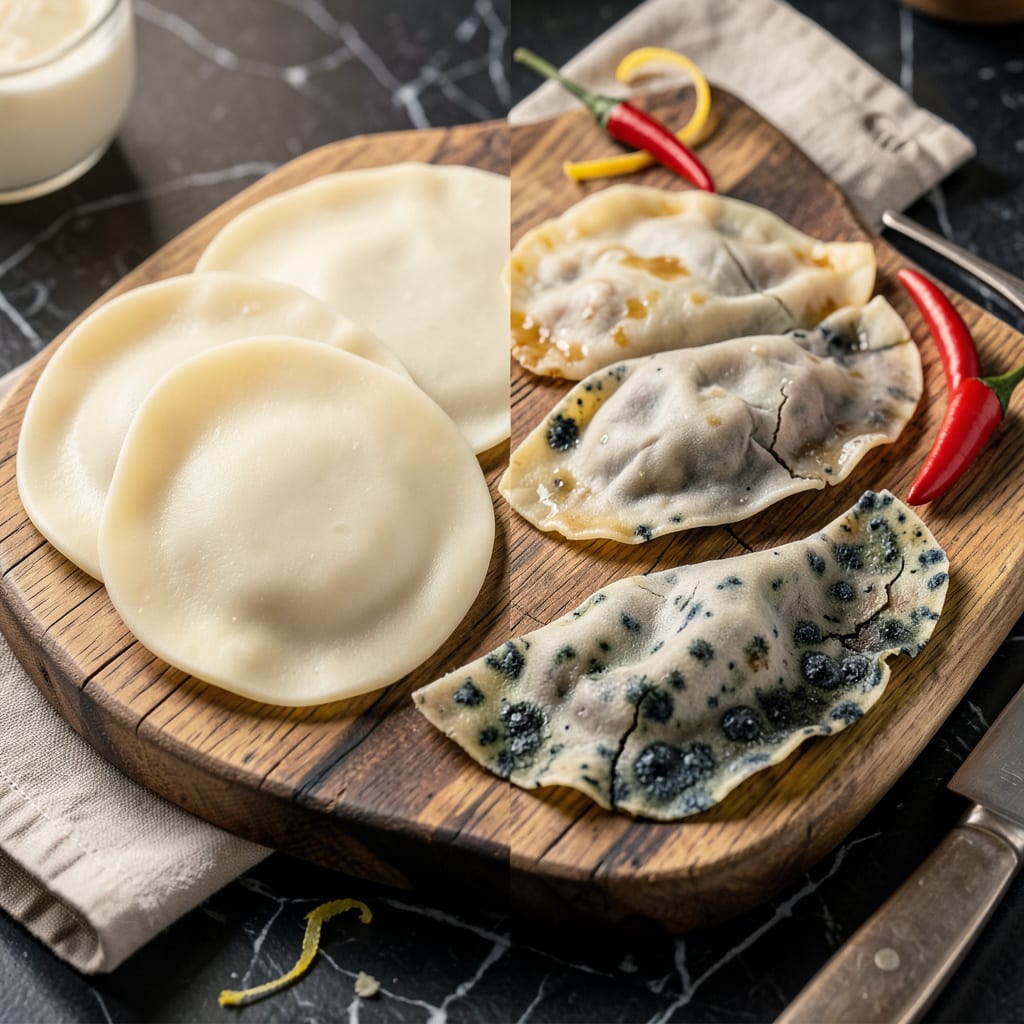
Fresh wonton wrappers should be soft, pliable, and slightly moist with no sour smell. Discard them if they’re dry, brittle, cracked, or show mold spots—even small ones. A strong off-odor or slimy texture also means they’ve spoiled.
I’ve learned the hard way that texture and smell are your best guides here. 🔥 Those wrappers rely on precise moisture levels—too dry, and they’ll shatter when folded; too damp, and they become breeding grounds for bacteria. What’s tricky is that even tiny mold spots (think pinprick-sized) can indicate hidden contamination throughout the batch. Always trust your nose, too: a faint sourness often appears before visible signs, especially if they’ve been stored improperly.
💡 In This Article
- Visual and Textural Signs of Spoiled Wonton Wrappers
- Safe Storage and Shelf Life for Wonton Wrappers
Visual and Textural Signs of Spoiled Wonton Wrappers
Wonton wrappers rely on a delicate balance of moisture and starch to maintain their signature pliability. When exposed to air or improper storage, they begin losing moisture at a rate of about 1-2% per hour in dry conditions. This dehydration causes the gluten strands to tighten, transforming the once-supple sheets into brittle, crack-prone layers.
Think of it like overworked playdough—once it dries out, you can’t rehydrate it evenly. 🔥
The color shifts tell a story too. Fresh wrappers have a uniform ivory hue from the wheat flour and egg mixture. As they degrade, enzymatic reactions cause yellowing (from starch breakdown) or grayish patches (oxidation).
These aren’t just cosmetic issues—they signal that the pH is rising, creating an environment where bacteria like Bacillus species can multiply. I’ve seen wrappers develop these discolorations within 3-5 days when left in original packaging at room temperature.
Mold presents differently than you might expect. Instead of fuzzy green spots, wonton wrappers often develop tiny black or white specks (as small as 1mm) along the edges first. This happens because the folded areas trap moisture, creating microclimates where Aspergillus or Penicillium spores germinate.
What’s alarming is that these molds can produce mycotoxins even before visible growth appears—another reason to discard any wrappers with off smells or sticky textures. ✨
Here’s what most people miss about texture changes: A slimy film isn’t just about moisture—it’s bacterial biofilm. When wrappers feel tacky or leave residue on your fingers, it means microorganisms have started breaking down the starches into dextrins.
This process accelerates at temperatures above 40°F, which is why refrigerated wrappers last 2-3 times longer than those left at room temperature. The slime layer also creates an anaerobic environment where harmful bacteria like Listeria can thrive.
Compare good vs. bad wrappers with this test: Gently press a wrapper between your fingers. Fresh ones will spring back slightly and feel cool to the touch. Spoiled wrappers either crack immediately (too dry) or stick to your skin (too moist).
I always check the package seams too—if you see crystalline deposits, that’s recystallized starch indicating multiple freeze-thaw cycles, which degrades the gluten structure permanently. 💫
Pro tip for bulk buyers: Commercial wrappers often contain preservatives like potassium sorbate, which can mask early spoilage signs. That’s why I recommend the “fold test” for these—if the wrapper tears when folded into a simple triangle (without filling), the gluten network has already broken down, even if it looks okay.
This test catches degradation that visual checks might miss.
The packaging matters more than you’d think. Wrappers in vacuum-sealed packs last 30-50% longer because oxygen is the main catalyst for both mold growth and starch retrogradation (that’s the process making them grainy).
Once opened, transfer to an airtight container with parchment between layers—this prevents the “block freezing” effect where wrappers fuse together into unusable sheets. ⚡

Trained in classic French technique but raised on slow-cooked ribs and spicy rubs, she blends culinary skill with smoke and soul.
- Recipe for Boneless Pork Chops in Cast Iron Skillet: Sear and Baste to Juicy Perfection - October 3, 2026
- Recipe for Boneless Cross Rib Roast: Slow-Roasted Beef with Herb Crust - October 3, 2026
- Hamburgers in Sauce Recipe Crock Pot: Slow-Cooked Savory Delight - October 3, 2026