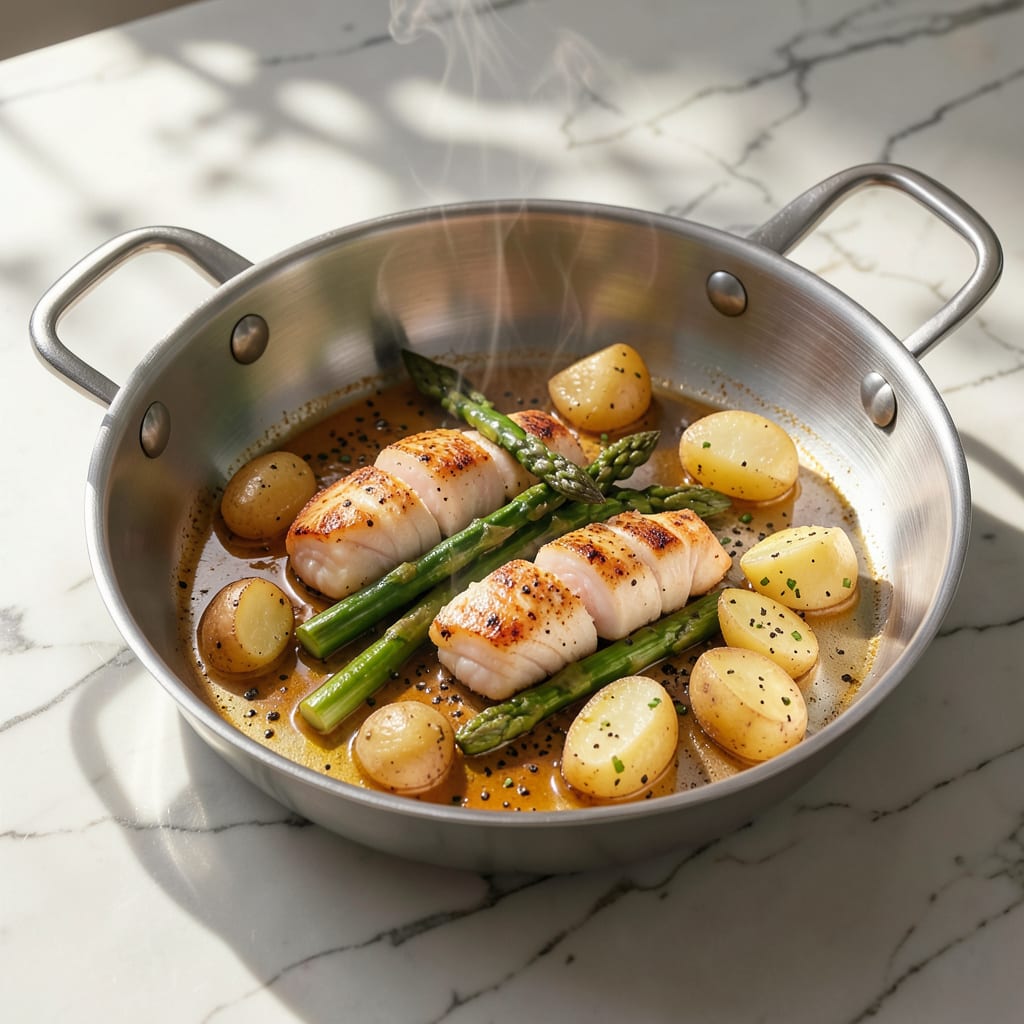
A chef’s pan is a versatile, hybrid cookware piece combining features of a sauté pan and skillet, with straight sides, a wide base, and a lid. It’s ideal for searing, braising, frying, and sauces—perfect for one-pan meals and precise temperature control.
I think of this as the Swiss Army knife of cookware—it’s what I grab when I need to transition from high-heat searing to gentle simmering without switching pans. 🔥 The straight sides and fitted lid make it exceptional for techniques like deglazing or braising, where you need to contain moisture while still having room to stir. What sets it apart from standard skillets is its ability to handle everything from crispy-skinned proteins to delicate reductions, all while maintaining even heat distribution.
In my kitchen, it’s replaced at least three other pans because of how effortlessly it handles sauces, stir-fries, and even shallow frying. ✨ The wide base gives you that perfect sear, while the taller sides prevent splatters when things get lively. It’s the kind of tool that makes weeknight cooking feel more professional—and way less chaotic.
💡 In This Article
- How a Chef’s Pan Differs from Skillets and Sauté Pans
- Top 5 Ways to Use a Chef’s Pan in Everyday Cooking
How a Chef’s Pan Differs from Skillets and Sauté Pans
The magic of a chef’s pan lies in its hybrid design—it borrows the wide, flat base of a skillet (typically 10-12 inches) for superior searing, but adds straight, 2-3 inch sides like a sauté pan. This combination gives you 30-50% more volume than a skillet while maintaining the same surface area for browning.
The straight sides are what make it exceptional for sauces—they prevent liquid from sloshing out when you’re reducing or deglazing. 🔥
Here’s where it outshines both skillets and sauté pans: the lid compatibility. A proper chef’s pan comes with a tight-fitting lid (unlike most skillets), which transforms it into a braising powerhouse. When you’re slow-cooking meats or simmering grains, that lid traps steam and circulates moisture—critical for dishes like risotto or pulled pork.
The heat distribution is also more even than a sauté pan because the sides aren’t sloped, so you don’t get hot spots when stir-frying or caramelizing onions.
Material choice dramatically changes performance. Stainless steel chef’s pans (like my go-to 3-ply clad model) develop fond beautifully for pan sauces and can handle 500°F+ searing, while non-stick versions excel at delicate foods like fish or eggs but max out around 400°F.
The weight matters too—a 3-4 lb pan retains heat better for searing, while lighter versions (2 lbs) are easier to toss for stir-fries. I’ve found the sweet spot is 10-inch stainless with a copper core—it responds instantly to temperature changes. ✨
What most home cooks don’t realize is how the side height affects technique. Those 2-3 inch walls let you build layers of flavor: sear proteins, remove them, then deglaze with wine or stock without losing liquid to evaporation. Try doing that in a skillet—you’ll lose half your sauce to splatter.
The wider base also means you can arrange proteins in a single layer (critical for even browning) while still having room to add aromatics later. It’s why I use mine for everything from crispy-skin chicken thighs to one-pan pasta primaveras. 💫
Even the handle design is intentional. Chef’s pans typically have a long, stay-cool handle (like a skillet) plus a helper handle on the opposite side—this gives you the control of a sauté pan when lifting heavy loads (like a 5 lb pork shoulder) while still allowing one-handed tossing.
The helper handle also lets you stabilize the pan when pouring sauces, which is a game-changer when you’re reducing a pan sauce and need precision. I’ve burned fewer fingers since switching! ⚡
For comparison, here’s how it stacks up:
- Skillet: Sloped sides, no lid, best for quick cooking (eggs, pancakes)
- Sauté Pan: Straight sides, lid, but narrower base (less searing surface)
- Chef’s Pan: Wide base + straight sides + lid = searing, sauces, and braising in one
The real test? Try making a pan-seared steak with red wine reduction in all three. The chef’s pan will give you the best crust, the most efficient deglazing, and zero splatter—while the others force compromises. That’s why it’s the only pan I reach for when I’m cooking restaurant-quality meals at home. 🌟

Trained in classic French technique but raised on slow-cooked ribs and spicy rubs, she blends culinary skill with smoke and soul.
- Recipe for Boneless Pork Chops in Cast Iron Skillet: Sear and Baste to Juicy Perfection - October 3, 2026
- Recipe for Boneless Cross Rib Roast: Slow-Roasted Beef with Herb Crust - October 3, 2026
- Hamburgers in Sauce Recipe Crock Pot: Slow-Cooked Savory Delight - October 3, 2026