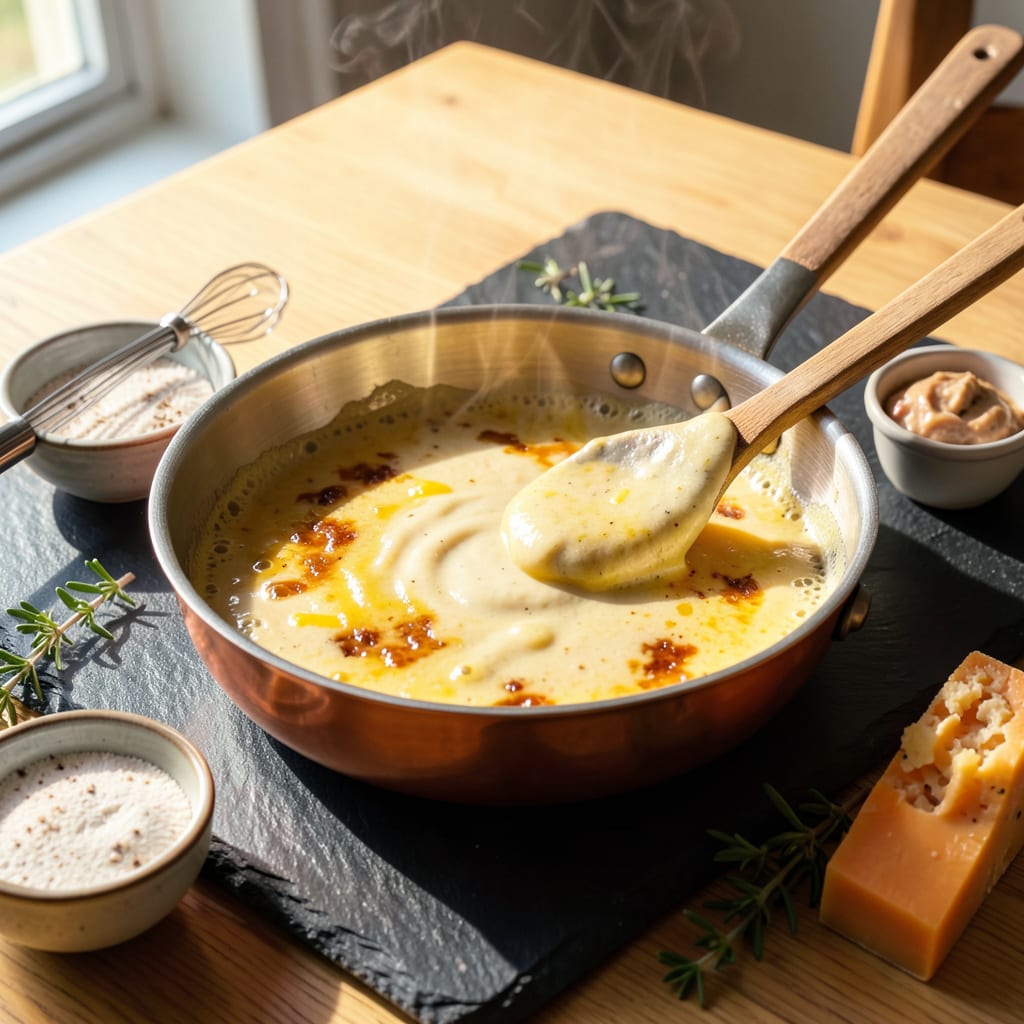
I’ll be real with you—nothing ruins a perfect bowl of mac and cheese faster than a runny cheese sauce. After years of experimenting (and more than a few saucy disasters), I’ve cracked the code for achieving that velvety, restaurant-quality texture without a single grain of flour. The secret? Three simple techniques that work every time.
Here’s the thing—flour isn’t the only way to get that ideal consistency. Whether you’re avoiding gluten or just out of all-purpose, I’ve got you covered with cornstarch slurries, arrowroot magic, and even a sneaky reduction method that concentrates flavor while thickening. Each approach brings something different to the table, from ultra-smooth finishes to glossy, restaurant-worthy shine.
What you’ll end up with is a cheese sauce that clings to pasta, coats veggies, or turns into the ultimate dip—no separation, no graininess, just pure creamy perfection. I’ve tested these methods on everything from nachos to grilled cheese upgrades, and they never let me down. The best part? You probably already have everything you need in your pantry.
No fancy equipment required, just a whisk and about 10 minutes of your time. Let’s fix that sauce and never settle for watery cheese again.
📚 In This Guide
- What You’ll Need
- Instructions
- Tips and Common Mistakes
What Youll Need
- ● Cheese sauce base (required): 2–3 cups of your existing sauce (e.g., cheddar, gouda, or American cheese blend).
- ● Thickening agents (pick 1–2): Cornstarch: 1–2 tbsp mixed with 1–2 tbsp cold water (slurry).
- ● Arrowroot powder: 1 tbsp + 1 tbsp water (slurry).
- ● Heavy cream: ¼–½ cup (full-fat for best results).
- ● Egg yolks: 1–2 yolks, lightly beaten (for rich sauces).
- ● Reduced sodium cream cheese: 2 oz, softened.
- ● Tools (required): Medium saucepan (non-stick recommended).
- ● Whisk or silicone spatula.
- ● Measuring spoons/cups.
- ○ Optional but helpful: Immersion blender (for ultra-smooth texture).
- ● Thermometer (to monitor heat—keep below 160°F to avoid curdling).
- ● Extra grated cheese (for adjusting flavor).
Step-by-Step Instructions for Thickening Cheese Sauce Without Flour
Here’s how to transform thin, watery cheese sauce into rich, velvety perfection using three foolproof techniques.
Reduce the Sauce for Concentrated Flavor and Body
Begin by transferring your cheese sauce to a wide, shallow saucepan. The increased surface area accelerates evaporation, which is exactly what we want. Place it over medium-low heat and let it simmer gently—you should see small bubbles breaking the surface consistently but not vigorously.
Stir frequently with a silicone spatula, making sure to scrape the bottom and sides of the pan to prevent scorching. As the liquid evaporates, the sauce will naturally thicken and intensify in flavor. This method works particularly well for sauces that are slightly thin but already have good cheese content. Watch for the sauce to coat the back of your spoon and leave a clean path when you run your finger through it—that’s your visual cue it’s ready.
Create an Egg Yolk Emulsion for Silky Texture
For this technique, you’ll need to temper egg yolks before incorporating them. Whisk 2-3 egg yolks in a separate bowl until smooth and slightly pale. The key here is gradual temperature integration—add about ¼ cup of your hot cheese sauce to the yolks while whisking constantly. This gentle introduction prevents the yolks from curdling when they meet the full volume of hot sauce.
Once tempered, pour the yolk mixture back into the saucepan with the remaining cheese sauce. Keep the heat at low and stir constantly for 3-5 minutes until the sauce thickens noticeably. You’ll feel the resistance increase as you stir—the sauce will become luxuriously smooth and coat your spatula completely. This method adds incredible richness while creating a stable emulsion that won’t separate.
Incorporate a Cornstarch Slurry for Reliable Thickening
Mix 1 tablespoon cornstarch with 2 tablespoons cold water in a small bowl until completely smooth—no lumps should remain. The cold temperature is crucial as it prevents the cornstarch from activating prematurely. With your cheese sauce at a gentle simmer over medium heat, slowly drizzle in the slurry while whisking constantly.
Continue whisking for 2-3 minutes as the sauce transforms. You’ll first notice it become slightly cloudy, then watch as it magically thickens to a perfect consistency. The cornstarch molecules absorb liquid and swell, creating a beautifully smooth texture without any floury taste. Remove from heat immediately once it reaches your desired thickness, as it will continue to thicken slightly as it cools.
Finish with Cold Butter for Glossy Perfection
Cut 2-3 tablespoons unsalted butter into small cubes and keep them very cold. With your sauce at just below simmering temperature (you should see gentle movement but no bubbles), begin whisking in the butter one cube at a time. Each addition should fully incorporate before adding the next—this creates a stable emulsion that adds incredible body and shine to your sauce.
The butter technique is my secret weapon for restaurant-quality results. As the butter melts, it creates tiny droplets that suspend in the sauce, naturally thickening it while adding incredible richness. You’ll know it’s working when the sauce takes on a beautiful glossy sheen and becomes noticeably more velvety. Taste and adjust seasoning if needed—the butter may slightly mute the saltiness.
Tips and Common Mistakes for Perfect Cheese Sauce Without Flour
These game-changing insights will elevate your cheese sauce from good to extraordinary—no flour required!
Heat Control Mastery: The difference between silky perfection and a broken sauce often comes down to precise heat management. For Step 1’s reduction, maintain that medium-low heat religiously—you want a gentle simmer where bubbles break the surface like tiny pearls, not a rolling boil. In Step 3, when adding the cornstarch slurry at medium heat, watch for the moment the sauce transforms from cloudy to glossy—that’s your golden window before it over-thickens. I’ve ruined more sauces by rushing this than I care to admit!
Egg Yolk Technique Breakthrough: Here’s what nobody tells you about Step 2—the tempering process isn’t just about preventing curdling; it’s about creating microscopic fat globules that will suspend in your sauce. When you’re whisking those 2-3 egg yolks with the ¼ cup of hot sauce, go beyond smooth—aim for a pale, ribbon-like consistency. During the 3-5 minutes of constant stirring at low heat, you’re building an emulsion so stable it could survive a gentle reheat. This is where restaurant-quality texture is born!
Butter Emulsion Secret: The cold butter finish in Step 4 isn’t just for richness—it’s your insurance policy against separation. Those 2-3 tablespoons of cubed butter should be ice-cold when they hit the sauce. As each cube melts, it creates thousands of tiny fat droplets that physically thicken the sauce while adding that coveted glossy sheen. I like to keep my butter in the freezer until the very last moment, and I mean the very last moment—this makes all the difference in creating that velvety mouthfeel we’re after.
Visual Cues That Matter: Forget timers—your eyes and spatula are your best tools. In Step 1, when the sauce coats the back of a spoon and your finger leaves a clean path (like parting the Red Sea), you’ve hit the perfect reduction point. During Step 3’s 2-3 minutes of whisking, watch for the sauce to go from cloudy to translucent with body—that’s your cornstarch working its magic. And in Step 4, that glorious sheen when the butter emulsifies? That’s your signal to stop adding butter and start celebrating!
Pro Tips for Thicken Cheese Sauce Without Flour
- These game-changing insights will elevate your cheese sauce from good to extraordinary—no flour required!
- Heat Control Mastery: The difference between silky perfection and a broken sauce often comes down to precise heat man…
- Egg Yolk Technique Breakthrough: Here’s what nobody tells you about Step 2—the tempering process isn’t just about pre…
Frequently Asked Questions
Can I use cornstarch instead of flour to thicken cheese sauce?
Cornstarch is a great flour-free alternative. Mix 1 tablespoon with 2 tablespoons cold water per cup of sauce, then whisk it in while heating. It thickens faster than flour and keeps the sauce smooth—just avoid boiling, or it may thin out again.
How long does it take for cheese sauce to thicken without flour?
Timing depends on your method! Reduction (simmering) takes 10–15 minutes, while cornstarch or arrowroot slurries work in 2–3 minutes. Cream cheese or evaporated milk thickens almost instantly when melted in. Stir constantly for even results!
Why did my cheese sauce get grainy after thickening?
Graininess usually means the cheese overheated or the thickener clumped. To fix it, remove from heat, whisk in 1–2 tablespoons warm milk or cream, and stir until smooth. For prevention, use low heat and shred cheese finely for even melting.
What’s the best dairy-free thickener for vegan cheese sauce?
Try blended cashews (soaked + puréed) or tapioca starch! Cashews add creaminess, while tapioca gives a stretchy, glossy texture. Use 1–2 tablespoons tapioca slurry per cup of sauce, or blend ½ cup soaked cashews with liquid for a rich base.
Can I thicken cheese sauce after it’s been refrigerated?
Yes! Reheat gently on low, stirring in a slurry (1 tsp cornstarch + 1 tbsp water) or extra cheese. Avoid microwaving—it can separate the sauce. If too thick, thin with a splash of milk or broth while warming.
Thickening cheese sauce without flour is easier than you think! 🧀✨ Whether you choose reduction, cornstarch, or cream cheese, each method delivers rich, velvety results without compromising flavor. Say goodbye to lumps and hello to perfectly smooth sauces every time.
Now that you’ve mastered these techniques, why not put them to the test? Whip up a batch of mac and cheese or drizzle your sauce over nachos—your taste buds will thank you! Happy cooking! 😊

Trained in classic French technique but raised on slow-cooked ribs and spicy rubs, she blends culinary skill with smoke and soul.
- Recipe for Boneless Pork Chops in Cast Iron Skillet: Sear and Baste to Juicy Perfection - October 3, 2026
- Recipe for Boneless Cross Rib Roast: Slow-Roasted Beef with Herb Crust - October 3, 2026
- Hamburgers in Sauce Recipe Crock Pot: Slow-Cooked Savory Delight - October 3, 2026