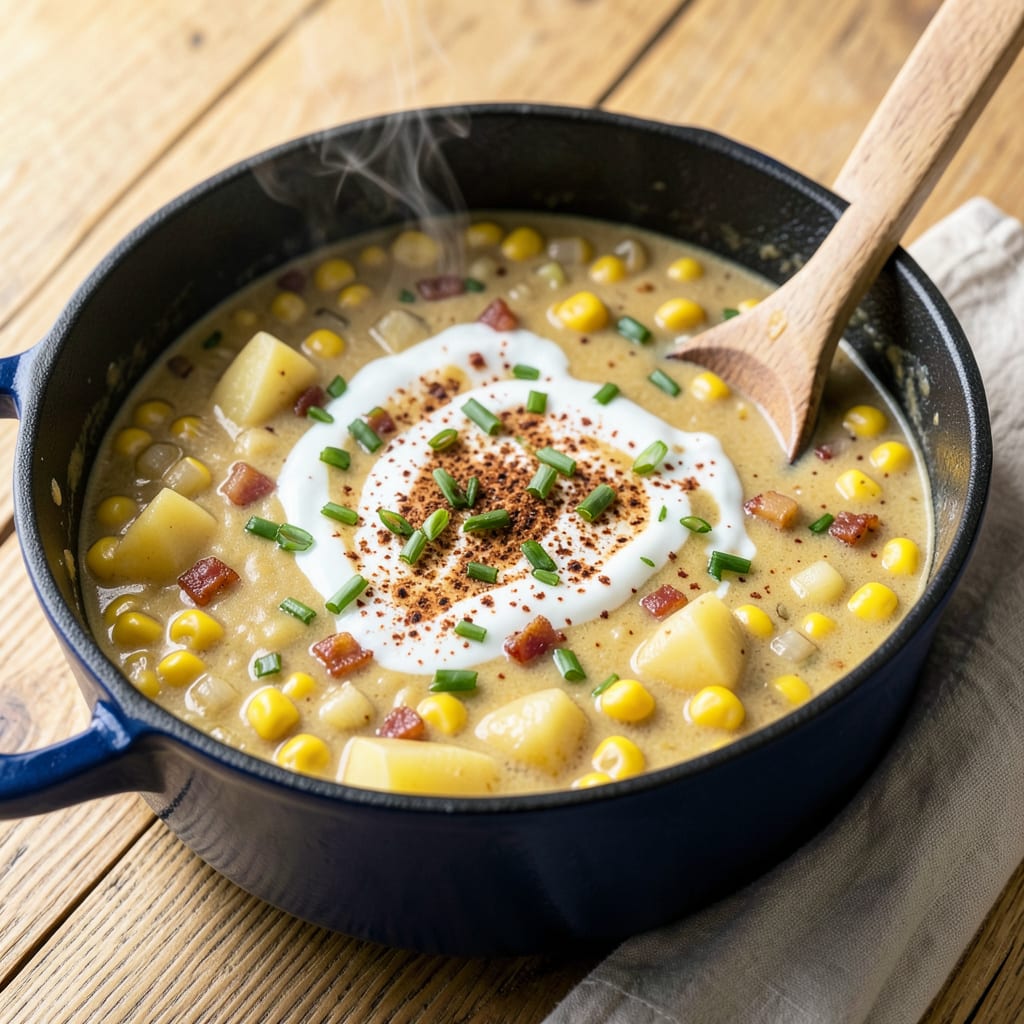
There’s nothing quite like a bowl of creamy corn chowder on a chilly evening—rich, velvety, and packed with sweet corn flavor. I’ve made this soup more times than I can count, and the secret to that perfect consistency isn’t complicated. Whether you prefer it thick enough to stand a spoon in or just lightly creamy, I’ve got the foolproof methods to get you there without any fuss.
I remember the first time I tried to thicken chowder and ended up with a lumpy mess. Turns out, timing is everything. Some techniques work best at the start of cooking, while others save the day at the end. The good news? You probably already have everything you need in your pantry—no special ingredients required.
What you’ll end up with is a bowl of chowder so smooth and satisfying, it’ll become your new comfort food staple. The corn stays sweet and tender, the broth turns silky, and every spoonful feels like a warm hug. Best part? These methods work for any chowder variation you dream up.
Let me walk you through the simple steps to achieve that restaurant-quality texture at home. No culinary degree needed—just a little know-how and about 30 minutes of your time. The results are worth every minute.
📚 In This Guide
- What You’ll Need
- Instructions
- Tips and Common Mistakes
What Youll Need
- ● Pre-made corn chowder – 6–8 cups (homemade or store-bought, warmed 🥘)
- ● Thickening agents (pick 1–2): All-purpose flour – 2–3 tbsp (for a roux)
- ● Cornstarch – 1–2 tbsp (mixed with cold water)
- ● Heavy cream or half-and-half – ½–1 cup (for richness)
- ● Mashed potatoes – ½ cup (leftover or instant)
- ● Blended corn – 1 cup (pureed from the chowder itself!)
- ● Tools: Whisk or wooden spoon (for smooth mixing)
- ● Small bowl (to mix cornstarch/water slurries)
- ○ Blender or immersion blender (optional, for corn puree)
- ● Measuring cups/spoons (precision matters!)
- ○ Extras (optional but handy): Butter – 2 tbsp (for roux or extra creaminess)
- ● Cheese (cheddar or Monterey Jack) – ½ cup (shredded, for flavor boost)
- ● Fresh herbs (thyme, chives) – for garnish
Instructions: Achieve Perfectly Thickened Corn Chowder
Here’s the foolproof method that transforms your soup into creamy, velvety perfection every time.
Start with the Right Base Texture
Before adding any thickeners, make sure your chowder has the right starting consistency. I always begin by cooking my aromatics (onions, celery, etc.) until they’re completely soft – this builds flavor AND contributes to thickness naturally. You want them to almost melt into the broth.
Once you add your liquid ingredients (broth, milk, or cream), bring everything to a gentle simmer. Let it cook uncovered for about 10-15 minutes – this reduces the liquid slightly and concentrates flavors. You’ll notice the soup starts looking richer even before adding thickeners.
Puree Part of the Soup for Natural Creaminess
Here’s my secret weapon for the creamiest texture: use an immersion blender to puree about one-third of the soup right in the pot. If you don’t have an immersion blender, carefully transfer 2 cups of the chowder to a regular blender, puree until smooth, then return it to the pot.
The pureed corn and vegetables create a velvety base that thickens the entire pot naturally. I stir everything together and let it simmer for another 5 minutes – you’ll see the chowder transform into something much richer and more luxurious. This technique gives you that perfect balance between creamy and chunky.
Add Your Thickening Agent Gradually
Now for the thickening magic! My go-to method is creating a slurry with 2 tablespoons of cornstarch mixed with 2 tablespoons of cold water. The key is adding it slowly – I pour the slurry in while stirring constantly, then let the chowder return to a gentle simmer.
Watch carefully as it thickens – this happens quickly, usually within 2-3 minutes. You’ll know it’s ready when the soup coats the back of a spoon and leaves a clear path when you run your finger through it. If it’s still too thin, you can repeat with another small slurry, but be patient – over-thickening is harder to fix than under-thickening!
Finish with Cream for Ultimate Richness
For that final touch of decadence, I stir in ½ cup of heavy cream or whole milk at the very end. This isn’t just for thickness – it adds that beautiful velvety mouthfeel that makes chowder so satisfying. Heat it through gently – you don’t want to boil it at this stage.
Taste and adjust your seasoning now. The cream might mellow some flavors, so I often add a final pinch of salt or a grind of black pepper. Let the chowder rest for 5 minutes off the heat before serving – this allows everything to meld together perfectly.
Let It Rest for Perfect Consistency
This is the step most people skip, but it makes all the difference! Let your chowder sit covered for 10-15 minutes before serving. During this time, the thickening agents fully activate and the flavors deepen. You’ll notice the texture becomes even more luxurious.
If the chowder thickens too much as it sits (this can happen as it cools), simply stir in a splash of warm broth or milk to bring it back to your ideal consistency. Remember, it should be rich and creamy but still flow easily from your spoon – not gluey or pasty.
Tips and Common Mistakes
Let me share the game-changing secrets that’ll take your chowder from good to absolutely restaurant-worthy.
The Simmer Secret: Those 10-15 minutes of uncovered simmering in Step 1 are magic! This isn’t just reducing liquid – it’s concentrating all those beautiful corn and vegetable flavors. Watch for the surface to develop tiny bubbles around the edges and the aroma to deepen. That’s when you know the base is perfectly primed for thickening.
Puree Perfection: When you puree that one-third of the soup in Step 2, here’s what nobody tells you—blend it until completely smooth, not just chunky. I learned this the hard way after my first attempt left bits of corn kernel. The smoother the puree, the silkier your final chowder texture becomes. Those 5 minutes of simmering after blending are crucial for everything to marry together beautifully.
Slurry Success: The 2 tablespoons of cornstarch slurry in Step 3 thickens faster than you’d expect! Stir constantly as you pour it in, and don’t walk away during those 2-3 minutes—it can go from perfect to gluey in seconds. I like to remove the pot from heat just as it reaches the ideal consistency to prevent over-thickening.
Resting Revelation: That final 10-15 minutes of resting in Step 5 isn’t optional—it’s when the chowder transforms from good to extraordinary. The starches fully absorb the liquid, creating that luxurious mouthfeel we’re after. I’ve served it immediately before and the difference is night and day!
Pro Tips for Thicken Corn Chowder
- Let me share the game-changing secrets that’ll take your chowder from good to absolutely restaurant-worthy.
- The Simmer Secret: Those 10-15 minutes of uncovered simmering in Step 1 are magic! This isn’t just reducing liquid – …
- Puree Perfection: When you puree that one-third of the soup in Step 2, here’s what nobody tells you—blend it until co…
Frequently Asked Questions
Can I use flour to thicken corn chowder without making it taste raw?
To avoid a raw flour taste, create a roux first: Cook equal parts flour and butter (or oil) over medium heat for 2-3 minutes until golden. Whisk this into your chowder slowly and simmer for 10+ minutes to eliminate any raw flavor. Pro tip: Toast the flour slightly for a nuttier depth!
How long does it take for corn chowder to thicken after adding a slurry?
A cornstarch or arrowroot slurry (1:1 ratio with cold water) typically thickens chowder in 3-5 minutes of gentle simmering. Avoid boiling—high heat can break the starch bonds, making it thin again. Stir occasionally and check consistency after 3 minutes. Patience pays off!
What’s the best dairy-free alternative to thicken corn chowder?
For creaminess without dairy, blend ½ cup cooked potatoes or cauliflower into the broth (immersion blender works great!). Alternatively, stir in full-fat coconut milk (13.5 oz can) or cashew cream (blended soaked cashews + water). Both add richness and body without dairy.
Why did my corn chowder separate or curdle after thickening?
Curdling usually happens from high heat or acidic ingredients (like tomatoes or wine) added too early. Fix it by: 1) Tempering dairy (warm it before adding), 2) Simmering on low heat, or 3) Stirring in a splash of cold water to rebind. If it’s already separated, blend briefly to re-emulsify.
Can I thicken corn chowder in a slow cooker or Instant Pot?
Yes! For a slow cooker, mix a slurry (cornstarch + cold broth) in the last 30 minutes on high. In an Instant Pot, use the Sauté function to reduce liquid or stir in a roux after pressure cooking. Avoid adding dairy until the very end to prevent curdling. Slow or fast—both work!
Thickening corn chowder doesn’t have to be complicated! Whether you prefer a creamy roux, a simple slurry, or a natural puree, you’ve got plenty of foolproof options to achieve that perfect velvety texture. 🥄✨ With these easy techniques, your chowder will be rich, hearty, and downright irresistible—every single time.
Now that you’re armed with the know-how, why not put it to the test? Grab your favorite corn chowder recipe, pick your preferred thickening method, and get simmering! Don’t forget to tweak and taste as you go—your ideal bowl of comfort is just a stir away. 😊

Trained in classic French technique but raised on slow-cooked ribs and spicy rubs, she blends culinary skill with smoke and soul.
- Recipe for Boneless Pork Chops in Cast Iron Skillet: Sear and Baste to Juicy Perfection - October 3, 2026
- Recipe for Boneless Cross Rib Roast: Slow-Roasted Beef with Herb Crust - October 3, 2026
- Hamburgers in Sauce Recipe Crock Pot: Slow-Cooked Savory Delight - October 3, 2026