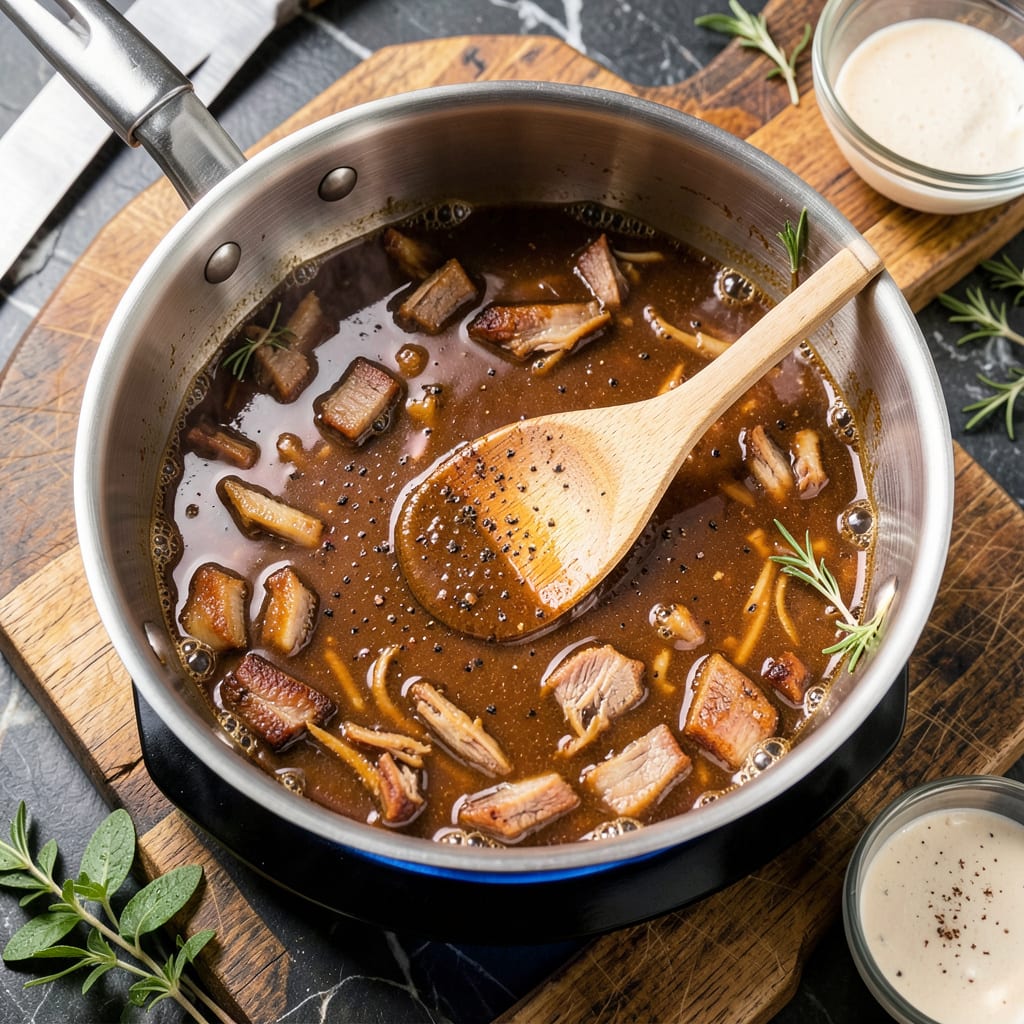
Nothing ruins perfect pulled pork faster than a watery sauce that slides right off the meat. I’ve spent years perfecting the balance between rich, clingy sauce and tender pork—turns out the thickening method makes all the difference. Whether you’re working with a vinegar-based Carolina sauce or a sweet Kansas City style, getting that perfect consistency transforms good pork into unforgettable BBQ.
Here’s the thing—thickening isn’t just about adding starch. It’s about enhancing flavor while achieving that glossy, coat-the-back-of-a-spoon texture. I’ve tested every method from classic reductions to modern slurries, and the right approach depends on your sauce’s base. Some techniques work better with tomato-heavy sauces, while others preserve the tangy brightness of vinegar-based versions.
What you’ll end up with is sauce that actually stays put, clinging to every shred of pork instead of pooling at the bottom of your bun. No more soggy sandwiches or flavorless bites—just that ideal balance where the sauce complements rather than overwhelms. The difference is dramatic enough that I’ve had friends ask for my “secret recipe” when all I changed was the thickening method.
Best part? These techniques work whether you’re fixing a batch right before serving or adjusting leftovers. The methods are simple, the ingredients minimal, and the results consistently impressive. Let’s get that sauce exactly where it needs to be.
📚 In This Guide
- What You’ll Need
- Instructions
- Tips and Common Mistakes
What Youll Need
- ● Pulled pork sauce (2–4 cups) – Your existing sauce (homemade or store-bought) that needs thickening. 🍖
- ● Thickening agent (choose one): Cornstarch (1–2 tbsp mixed with 2 tbsp cold water per cup of sauce)
- ● All-purpose flour (1–2 tbsp per cup of sauce, pre-mixed with fat or liquid)
- ● Xanthan gum (¼–½ tsp per cup, for gluten-free options)
- ● Reduced sauce (simmer 10–15 mins to evaporate excess liquid)
- ● Tools: Medium saucepan (2–3 qt) or skillet with high sides
- ● Whisk or wooden spoon (for stirring)
- ● Measuring spoons (for precise thickening agent ratios)
- ● Small bowl (for mixing slurries)
- ○ Optional but helpful: Immersion blender (for ultra-smooth texture)
- ● Fine-mesh strainer (if removing lumps)
- ● pH strips (if balancing acidity post-thickening)
- ● Prerequisites: Sauce at room temp (if using cornstarch/flour slurries)
- ● Low-medium heat source (to prevent scorching)
Step-by-Step Instructions for Thickening Pulled Pork Sauce
Transform your runny sauce into a rich, velvety masterpiece with these professional techniques.
Reduce the Sauce for Maximum Flavor Concentration
Transfer your pulled pork sauce to a wide, heavy-bottomed saucepan. The increased surface area accelerates evaporation while preventing scorching. Bring it to a gentle simmer over medium heat, then immediately reduce to low heat to maintain a steady, controlled bubble pattern.
Stir frequently with a silicone spatula, scraping the bottom to prevent sticking. You’ll notice the sauce gradually darkening and developing a glossy sheen as water evaporates. This method intensifies flavors while naturally thickening – expect a 30-50% reduction in volume for optimal consistency.
Create a Cornstarch Slurry for Instant Body
In a small bowl, whisk together equal parts cornstarch and cold water (start with 1 tablespoon each per cup of sauce). The cold liquid prevents clumping while the cornstarch’s molecular structure swells to create thickening power. Pour this slurry into your simmering sauce while whisking vigorously to distribute evenly.
Within 30-60 seconds, you’ll observe the sauce transforming from liquid to velvety. Continue cooking for 2 minutes to fully activate the cornstarch and eliminate any raw taste. This technique delivers immediate results without altering the sauce’s fundamental flavor profile.
Incorporate a Roux for Professional-Quality Texture
Melt 2 tablespoons butter in a separate pan over medium heat, then whisk in an equal amount of all-purpose flour. Cook this mixture for 2-3 minutes until it develops a nutty aroma and reaches a light golden color – this toasting removes the raw flour taste.
Gradually ladle 1 cup of hot sauce into the roux while whisking constantly to prevent lumps. Once smooth, return this mixture to your main sauce pot. The roux’s fat-flour emulsion creates a stable, glossy thickness that withstands reheating better than other methods.
Finish with the Butter Mounté Technique
Remove your sauce from heat and let it cool slightly for 2 minutes. Whisk in 1-2 tablespoons cold, cubed butter one piece at a time, allowing each to fully incorporate before adding the next. The butter’s emulsifying properties create a silky, luxurious mouthfeel.
You’ll witness the sauce developing a beautiful sheen as the butter melts. This final step adds richness while slightly thickening the sauce through emulsion. Taste and adjust seasoning – the butter may require additional salt to balance the flavors perfectly.
Tips and Common Mistakes for Perfect Sauce Consistency
These professional insights will transform your sauce-thickening game from good to extraordinary.
Heat Management Mastery: The transition from medium to low heat in Step 1 isn’t just about temperature—it’s about creating the perfect evaporation rate. Medium heat initiates the process, but that immediate reduction to low heat maintains a gentle simmer that prevents scorching while maximizing flavor concentration. Watch for the sauce to develop that telltale glossy sheen—this visual cue means you’re building body through reduction rather than just cooking off liquid.
Slurry Technique Perfection: When creating your cornstarch slurry in Step 2, the water temperature is everything. I cannot stress enough how critical it is to use cold water—it creates a suspension that incorporates smoothly. As you whisk the slurry into your simmering sauce, maintain that vigorous motion for the full 30-60 seconds until you see the transformation begin. That 2-minute cook time afterward isn’t just about activation; it’s your insurance against any starchy aftertaste that could dull your sauce’s vibrant flavors.
Roux Revelation: The 2-3 minutes you spend toasting your roux in Step 3 makes all the difference between a flat, floury thickness and a rich, nutty depth. This isn’t just about color—it’s about developing the Maillard reaction that creates complex flavor compounds. When you reach that light golden stage, you’ve hit the sweet spot where the roux will thicken without tasting raw. The gradual incorporation of hot sauce is your moment to create a perfect emulsion that will hold up beautifully when reheated.
Butter Integration Artistry: That 2-minute cooling period in Step 4 might seem insignificant, but it’s your secret weapon against breaking the emulsion. Cold butter incorporates more smoothly into slightly cooled sauce, creating that luxurious silkiness we’re after. Add those cubes one at a time, allowing each to fully melt and emulsify before introducing the next. This patience pays off in a sauce with professional-grade body and sheen that clings perfectly to every shred of pork.
Pro Tips for Thicken Pulled Pork Sauce
- These professional insights will transform your sauce-thickening game from good to extraordinary.
- Heat Management Mastery: The transition from medium to low heat in Step 1 isn’t just about temperature—it’s about cre…
- Slurry Technique Perfection: When creating your cornstarch slurry in Step 2, the water temperature is everything. I c…
Frequently Asked Questions
Can I thicken pulled pork sauce after it’s already been mixed with the meat?
Yes! Remove the pork with a slotted spoon, then simmer the sauce alone to reduce it. Alternatively, mix a cornstarch slurry (1 tbsp cornstarch + 2 tbsp cold water) into the hot sauce (off heat) and stir until thickened. Avoid overmixing to keep the meat tender.
How long does it take to thicken sauce by reducing it on the stove?
Typically 10–20 minutes on medium-low heat, stirring often. The time depends on your sauce’s starting consistency and batch size. Watch for a glossy, coat-the-back-of-a-spoon texture—don’t let it scorch!
What’s the best thickener for a smoky BBQ sauce without altering the flavor?
Use xanthan gum (¼ tsp per cup) or arrowroot powder—both are neutral-tasting. Whisk vigorously to avoid clumping. For extra richness, blend in 1–2 tbsp of the pork’s rendered fat instead of starches.
Why did my sauce get gummy or slimy after adding cornstarch?
Overcooking or adding cornstarch directly to hot liquid causes clumping. Always mix it with cold water first, then temper by stirring a bit of hot sauce into the slurry before combining. If it’s already gummy, thin with broth or vinegar and re-heat gently.
Can I use flour to thicken pulled pork sauce, or will it taste raw?
Flour works but needs 5–10 minutes of cooking to lose its raw taste. For best results, make a roux (equal parts flour + fat) first, then whisk in sauce. Alternatively, toast the flour in a dry pan until golden before mixing in.
Now you’ve got the secrets to perfectly thickened pulled pork sauce—whether you prefer a slow-simmered reduction, a cornstarch slurry, or a butter roux for extra richness. 🎯 The key is patience and a little experimentation to match your ideal texture. Don’t be afraid to tweak flavors as you go—your taste buds are the best guide!
Ready to put your new skills to the test? Grab that pot of sauce and start thickening—your next batch of pulled pork is about to be the juiciest, most flavor-packed one yet. Happy cooking! 🍖✨

Trained in classic French technique but raised on slow-cooked ribs and spicy rubs, she blends culinary skill with smoke and soul.
- Recipe for Boneless Pork Chops in Cast Iron Skillet: Sear and Baste to Juicy Perfection - October 3, 2026
- Recipe for Boneless Cross Rib Roast: Slow-Roasted Beef with Herb Crust - October 3, 2026
- Hamburgers in Sauce Recipe Crock Pot: Slow-Cooked Savory Delight - October 3, 2026