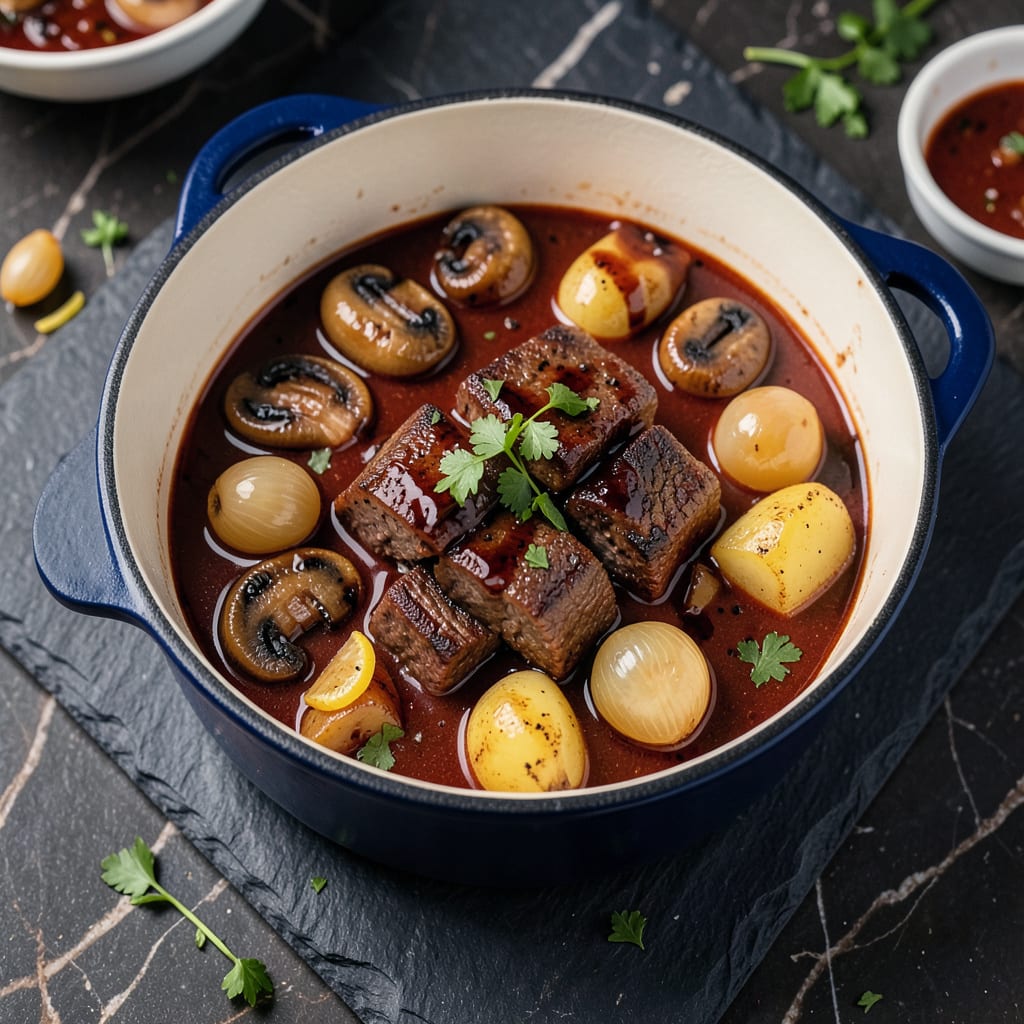
I’ll be real with you: mushrooms can make or break your stew. Add them too early and they turn to mush. Toss them in too late and they taste like an afterthought. After years of testing (and more than a few disappointing batches), I’ve cracked the code for perfect texture every single time.
Here’s the thing—mushroom type matters just as much as timing. Button mushrooms hold up better when added early, while delicate shiitakes need just 20 minutes to stay firm. I always brown mine first in the same pot (why waste flavor?) before building the stew base. That extra step adds depth you can’t get any other way.
The golden rule: add hearty mushrooms with the onions, but save delicate varieties until the last 30 minutes. This gives you rich, earthy flavor without sacrificing texture. My go-to beef and mushroom stew uses this exact method—tender beef, velvety sauce, and mushrooms that actually taste like mushrooms.
Fair warning: if your stew looks watery, you’ve likely added too much liquid too soon. Start with less, then adjust as needed. The mushrooms will release moisture as they cook, so patience pays off. Trust me, your spoon will thank you later.
📚 In This Guide
- What You’ll Need
- Instructions
- Tips and Common Mistakes
What Youll Need
- ● Fresh mushrooms – 8–12 oz (cremini, white button, or shiitake for best texture) 🍄
- ● Stew base – 4–6 cups (beef, chicken, or vegetable broth, or a pre-made stew)
- ● Cooking pot or Dutch oven – 5–6 quart capacity (heavy-bottomed for even heat)
- ● Sharp chef’s knife – 8-inch blade (for clean, even slices)
- ● Cutting board – Wood or plastic (dedicated for mushrooms if possible)
- ● Wooden spoon or silicone spatula – For stirring without scratching
- ○ Olive oil or butter – 1–2 tbsp (for sautéing, optional but recommended)
- ○ Garlic – 2–3 cloves (minced, optional for extra flavor)
- ○ Onion – 1 small (diced, optional for depth)
- ○ Herbs – 1 tsp dried thyme or rosemary (optional but enhances flavor)
- ● Salt & pepper – To taste (essential for seasoning)
- ● Timer or clock ⏰ – To track cooking stages precisely
- ● Ladle – For tasting and serving (because patience deserves a reward!)
Instructions: When to Add Mushrooms to Your Stew
Timing is everything when it comes to mushrooms in stew—here’s how to get it right.
Prepare Your Mushrooms Properly
Before you even think about adding mushrooms to your stew, you need to prepare them correctly. I always start by cleaning them with a damp paper towel or soft brush—never soak them in water, as they’ll absorb moisture like little sponges and become soggy when cooked.
Once clean, trim any tough stems and slice them uniformly. I prefer ¼-inch thick slices for most stews, as they hold their shape well during cooking. If you’re using larger mushrooms like portobellos, cut them into bite-sized chunks. The key here is consistency—uniform pieces cook evenly and look beautiful in your finished dish.
Sauté Mushrooms Separately for Maximum Flavor
Here’s the secret most recipes don’t tell you: mushrooms should be cooked separately before adding to stew. Heat a skillet over medium-high heat with a bit of oil or butter, then add your prepared mushrooms in a single layer. Don’t overcrowd the pan—work in batches if needed.
Cook them undisturbed for 3-4 minutes until they release their moisture, then continue cooking until all the liquid evaporates and the mushrooms develop a golden brown color. This step concentrates their flavor and prevents them from turning your stew watery. You’ll know they’re ready when they’ve reduced in size by about half and have a rich, meaty aroma.
Determine the Perfect Addition Time
Now for the crucial timing decision. If you’re making a long-simmering stew (like beef or lamb), add your pre-cooked mushrooms during the last 30 minutes of cooking. This gives them enough time to absorb the stew’s flavors without turning mushy.
For quicker-cooking stews (like chicken or vegetable), add them during the final 15 minutes. The mushrooms will soften slightly but maintain their texture. Watch for the moment when they become tender but still hold their shape—that’s your sweet spot. Remember, they’ll continue cooking slightly even after you remove the stew from heat.
Adjust and Finish Like a Pro
Once your mushrooms are in the stew, taste and adjust the seasoning. Mushrooms often need a bit more salt to bring out their earthy flavor. I like to add a splash of soy sauce or Worcestershire sauce at this stage—it enhances the umami notes beautifully.
Let the stew simmer gently for those final minutes, then check the mushrooms one last time. They should be tender but still have a slight bite, not mushy. If they’re perfect now, your stew is ready to serve. If they need more time, give them 5-10 additional minutes, but keep an eye on them—overcooked mushrooms can ruin an otherwise perfect stew.
Tips and Common Mistakes for Perfect Stew Mushrooms
Getting mushrooms just right in stew takes more than luck—it’s about technique and timing. Here’s what I’ve learned from years of perfecting this balance.
Sautéing Secret: In Step 2, when you cook mushrooms over medium-high heat for those crucial 3-4 minutes, resist the urge to stir immediately. Let them develop that golden brown color undisturbed—this builds deep, meaty flavor. If you move them too soon, they’ll steam instead of sear, leaving your stew with watery mushrooms instead of rich, concentrated flavor.
Timing Precision: The 30-minute window for long-simmering stews and 15-minute window for quicker versions exist for good reason. Mushrooms added too early turn to mush, while those added too late stay tough. I set a timer when adding them—this small step prevents overcooking every time. Remember, they’ll continue softening slightly even after you remove the stew from heat.
Texture Check: During those final 5-10 additional minutes mentioned in Step 4, test mushrooms with a fork—they should yield slightly but still hold their shape. If they’re perfect at this stage, remove the stew immediately. Overcooked mushrooms become slimy and ruin the stew’s texture, no matter how perfectly you prepared them earlier.
Flavor Boost: When adjusting seasoning in Step 4, don’t just add salt—try a splash of soy sauce or Worcestershire as suggested. The umami in these ingredients complements mushrooms beautifully. I often add just 1 teaspoon of soy sauce to a 4-serving stew, which enhances without overpowering the natural mushroom flavor.
Pro Tips for When To Add Mushrooms To Stew
- Getting mushrooms just right in stew takes more than luck—it’s about technique and timing. Here’s what I’ve learned f…
- Sautéing Secret: In Step 2, when you cook mushrooms over medium-high heat for those crucial 3-4 minutes, resist the u…
- Timing Precision: The 30-minute window for long-simmering stews and 15-minute window for quicker versions exist for g…
Frequently Asked Questions
Can I add mushrooms to stew at the very end?
While you can toss them in late, mushrooms added in the last 10–15 minutes will stay firmer but may taste raw or underdeveloped. For best flavor, sauté them first (5–7 minutes) or add mid-cook (30–45 minutes before serving) so they absorb the broth without turning mushy.
What if my mushrooms turn slimy in the stew?
Slimy mushrooms usually mean they released too much moisture. Pat them dry before cooking, sauté them separately to evaporate liquid, or add a splash of acid (like wine or vinegar) to balance texture. If it’s too late, simmer uncovered to reduce excess liquid.
Should I cook mushrooms separately before adding to stew?
Yes! Sautéing mushrooms in oil or butter first ( medium-high heat) deepens their umami flavor and prevents them from making your stew watery. Brown them in batches for even cooking—then add to the pot when the recipe calls for it.
Can I use canned or frozen mushrooms instead of fresh?
You can, but adjust timing: Add canned (drained!) mushrooms in the last 20–30 minutes to avoid mushiness. Frozen mushrooms (thawed + patted dry) work best if sautéed first—skip adding their thawed liquid to avoid a diluted stew.
How do I fix undercooked mushrooms in stew?
Fish them out with a slotted spoon and sauté in a separate pan for 3–5 minutes until tender, then return to the pot. Alternatively, extend simmering time by 15–20 minutes (uncovered) to concentrate flavors and soften them—just stir occasionally!
Timing is everything when it comes to adding mushrooms to stew—whether you want them tender, meaty, or bursting with flavor. By adding them early for depth or late for texture, you’ll elevate your dish from good to unforgettable. 🍄✨
Now that you’ve got the know-how, grab your pot and start experimenting! Try a classic beef and mushroom stew or mix things up with wild varieties. Your next cozy meal is just a simmer away.

Trained in classic French technique but raised on slow-cooked ribs and spicy rubs, she blends culinary skill with smoke and soul.
- Recipe for Boneless Pork Chops in Cast Iron Skillet: Sear and Baste to Juicy Perfection - October 3, 2026
- Recipe for Boneless Cross Rib Roast: Slow-Roasted Beef with Herb Crust - October 3, 2026
- Hamburgers in Sauce Recipe Crock Pot: Slow-Cooked Savory Delight - October 3, 2026