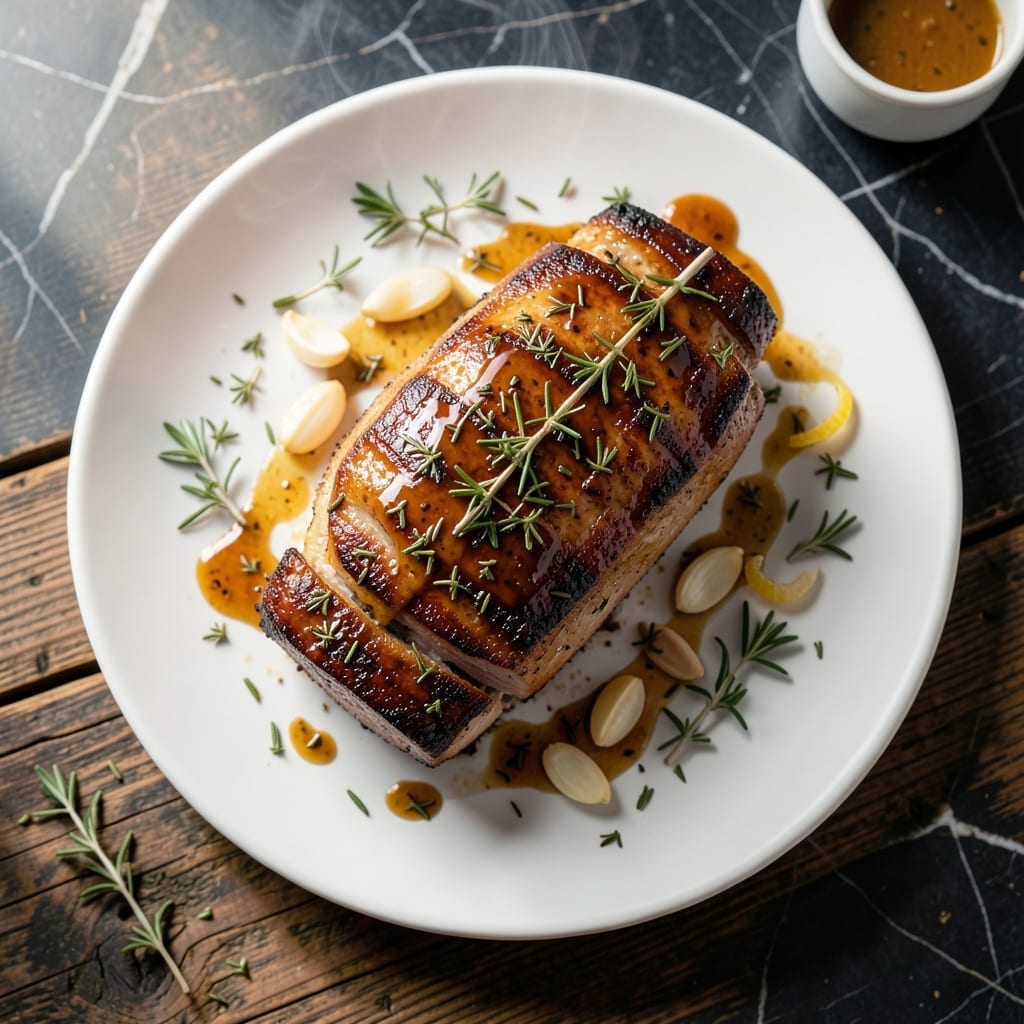
I remember watching my grandmother cook pork tenderloin without a single measurement, just her hands and intuition. This version keeps her spirit alive with simple, tender results every time.
What makes this dish special is the herb crust—fresh rosemary, thyme, and garlic create a fragrant seal that locks in juices. A quick sear followed by 20 minutes in the oven does the rest.
You’ll end up with perfectly cooked pork that’s juicy inside, golden outside, and packed with herby aroma. It’s elegant enough for company but easy enough for a weeknight.
Serve with roasted potatoes or a fresh salad. Here’s how to make it.
Ingredients for I Need a Recipe for Pork Tenderloin
Pantry staples meet fresh herbs for this elegant, tender centerpiece dish.
| Ingredient | Amount | Notes |
|---|---|---|
| Pork Tenderloin 🥩 | 1 ½ lb | Trimmed of silver skin |
| Fresh Rosemary 🌿 | 2 tbsp | Finely chopped, stems removed |
| Fresh Thyme Leaves 🍃 | 2 tbsp | Stems removed, loosely packed |
| Garlic Cloves 🧄 | 4 cloves | Minced for herb crust |
| Dijon Mustard 🟡 | 2 tbsp | For binding herb crust |
| Olive Oil 🫒 | 2 tbsp | Divided for searing and crust |
| Kosher Salt 🧂 | 1 ½ tsp | For seasoning pork and crust |
| Black Pepper 🌶️ | 1 tsp | Freshly ground for best flavor |
| Breadcrumbs 🍞 | ½ cup | Panko for extra crunch |
| Butter 🧈 | 2 tbsp | For basting while roasting |
| Lemon Zest 🍋 | 1 tsp | For brightness in crust |
| Vegetable Oil 🫒 | 1 tbsp | High smoke point for searing |
[recipe_ingredient_scaler]
The pork tenderloin is the star—look for 1.5 lb pieces at Whole Foods or your butcher (they’ll trim the silver skin for you). Fresh herbs matter here: rosemary and thyme should be vibrant, not wilted. I grab mine from the refrigerated herb section at Trader Joe’s (lasts longer than the sad bundles in the produce aisle). The Dijon mustard ties everything together—Grey Poupon is my go-to, but any good brand works.
No fresh herbs? Dried at one-third the amount (so 2 tsp dried rosemary instead of 2 tbsp fresh). Swap panko for regular breadcrumbs—just pulse them in a processor first for texture. Out of Dijon? Whole-grain mustard adds a nice nuttiness. The lemon zest is optional but worth it (a Microplane makes quick work). If you’re avoiding dairy, use olive oil instead of butter for basting.
Prep the herb crust up to 24 hours ahead—store covered in the fridge. The pork itself? Cook and eat within 3-4 days of purchase, or freeze for 3 months. Leftovers make killer sandwiches (trust me on the crusty bread and a smear of that Dijon).
Why You’ll Love This Recipe
- I’ll be real: the sandwiches the next day with cold slices might be better than the first meal.
- One Pan Magic: I toss the pork with rosemary, thyme, and mustard, then roast—no extra dishes, no fuss.
- Herb-Crusted Heaven: The garlic and Dijon create this sticky, fragrant crust that’s honestly the best part.
- Weeknight Hero: Between us, it’s my go-to for busy Tuesdays when I need something impressive fast.
Step-by-Step Instructions for Herb-Crusted Pork Tenderloin
Here’s the method that guarantees juicy meat with a crispy, aromatic crust every time.
Step 1: Prep and Season the Pork Tenderloin
Pat the 1.5 lb pork tenderloin dry with paper towels—this removes moisture that would prevent proper browning. Trim any remaining silver skin if needed. Season the pork all over with 1.5 tsp kosher salt and 1 tsp black pepper, pressing it in gently so it adheres.
This step might seem basic, but it’s essential for flavor and texture. I always let the seasoned pork sit at room temperature for 15-20 minutes before cooking to ensure even cooking throughout.
Step 2: Create the Herb Crust
In a small bowl, combine 2 tbsp fresh rosemary, 2 tbsp fresh thyme leaves, 4 cloves minced garlic, 2 tbsp Dijon mustard, 2 tbsp olive oil, and 1 tsp lemon zest. Mix until it forms a thick paste. The mustard acts as a binder so the herbs stick to the pork.
Stir in the 0.5 cup breadcrumbs until evenly coated. This mixture should be chunky but hold together when pressed. I use panko for extra crunch, but regular breadcrumbs work too.
Step 3: Sear and Crust the Pork
Heat 1 tbsp vegetable oil in an oven-safe skillet over medium-high heat until shimmering. Sear the pork on all sides for 2-3 minutes per side until golden brown. Don’t rush this—you want a deep, even color.
Once seared, brush the herb crust mixture all over the top and sides of the pork, pressing it on firmly. Add 2 tbsp butter to the pan and let it melt. The butter will baste the pork as it roasts, adding richness.
Step 4: Roast to Perfection
Transfer the skillet to a preheated 400°F oven. Roast for 15-20 minutes until the internal temperature reaches 145°F. Use a meat thermometer for accuracy—this ensures the pork stays tender and juicy.
If the crust starts browning too quickly, tent the pan with foil. The herbs should be fragrant and the breadcrumbs crispy. I like to baste the pork with the pan juices halfway through for extra flavor.
Step 5: Rest and Serve
Remove the pork from the oven and let it rest in the skillet for 10 minutes. This allows the juices to redistribute, so every slice stays moist. Tent it loosely with foil to keep it warm.
Slice the pork into ½-inch thick medallions and serve immediately. The crust should be golden and crispy, with the herbs releasing their aroma as you cut into it. Drizzle any pan juices over the top for extra flavor.
Pro Tips For Making I Need A Recipe For Pork Tenderloin
- Sear It Hot: Get your pan screaming hot before adding the pork—this gives you that golden crust that locks in the juices, and it only takes 2-3 minutes per side for tenderloin.
- Mince Those Herbs: Finely chop the rosemary and thyme so they distribute evenly and don’t leave big woody bits in your mustard rub.
- Don’t Overcook: Pull the pork at 140-145°F internal temp; it’ll rise to 145-150°F while resting, and anything higher turns it dry.
- Rub It Right: Mix the Dijon with minced garlic, rosemary, and thyme first, then coat the pork—this sticks better than dry herbs and keeps the flavor where it belongs.
Pro Cooking Tips for This Recipe
Perfect Searing Technique
Don’t skip the sear—this creates the Maillard reaction for deep flavor. Heat your oven-safe skillet (I use Lodge cast iron) over medium-high heat until the oil shimmers. Pat the pork very dry first for the best crust.
Internal Temperature Mastery
The USDA recommends 145°F internal temperature for pork. Use a meat thermometer—I swear by my ThermoWorks Instant Read. Pull it at 140°F; it’ll coast to 145°F while resting. 🌡️
Crust Application Tip
Press the herb crust on firmly so it adheres during roasting. If it’s sliding off, your mustard paste might be too thin—add a bit more Dijon mustard to thicken it. The crust should look chunky, not smooth.
Oven Position Matters
Place your skillet on the middle rack for even cooking. If using a dark pan, check 5 minutes early—it can cause over-browning. I learned this the hard way with my first cast iron attempt.
Resting is Non-Negotiable
Let it rest 10 minutes before slicing. This isn’t just tradition—it’s science. The juices redistribute, so you get moist meat in every bite. Skip this, and you’ll cry over a dry plate.
Basting for Extra Flavor
Spoon the melted butter and pan juices over the pork every 5 minutes while roasting. This adds richness and helps the crust brown evenly. A long-handled spoon keeps your hands safe from the heat. 🔥
Nutrition Facts
Frequently Asked Questions
What’s the best way to prevent dry pork?
Don’t overcook it! Pull it from the oven at 140°F internal temperature, then let it rest for 10 minutes. This ensures it reaches 145°F while staying juicy.
Can I use dried herbs instead of fresh?
Yes, but use 1/3 the amount since dried herbs are more concentrated. For example, use 2 tsp dried rosemary instead of 2 tbsp fresh. Rehydrate them in the olive oil for better flavor.
How do I know when it’s done without a thermometer?
The meat should feel slightly firm to the touch, like the base of your thumb. But for best results, invest in a meat thermometer—it’s the only foolproof method.
Can I make this ahead of time?
Prep the herb crust up to 24 hours ahead and store it covered in the fridge. Cook the pork just before serving for the best texture and flavor.

Trained in classic French technique but raised on slow-cooked ribs and spicy rubs, she blends culinary skill with smoke and soul.
- Recipe for Boneless Pork Chops in Cast Iron Skillet: Sear and Baste to Juicy Perfection - October 3, 2026
- Recipe for Boneless Cross Rib Roast: Slow-Roasted Beef with Herb Crust - October 3, 2026
- Hamburgers in Sauce Recipe Crock Pot: Slow-Cooked Savory Delight - October 3, 2026