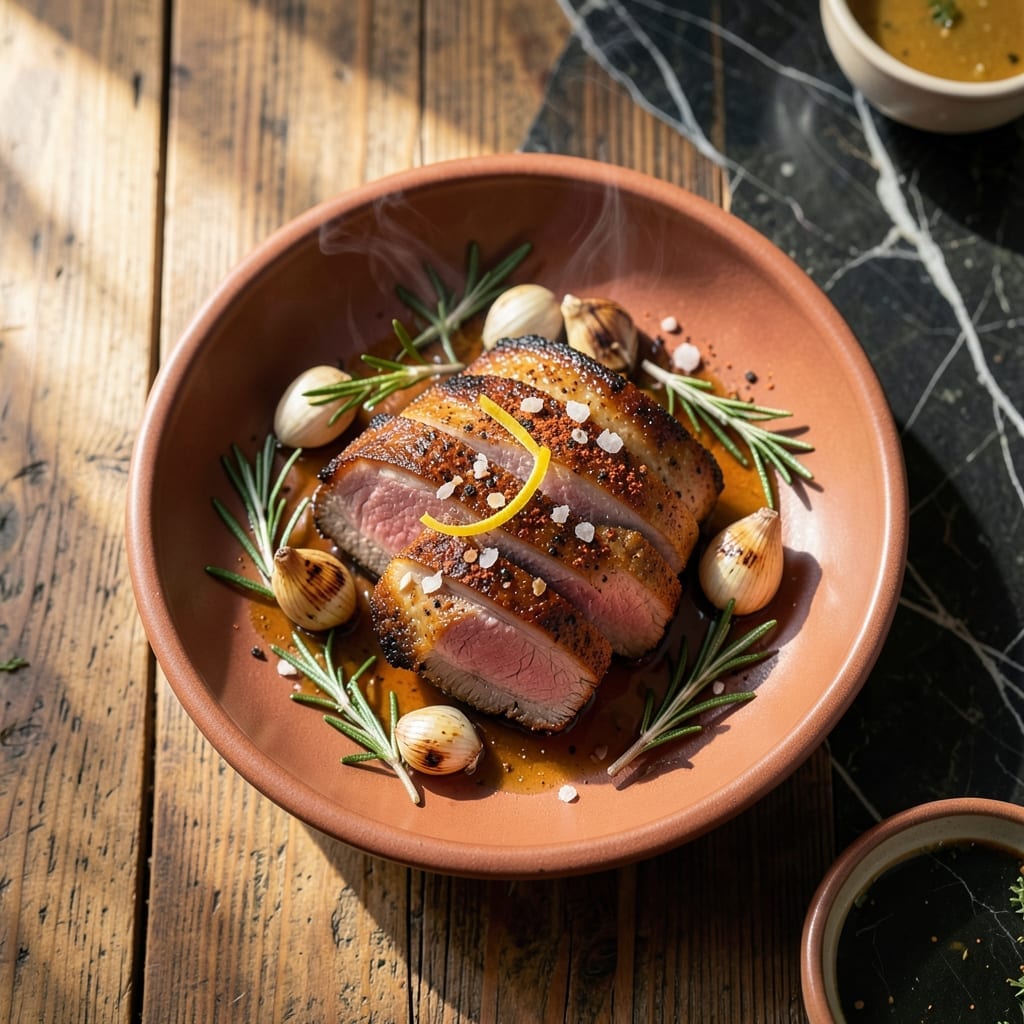
Iberico pork represents the pinnacle of Spanish culinary tradition, offering a depth of flavor that only comes from acorn-fed animals. This recipe captures that essence with a simple yet precise method.
The key lies in respecting the meat’s natural richness while enhancing it with complementary seasonings. A hot sear locks in juices, while a gentle finish ensures tender, melt-in-your-mouth results.
What emerges is a dish that celebrates the pork’s buttery texture and nutty undertones. The crust develops a deep caramelization that contrasts beautifully with the tender interior.
Serve with rustic bread to soak up every bit of the flavorful juices. This is Spanish heritage on a plate.
Ingredients for Iberico Pork
Premium Iberico pork meets aromatic herbs and wine for authentic Spanish flavor.
| Ingredient | Amount | Notes |
|---|---|---|
| Iberico Pork Loin 🥩 | 2 lb | Acorn-fed, bone-in preferred |
| Sea Salt 🧂 | 1 tbsp | Coarse, for seasoning |
| Black Pepper 🌶️ | 1 tsp | Freshly ground |
| Smoked Paprika 🌶️ | 1 tsp | Spanish pimentón preferred |
| Garlic Cloves 🧄 | 4 cloves | Peeled, lightly crushed |
| Fresh Rosemary 🌿 | 2 tbsp | Chopped, stems removed |
| Fresh Thyme 🌿 | 1 tbsp | Leaves only, chopped |
| Extra-Virgin Olive Oil 🫒 | ¼ cup | For searing and finishing |
| Dry White Wine 🍷 | ½ cup | Spanish Albariño or Verdejo |
| Chicken Stock 🥣 | ½ cup | Low-sodium preferred |
| Butter 🧈 | 2 tbsp | Unsalted, for basting |
| Rustic Bread 🍞 | 1 whole | For serving, crusty variety |
[recipe_ingredient_scaler]
The pork is non-negotiable—Iberico de bellota (acorn-fed) offers the signature marbling and nutty depth. Source from specialty butchers like D’Artagnan or La Tienda. Look for deep red meat with abundant white fat streaks. The bone-in loin stays juicier during cooking. If buying pre-packaged, check the label for 100% Iberico and acorn-fed certification.
No white wine? Dry sherry (fino or amontillado) adds authentic Spanish flair. Fresh herbs can be swapped for dried at one-third the amount, but the flavor won’t be as vibrant. For the stock, vegetable broth works in a pinch—just reduce the salt. The butter can be replaced with high-smoke-point oil if avoiding dairy, though you’ll lose some richness.
Leftover pork keeps 3-4 days wrapped in the fridge. Reheat gently in a skillet with a splash of stock to prevent drying. The rendered fat is liquid gold—strain and store in the fridge for 1 week to use in other dishes. Always bring pork to room temperature before cooking for even doneness.
Why You’ll Love This Recipe
- I’ll be real: the next-day sandwiches with the sliced pork might be even better than dinner.
- Five Ingredient Magic: I love that this only needs pork loin, sea salt, pepper, smoked paprika, and garlic—no fancy shopping required.
- Smoky Garlic Depth: The smoked paprika and garlic give the Iberico pork this rich, warm flavor that lingers.
- Weeknight Hero: Honestly, it’s ready before I can set the table on a busy evening.
Step-by-Step Instructions for Iberico Pork Loin
Master the technique that transforms premium pork into a Spanish-inspired centerpiece with rich depth.
Step 1: Season and Marinate the Iberico Pork Loin
Pat the 2 lb Iberico Pork Loin dry with paper towels to ensure optimal searing. In a small bowl, combine the 1 tbsp Sea Salt, 1 tsp Black Pepper, and 1 tsp Smoked Paprika for a robust Spanish-inspired rub.
Rub this mixture evenly over all surfaces of the pork loin, pressing gently to adhere. In a separate bowl, crush the 4 cloves Garlic Cloves, 2 tbsp Fresh Rosemary, and 1 tbsp Fresh Thyme with the 0.25 cup Extra-Virgin Olive Oil. Pour this aromatic oil mixture over the pork, ensuring it is fully coated. Let the pork marinate at room temperature for 30 minutes to allow the flavors to penetrate deeply.
Step 2: Sear the Pork to Develop a Crust
Preheat your oven to 375°F. Heat a large oven-safe skillet or Dutch oven over medium-high heat. Remove the pork from the marinade (reserve the marinade) and sear it in the hot skillet, turning occasionally, until all sides are deep golden brown—this should take 6-8 minutes total.
The sear caramelizes the surface, locking in juices and creating a flavorful crust. Use tongs to turn the pork; avoid piercing it with a fork to prevent losing precious juices. Once browned, transfer the pork to a plate temporarily.
Step 3: Deglaze and Braise for Tenderness
Reduce the heat to medium and pour the reserved marinade into the skillet. Add the 0.5 cup Dry White Wine and scrape up any browned bits from the bottom of the pan with a wooden spoon. These fond bits are packed with flavor and will enrich your braising liquid.
Return the pork to the skillet, then add the 0.5 cup Chicken Stock. Bring the liquid to a gentle simmer, then cover the skillet and transfer it to the preheated oven. Braise for 1 to 1.5 hours, turning the pork halfway through, until the internal temperature reaches 145°F.
Step 4: Baste and Rest for Optimal Flavor
Remove the skillet from the oven and transfer the pork to a cutting board. Place the skillet back on the stovetop over medium heat. Stir in the 2 tbsp Butter and simmer the braising liquid for 3-4 minutes until it reduces slightly into a glossy sauce.
Spoon this reduced sauce over the pork loin and let it rest, tented loosely with foil, for 10-15 minutes. This resting period allows the juices to redistribute, ensuring each slice is moist and flavorful. The internal temperature will rise to 150-155°F during resting, perfect for medium doneness.
Slice the pork against the grain into ½-inch thick pieces and serve with the sauce and 1 whole Rustic Bread to soak up every last drop.
Pro Tips For Making Iberico Pork
- Sear High, Finish Low: Start with a screaming hot pan to get that deep brown crust on the Iberico pork loin, then drop the heat to medium-low for the rest of the cooking. I learned this the hard way—burnt garlic and smoked paprika on the outside, raw meat inside.
- Salt the Pork Early: Pat the pork loin dry and salt it at least 30 minutes before cooking. Sounds weird, but it works: the sea salt draws out moisture initially, then reabsorbs it, seasoning the meat all the way through.
- Don’t Rush the Rest: After cooking, tent the pork loosely with foil and let it rest for 10 minutes. Skip this and all those beautiful juices will end up on your cutting board, not in your meat.
- Crush the Garlic: Smash the garlic cloves with the flat of your knife before adding them to the pan. It releases more flavor into the oil and keeps the cloves from burning before the pork is done.
Common Mistakes When Making Great iberico pork
Over-seasoning the Meat
Iberico pork is naturally rich and flavorful. Using more than 1 tbsp Sea Salt or adding extra spices can overpower its delicate acorn-fed taste. Stick to the recipe’s simple rub—1 tsp Black Pepper and 1 tsp Smoked Paprika are enough to enhance, not mask. 💡
Skipping the Marinade
Rushing the 30-minute marinade means missing out on depth. The garlic, rosemary, and thyme in 0.25 cup Extra-Virgin Olive Oil infuse the meat with aromatic layers that complement its natural nuttiness. Don’t skip this step—it’s worth the wait.
High Heat Searing
Blasting the pork on high heat risks burning the fat before the interior cooks. Use medium-high heat for searing to caramelize the surface without charring. This builds a perfect crust while keeping the meat juicy.
Ignoring Internal Temp
Pulling the pork at 145°F is critical. Overcooking beyond 155°F dries out the meat, wasting its buttery texture. Use a meat thermometer—I trust my ThermoWorks for accuracy.
Skipping the Rest
Cutting too soon lets juices escape, leaving dry slices. Always rest the pork for 10-15 minutes after cooking. This redistributes moisture, ensuring each bite is tender and flavorful.
Wasting the Fond
The browned bits in the pan are pure flavor. Deglaze with 0.5 cup Dry White Wine and 0.5 cup Chicken Stock to create a sauce that elevates the dish. Never discard this liquid gold. ✨
Nutrition Facts
Frequently Asked Questions
What’s the best cooking method for acorn-fed pork?
Start with a hot sear in a skillet for 6-8 minutes to develop a crust, then finish by braising in the oven at 375°F. This combination locks in juices while enhancing the meat’s natural richness.
Can I substitute regular pork for Iberico?
Yes, but expect less marbling and a milder flavor. Use a well-marbled pork loin and increase the marinade time to 1 hour to compensate for the lack of natural richness. The technique remains the same.
How do I know when it’s done cooking?
Use a meat thermometer and remove the pork from the oven when it reaches 145°F internally. After resting for 10-15 minutes, it will rise to 150-155°F, ensuring perfect tenderness.
What if my pork turns out dry?
Overcooking is the most likely cause. Ensure you pull it at 145°F and let it rest before slicing. If it’s already dry, serve with extra sauce to add moisture back.

Trained in classic French technique but raised on slow-cooked ribs and spicy rubs, she blends culinary skill with smoke and soul.
- Recipe for Boneless Pork Chops in Cast Iron Skillet: Sear and Baste to Juicy Perfection - October 3, 2026
- Recipe for Boneless Cross Rib Roast: Slow-Roasted Beef with Herb Crust - October 3, 2026
- Hamburgers in Sauce Recipe Crock Pot: Slow-Cooked Savory Delight - October 3, 2026