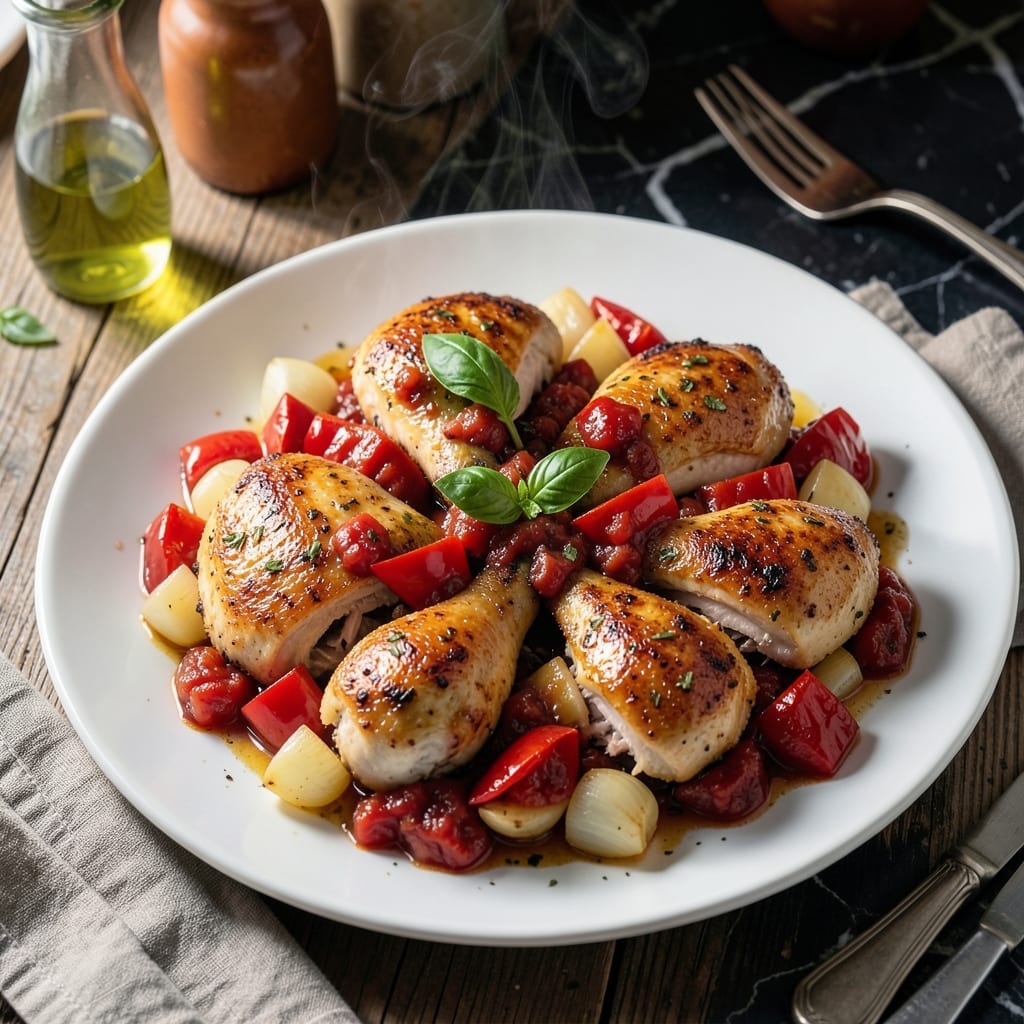
This dish brings Italian rustic charm to your table with tender chicken in a rich white wine sauce.
Slow-braised with herbs, tomatoes, and onions, it delivers restaurant-quality flavor with a foolproof method.
Ingredients for Ina Garten Chicken Cacciatore
Classic Italian ingredients deliver restaurant-quality results with this approachable dish.
| Ingredient | Amount | Notes |
|---|---|---|
| Chicken Thighs 🍗 | 2 lb | Bone-in, skin-on, about 6 pieces |
| Kosher Salt 🧂 | 1 ½ tsp | Diamond Crystal preferred |
| Freshly Ground Black Pepper 🌶️ | 1 tsp | Coarsely ground |
| All-Purpose Flour 🌾 | ½ cup | For dredging chicken |
| Extra-Virgin Olive Oil 🫒 | 3 tbsp | Divided for cooking |
| Yellow Onion 🧅 | 1 whole | Medium, diced |
| Garlic Cloves 🧄 | 4 cloves | Minced or thinly sliced |
| Dry White Wine 🍷 | ¾ cup | Sauvignon Blanc or Pinot Grigio |
| Chicken Stock 🥫 | ½ cup | Low-sodium preferred |
| Canned Diced Tomatoes 🍅 | 1 can | 28 oz, with juices |
| Tomato Paste 🍅 | 2 tbsp | For depth of flavor |
| Fresh Rosemary 🌿 | 1 tbsp | Chopped, stems removed |
| Fresh Thyme 🌿 | 1 tbsp | Chopped, stems removed |
| Dried Oregano 🍃 | 1 tsp | Mediterranean variety preferred |
| Bay Leaf 🌿 | 1 whole | For braising liquid |
[recipe_ingredient_scaler]
The chicken is key here. Bone-in, skin-on thighs stay juicy during the long braise—avoid breasts, as they dry out. Whole Foods or ButcherBox offer excellent quality, but any supermarket brand with good skin color works. Look for pieces that are uniform in size for even cooking. The white wine should be something you’d drink—Sauvignon Blanc or Pinot Grigio add brightness without overpowering.
No white wine? Substitute with additional chicken stock and 1 tbsp lemon juice. Fresh herbs are ideal, but dried work at one-third the amount—just add them earlier to mellow. For the tomatoes, San Marzano canned tomatoes are a splurge worth making. Need a shortcut? Pre-diced onions (from the produce section) save time without sacrificing flavor. The flour for dredging can be swapped for cornstarch if needed.
This dish tastes even better the next day once the flavors meld. Store leftovers in an airtight container for up to 4 days in the fridge, or freeze for 3 months. Reheat gently on the stovetop to preserve the chicken’s tenderness.
Why You’ll Love This Recipe
- One Pan Magic: I love that this comes together in a single skillet—just brown the thighs, then let the sauce work its magic.
- Rich, Rustic Taste: The olive oil and herbs create this deep, savory flavor that makes the chicken thighs taste like they simmered all day.
- Weeknight Hero: Honestly, it’s my go-to for busy evenings when I need something hearty but don’t want to fuss.
- Budget Friendly: Chicken thighs are so affordable, and this recipe stretches them into a meal that feels special without the cost.
Step-by-Step Instructions for Chicken Cacciatore
This classic Italian method builds deep flavor through careful layering of ingredients and techniques.
Step 1: Season and Dredge the Chicken Thighs
Pat the 2 lb Chicken Thighs completely dry with paper towels to ensure proper browning. Season both sides evenly with the 1.5 tsp Kosher Salt and 1 tsp Freshly Ground Black Pepper, pressing the seasonings into the skin.
Place the 0.5 cup All-Purpose Flour in a shallow dish. Dredge each thigh through the flour, shaking off any excess. This creates a light coating that will crisp beautifully and help thicken the sauce later. Set the dredged thighs aside on a plate while you heat the pan.
Step 2: Sear the Chicken to Golden Perfection
Heat 2 tbsp of the 3 tbsp Extra-Virgin Olive Oil in a large Dutch oven or heavy pot over medium-high heat. When the oil shimmers, add the chicken thighs skin-side down. Cook undisturbed for 6-7 minutes until the skin is deep golden brown and crisp.
Flip the thighs and cook for another 4-5 minutes until browned on the second side. The chicken won’t be fully cooked through yet—this is intentional. Transfer the thighs to a plate and set aside. The fond left in the pot will form the flavor base for your sauce.
Step 3: Build the Aromatic Foundation
Reduce the heat to medium and add the remaining 1 tbsp Extra-Virgin Olive Oil to the pot. Add the diced 1 whole Yellow Onion and cook for 5 minutes, stirring occasionally, until softened and just beginning to color.
Add the 4 cloves Garlic Cloves, 2 tbsp Tomato Paste, 1 tbsp Fresh Rosemary, 1 tbsp Fresh Thyme, 1 tsp Dried Oregano, and 1 whole Bay Leaf. Cook for 1-2 minutes until the tomato paste deepens in color and the garlic becomes fragrant. This step develops the complex flavor profile characteristic of authentic cacciatore.
Step 4: Deglaze and Braise the Chicken
Pour in the 0.75 cup Dry White Wine and scrape up all the browned bits from the bottom of the pot with a wooden spoon. Let the wine reduce by about half, which should take 3-4 minutes. These browned bits contain concentrated flavor that will enrich your sauce.
Add the 1 can Canned Diced Tomatoes (with juices) and 0.5 cup Chicken Stock. Return the chicken thighs to the pot, skin-side up, along with any accumulated juices. The liquid should come about halfway up the thighs. Bring to a gentle simmer.
Step 5: Simmer to Tenderness and Reduce the Sauce
Reduce the heat to medium-low, cover the pot, and let the chicken braise for 30 minutes. This gentle cooking method ensures the meat becomes fall-off-the-bone tender while the flavors meld together.
After 30 minutes, remove the lid and simmer for an additional 15-20 minutes until the sauce has thickened slightly and the chicken reaches an internal temperature of 165°F. The sauce should coat the back of a spoon and the chicken should be completely tender. Discard the bay leaf before serving.
Pro Tips For Making Ina Garten Chicken Cacciatore
- Brown the Thighs Well: Use medium-high heat and don’t move the chicken for 5-6 minutes per side—this builds a deep, flavorful crust that thickens the sauce later. I learned this the hard way after pulling chicken too early and ending up with pale, steamed flesh.
- Season the Flour: Mix 1 teaspoon kosher salt and ½ teaspoon pepper into the flour before dredging. Sounds weird, but it works: the seasoning sticks better and penetrates the meat as it cooks.
- Skip Crowded Pans: Cook the thighs in batches if needed—overcrowding drops the oil temp and turns your crust into soggy disappointment. My grandmother swore by this, and she was right.
- Use Bone-In Thighs: They stay juicier and add more flavor to the sauce than boneless. After burning three batches with dry meat, I finally figured out the bone makes a real difference.
Storing and Reheating ina garten chicken cacciatore
Refrigerator Storage
Let this dish cool for no more than 2 hours before transferring to an airtight container. I use glass containers to preserve the flavors. Store in the fridge at 40°F or below for up to 4 days. The flavors deepen overnight. ❄️
Freezer Storage
For longer storage, portion into freezer-safe bags or containers. It freezes beautifully for up to 3 months without losing quality. I recommend quart-sized bags for individual servings. Leave 1 inch headspace for expansion.
Stovetop Reheating
My preferred method for maintaining texture. Reheat in a heavy pot over medium-low heat for 10-15 minutes, stirring occasionally. Add 2 tbsp water or stock if the sauce looks thick. This revives the chicken beautifully. 🔥
Microwave Reheating
For quick meals, cover with a damp paper towel and heat on 70% power in 1-minute intervals. Stir between intervals until reaching 165°F. The chicken stays moist if you don’t overheat it.
Oven Reheating
Transfer to a baking dish, cover with foil, and warm at 350°F for 20-25 minutes. This method works well for larger portions. Check the internal temperature with a meat thermometer.
Nutrition Facts
Frequently Asked Questions
Can I use chicken breasts instead of thighs?
Thighs are ideal because they stay juicy during braising. Breasts can dry out with the 45-50 minute cook time—if using, reduce simmering to 25-30 minutes and monitor internal temperature closely.
What if I don’t drink white wine?
Substitute with 0.75 cup chicken stock + 1 tbsp lemon juice. The acidity mimics wine’s role in balancing the dish. Skip cooking wine—it lacks the depth needed.
Can this be made in a slow cooker?
Yes! Brown chicken first, then transfer to slow cooker with all ingredients. Cook on low for 4-5 hours or high for 2-3 hours. The sauce may need 10 minutes reduction on the stovetop afterward.
How do I thicken the sauce if it’s too thin?
Simmer uncovered for 5-10 minutes after cooking. For faster results, mix 1 tbsp cornstarch with 1 tbsp cold water, stir into the sauce, and simmer for 2 minutes.

Trained in classic French technique but raised on slow-cooked ribs and spicy rubs, she blends culinary skill with smoke and soul.
- Recipe for Boneless Pork Chops in Cast Iron Skillet: Sear and Baste to Juicy Perfection - October 3, 2026
- Recipe for Boneless Cross Rib Roast: Slow-Roasted Beef with Herb Crust - October 3, 2026
- Hamburgers in Sauce Recipe Crock Pot: Slow-Cooked Savory Delight - October 3, 2026