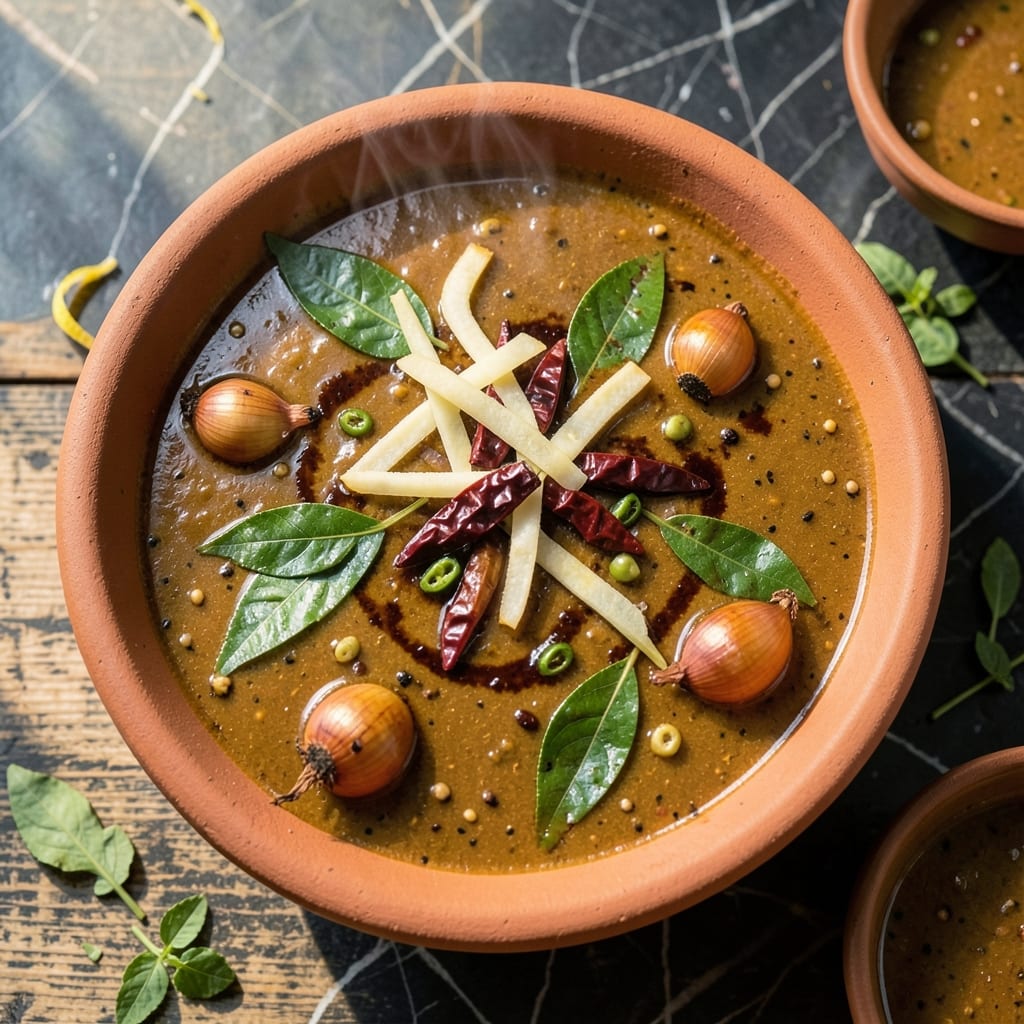
This Kerala-style ginger curry transforms humble ingredients into a bold, aromatic dish that captures the essence of South Indian cooking. The balance of heat, sweetness, and coconut richness makes it unforgettable.
Traditional methods bring out the best in fresh ginger, tamarind, and coconut. I’ve streamlined the process without losing authenticity, ensuring vibrant flavor with minimal effort.
What emerges is a spicy, tangy curry with a velvety texture—perfect alongside rice or dosa. The ginger’s warmth and the coconut’s creaminess create a harmony that lingers.
This recipe adapts beautifully to pantry staples while staying true to its roots. It’s a dish that feels both comforting and exciting.
Ingredients for Inji Curry Recipe Kerala Style
Humble pantry staples create this bold, aromatic Kerala-style ginger delight.
| Ingredient | Amount | Notes |
|---|---|---|
| Fresh Ginger Root 🌿 | 6 oz | Peeled, finely grated or minced |
| Shallots 🧅 | 8 whole | Peeled, thinly sliced |
| Green Chilies 🌶️ | 4 whole | Slit lengthwise, seeds removed for less heat |
| Curry Leaves 🍃 | ½ cup | Fresh, loosely packed |
| Dried Red Chilies 🌶️ | 6 whole | Deseeded, soaked in warm water |
| Tamarind Paste 🍋 | 2 tbsp | For tangy depth |
| Jaggery 🍯 | 2 tbsp | Or substitute brown sugar |
| Turmeric Powder 🌿 | ½ tsp | For color and earthiness |
| Coconut Oil 🥥 | 3 tbsp | For authentic flavor |
| Fresh Coconut 🥥 | 1 cup | Grated or shredded |
| Mustard Seeds 🌿 | 1 tsp | For tempering |
| Urad Dal 🌾 | 1 tsp | Split black gram, optional |
| Asafoetida 🧂 | ¼ tsp | Hing, for umami depth |
| Salt 🧂 | 1 tsp | Adjust to taste |
| Water 💧 | 1 ½ cups | For cooking curry |
[recipe_ingredient_scaler]
The ginger is non-negotiable here—fresh, plump rhizomes with taut skin deliver the best flavor (avoid shriveled or fibrous pieces). Asian grocery stores or well-stocked supermarkets like Whole Foods carry fresh curry leaves, which add authentic citrusy aroma. For coconut, unsweetened shredded from brands like Bob’s Red Mill works if fresh isn’t available. Tamarind paste can be found at Indian markets or the international aisle.
Out of fresh ginger? Ginger paste at half the amount works in a pinch, but fresh is ideal. No tamarind? Lime juice plus a pinch of sugar mimics the tang. Green chilies can be swapped for jalapeños or serranos—adjust quantity to taste. For jaggery, coconut sugar or dark brown sugar both add the needed depth. Skip the urad dal if unavailable; the dish remains delicious.
This curry tastes even better the next day as flavors meld. Stores in the fridge for 5 days in an airtight container. Freezes beautifully for up to 3 months—portion before freezing for easy reheating. Always temper the mustard seeds fresh for the best aroma.
Why You’ll Love This Recipe
- 20-Minute Magic: I can have this ginger-shallot curry ready before the rice even finishes cooking.
- Flavor Explosion: The ginger, green chilies, and curry leaves create a tangy, spicy kick that’s purely Kerala in every bite.
- Pairs with Anything: Honestly, it works with dosa, rice, or even as a chutney for idli.
- Budget Keeper: A handful of affordable pantry staples and fresh ginger is all it takes to feed four.
Instructions
Master the traditional method with these precise steps for authentic Kerala flavors.
Step 1: Temper the Spices and Aromatics
Heat the 3 tbsp Coconut Oil in a deep pan over medium heat. Add the 1 tsp Mustard Seeds and 1 tsp Urad Dal, then cook for 45-60 seconds until the mustard seeds begin to pop and the dal turns light golden brown.
Immediately add the 0.25 tsp Asafoetida, 0.5 cup Curry Leaves, and 6 whole Dried Red Chilies. Sauté for 30 seconds until the curry leaves release their aroma and the red chilies darken slightly. This tempering step builds the foundation of flavor for this dish.
Step 2: Cook the Shallots and Ginger
Add the 8 whole Shallots to the pan and sauté for 3-4 minutes until they turn translucent and begin to soften. Then stir in the 6 oz Fresh Ginger Root and 4 whole Green Chilies, cooking for another 2-3 minutes until the raw aroma of ginger mellows.
Sprinkle in the 0.5 tsp Turmeric Powder and 1 tsp Salt, stirring well to coat the shallots and ginger evenly. The mixture should become fragrant and slightly sticky as the shallots caramelize at the edges.
Step 3: Incorporate the Wet Ingredients
Pour in the 1.5 cups Water and add the 2 tbsp Tamarind Paste and 2 tbsp Jaggery. Stir well to dissolve the jaggery completely, then bring the mixture to a gentle simmer over medium-low heat.
Allow it to cook for 5-7 minutes until the liquid reduces slightly and the flavors meld together. The tamarind will add a tangy depth, while the jaggery balances it with subtle sweetness.
Step 4: Finish with Fresh Coconut
Reduce the heat to low and stir in the 1 cup Fresh Coconut. Simmer for an additional 3-4 minutes until the coconut is heated through and the curry reaches your desired consistency—it should coat the back of a spoon without being too thick.
Taste and adjust the seasoning if needed, though the balance of sweet, sour, and spicy should already be well-developed. Turn off the heat and let the curry rest for 5 minutes to allow the flavors to deepen further before serving.
Pro Tips For Making Inji Curry Recipe Kerala Style
- Toast the Spices First: I learned this the hard way—dry-roast the dried red chilies and coriander seeds for 30 seconds before grinding. It deepens the flavor in a way raw spices just can’t.
- Peel Ginger Thinly: Use a spoon to scrape off just the outer skin of the ginger; it removes the bitterness while keeping all the juicy, fibrous bits that make the curry rich.
- Don’t Overcook Shallots: Cook them until just translucent, not brown. After burning a batch, I realized they turn bitter if left too long—pull them off the heat as soon as they soften.
- Use Fresh Curry Leaves: Dried ones work in a pinch, but fresh curry leaves—about 10-12 sprigs—add that bright, citrusy aroma that defines Kerala-style inji curry. I skip them when lazy, but the dish always tastes flatter.
Creative Variations of These Flavors
Mango Inji Twist
Add ½ cup ripe mango pulp along with tamarind for a fruity sweetness. The natural pectin thickens the curry slightly. I love this summer variation—it’s refreshing yet still fiery. 🌶️
Pineapple Coconut Fusion
Stir in ¾ cup crushed pineapple with the jaggery for tropical flair. The acidity complements the ginger perfectly. This version pairs beautifully with grilled fish.
Tamarind-Free Option
Replace tamarind with 3 tbsp lime juice and 1 tsp sugar for a brighter, zestier profile. The curry loses some depth but gains a citrusy punch. I use this when I’m out of tamarind paste.
Creamy Yogurt Inji
Whisk in ½ cup plain yogurt at the end for a tangy, creamy texture. Reduce heat to low to prevent curdling. This version feels richer and works well with flatbreads.
North Indian Adaptation
Swap coconut for 2 tbsp heavy cream and add 1 tsp garam masala for a Punjabi-style twist. The warmth of the spices changes the character completely. 💛
Quick Weeknight Version
Use ground ginger at 1 tbsp instead of fresh, and skip the soaking step for dried chilies. It’s not as vibrant but still delicious on busy nights.
Nutrition Facts
Frequently Asked Questions
Can I use powdered ginger instead of fresh?
Use 1 tbsp powdered ginger for every 6 oz fresh, but fresh delivers better flavor. The dish may taste slightly sharper with powder.
How do I adjust the spice level?
Reduce green chilies to 2 or remove seeds for mild heat. For extra spice, add 1 tsp cayenne with the turmeric.
Why did my curry turn bitter?
Overcooked dried red chilies or old tamarind paste can cause bitterness. Always soak chilies and use fresh tamarind.
Can I skip the coconut?
Yes, but the texture changes. Replace with ½ cup cashew paste for creaminess or skip entirely for a lighter version.

Trained in classic French technique but raised on slow-cooked ribs and spicy rubs, she blends culinary skill with smoke and soul.
- Recipe for Boneless Pork Chops in Cast Iron Skillet: Sear and Baste to Juicy Perfection - October 3, 2026
- Recipe for Boneless Cross Rib Roast: Slow-Roasted Beef with Herb Crust - October 3, 2026
- Hamburgers in Sauce Recipe Crock Pot: Slow-Cooked Savory Delight - October 3, 2026