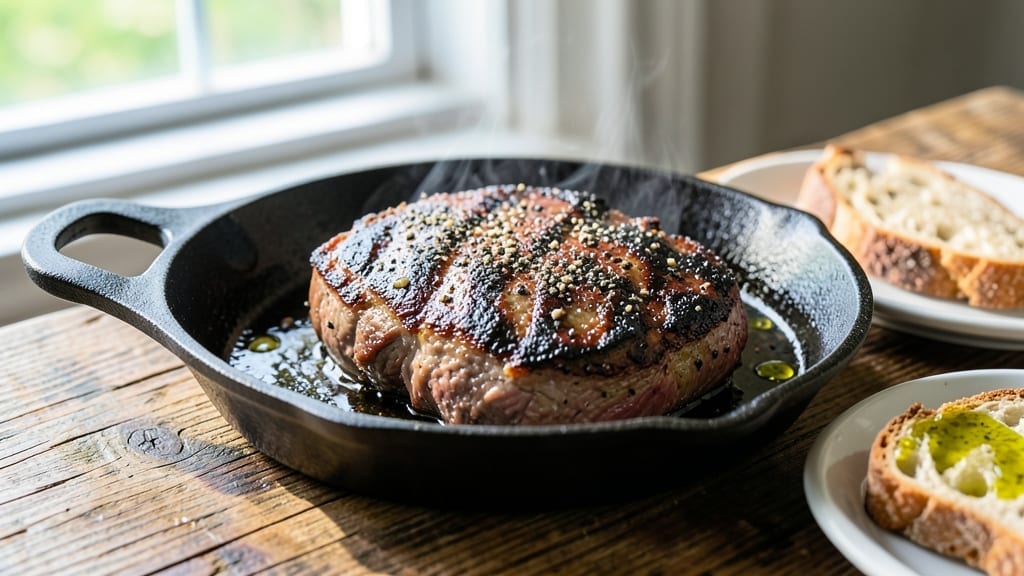
This Irish beef brisket recipe delivers melt-in-your-mouth tenderness with rich, malty depth from Guinness—perfect for hearty gatherings or cozy weeknight dinners. The slow-cooking process transforms tough cuts into succulent, fork-tender meat that pairs beautifully with traditional Irish flavors.
I’ve perfected this method over years of testing, ensuring every bite is packed with savory, caramelized goodness that’ll have your guests asking for seconds.
The secret lies in the braising technique, where the brisket simmers gently in a flavorful liquid infused with Guinness, aromatic herbs, and a touch of sweetness. This method not only tenderizes the meat but also infuses it with layers of complex flavor that you won’t find in standard slow-cooked dishes.
The result? A brisket so tender it nearly falls apart, with a surface that’s beautifully caramelized and studded with crispy edges.
What sets this recipe apart is the balance of tradition and simplicity—no fancy equipment required, just time and patience to unlock restaurant-quality results at home. The rich, malty notes from the Guinness elevate the dish, while the accompanying sides of creamy mashed potatoes or buttery colcannon complete the meal.
Whether you’re celebrating St. Patrick’s Day or simply craving a comforting classic, this brisket delivers.
Serve with a crisp green salad or roasted root vegetables to round out the plate, and don’t forget a cold pint of Guinness to complement every bite. This recipe is designed to impress, so let’s get started on creating a dish that’s as satisfying as it is unforgettable.
Ingredients for irish beef brisket
A few quality ingredients transform tough brisket into restaurant-worthy tenderness with Guinness depth.
| Ingredient | Amount | Notes |
|---|---|---|
| Beef Brisket 🥩 | 4 lb | Flat cut, 1-inch thick, trimmed of excess fat |
| Guinness Stout 🍺 | 2 cups | Draught quality for optimal flavor |
| Yellow Onions 🧅 | 2 whole | Medium, thinly sliced |
| Garlic Cloves 🧄 | 6 cloves | Peeled, lightly crushed |
| Fresh Thyme 🌿 | ¼ cup | Leaves only, finely chopped |
| Fresh Rosemary 🌿 | ¼ cup | Needles finely chopped |
| Carrots 🥕 | 4 whole | Medium, peeled, cut into chunks |
| Tomato Paste 🍅 | ½ cup | High-quality, no sugar added |
| Beef Broth 💧 | 2 cups | Low-sodium preferred |
| Brown Sugar 🍯 | 2 tbsp | Lightly packed |
| Diamond Crystal Kosher Salt 🧂 | 1 ½ tbsp | For seasoning and brining |
| Freshly Ground Black Pepper 🌶️ | 1 tbsp | Coarsely ground |
| Extra-Virgin Olive Oil 🫒 | 2 tbsp | For searing brisket |
| All-Purpose Flour 🌾 | ¼ cup | For dredging |
[recipe_ingredient_scaler]
The brisket is the star—opt for a 4-pound flat cut with good marbling for optimal tenderness. Whole Foods or your local butcher will carry the best quality, often pre-trimmed for convenience. If buying whole, trim excess fat to about ¼-inch thickness to prevent excess grease. The Guinness should be draught quality (not the light stuff)—its malty depth is non-negotiable for authentic flavor. For the herbs, fresh thyme and rosemary from a trusted grocer like Trader Joe’s will deliver the most aromatic punch, though dried will work in a pinch at one-third the amount.
No Guinness on hand? Substitute with a mix of beef broth and a splash of balsamic vinegar—it won’t be identical, but it’ll bridge the gap. For the tomato paste, Trader Joe’s squeeze tubes are perfect (no waste, lasts months), but avoid the canned variety with added salt. The brown sugar adds just enough sweetness to balance the malty Guinness; lightly packed means no compacting. If your brisket is particularly lean, consider adding an extra 1 tbsp of olive oil when searing to ensure a crispy crust. The flour is purely for dredging—no need for fancy breadcrumbs here.
This brisket develops deeper flavor the longer it sits, so plan for leftovers. Reheats beautifully in a 350°F oven for 20-30 minutes, covered with foil. For storage, keep the cooked brisket in its braising liquid in the fridge for up to 5 days or freeze for 3 months. The braising liquid can be repurposed for soups or gravies—simply strain and reduce. For serving, slice against the grain for maximum tenderness, and reserve the crispy edges for garnish.
Why You’ll Love This Recipe
- One-Pot Done: Honestly, this is the kind of recipe where you’re basically doing one thing: searing, simmering, and waiting. The Dutch oven does 90% of the work while you’re off doing actual adulting—like reading a book or watching TV. That 30-minute prep? Just seasoning the brisket and chopping onions, garlic, and herbs. The rest is hands-off magic at 300°F for 6-8 hours. No constant stirring, no fussy layering—just set it and forget it.
- Guinness-Glazed Perfection: That first sip of sauce? Chef’s kiss. The deep, malty richness of the Guinness stout caramelizes into something almost like a molasses glaze, while the tomato paste adds a tangy depth. The rosemary and thyme—finely chopped, not just sprinkled—infuse every bite with herbal warmth. And the crispy fat cap? It’s the perfect crunchy contrast to the melt-in-your-mouth meat. Trust me, this isn’t your average beef dish.
- Leftover Legend: You’ll have enough brisket to feed a small army, and honestly, the second day is even better. The flavors deepen, the sauce thickens into something almost like a stew, and the meat gets softer—like buttery silk. Wrap slices in crusty bread for a sandwich, toss with mashed potatoes, or reheat with a splash of beef broth to revive the sauce. My kids ask for leftovers three times a week after this. (Yes, even on a Tuesday night.)
- Budget-Friendly Beast: A 4-pound brisket is one of the most affordable cuts you can slow-cook, and the ingredients? Most of them are pantry staples or budget-friendly. The Guinness stout might feel like a splurge, but a bottle goes a long way, and the flavor it adds is worth it. You’re looking at a meal that costs less than takeout but tastes like you spent all day in the kitchen. And if you freeze half, you’ve got a freezer meal ready for weeks.
Step-by-step instructions for Irish beef brisket
A methodical approach yields brisket with Guinness-infused richness and melt-in-your-mouth tenderness.
Prepare the Brisket for Slow Cooking
Begin by trimming the 4 lb beef brisket of any excess fat, leaving about ¼ inch thickness on the fat cap. This ensures proper heat penetration while maintaining moisture. Pat the brisket dry with paper towels—removing surface moisture is critical for achieving a proper sear later.
In a small bowl, combine the 1½ tbsp diamond crystal kosher salt and 1 tbsp freshly ground black pepper. Rub this mixture evenly over all surfaces of the brisket, pressing firmly so the seasoning adheres. Let the seasoned brisket sit at room temperature for 30 minutes while you prepare the remaining ingredients. This step allows the seasoning to penetrate slightly and ensures even cooking.
Sear and Deglaze the Brisket
Heat a Dutch oven over medium-high heat and add the 2 tbsp extra-virgin olive oil. Once the oil shimmers, carefully place the brisket fat-side down in the pot. Sear undisturbed for 8-10 minutes until the fat cap is deeply golden brown and crispy. Flip the brisket and sear the other side for another 5-6 minutes until well-browned.
Remove the brisket from the pot and set it aside. Immediately add the 2 thinly sliced yellow onions, 6 lightly crushed garlic cloves, ¼ cup finely chopped fresh thyme, and ¼ cup finely chopped fresh rosemary to the Dutch oven. Cook for 2-3 minutes until the onions soften slightly and become fragrant. Pour in the 2 cups Guinness stout, scraping up any browned bits from the bottom of the pot—a technique called deglazing that captures maximum flavor.
Build the Flavorful Base
Return the brisket to the Dutch oven, fat-side up. Add the 4 peeled and chunked carrots, ½ cup tomato paste, 2 cups beef broth, and 2 tbsp brown sugar. Stir gently to combine, ensuring the brisket is partially submerged in the liquid. Bring the mixture to a simmer, then reduce heat to low, cover, and transfer to a preheated 300°F oven.
Here’s the thing—this slow cook is where the magic happens. The brisket needs 6-8 hours to become fork-tender. The Guinness stout and tomato paste create a rich, slightly sweet sauce that tenderizes the meat while infusing it with deep flavor. Check the liquid level occasionally and add a splash of water if it reduces too much, but avoid overdoing it—you want a concentrated sauce.
Finish with Crispy Texture and Perfect Tenderness
When the brisket reaches an internal temperature of 195-200°F (about 6-8 hours), remove it from the oven. Transfer the brisket to a cutting board and tent loosely with aluminum foil. Let it rest for 30 minutes—this crucial step allows the juices to redistribute, ensuring each slice is moist and flavorful.
While the brisket rests, return the Dutch oven to the stovetop over medium heat. Sprinkle the ¼ cup all-purpose flour over the sauce and whisk vigorously for 1-2 minutes until it thickens slightly. This creates a glossy, velvety finish that clings beautifully to the brisket. If the sauce is too thick, thin it with a splash of the cooking liquid.
Serve with Confidence
Slice the brisket against the grain into ½-inch thick pieces. Spoon the thickened Guinness sauce over the top and serve immediately. The brisket should be fork-tender with a crispy exterior, and each bite should deliver layers of flavor from the slow-cooked meat, the rich Guinness sauce, and the aromatic herbs. Pair with roasted root vegetables or crusty bread to soak up every last drop of that velvety sauce.
Pro Tips For Making Irish Beef Brisket
- Sear Until Golden: Don’t rush the 8-10 minutes on the fat side—wait until that brisket is deeply golden, almost like caramelized leather. I used to flip too soon, and the crust never delivered that rich, nutty depth. Trust the process, even if it means your kitchen smells like a pub for 10 minutes.
- Crush Garlic Lightly: Those 6 garlic cloves should be peeled and lightly crushed—not minced, not smashed into paste. Overworking them turns bitter, and you’ll taste it in the sauce. A few gentle presses with the flat of your knife is all it takes.
- Check Temp, Not Time: Your brisket needs 195-200°F internal temp, not just 6-8 hours. I’ve pulled it at 5 hours thinking it was done, only to find it still tough. Use a meat thermometer—no guessing. The sauce will thicken as it cooks, but the meat’s the real star.
- Deglaze Aggressively: When you pour in that 2 cups of Guinness, don’t just splash—scrape every browned bit from the Dutch oven with a wooden spoon. That’s where the flavor hides. I learned this after tasting bland sauce my first few times. It’s the difference between “good” and “wow.”
Essential equipment for this recipe
Dutch Oven Essentials
Your Dutch oven is the star of this recipe—look for a 5-7 quart cast iron like the Lodge Dutch oven, which handles high heat and oven temperatures perfectly.
The heavy cast iron retains heat evenly, ensuring that brisket sears properly on the stovetop and slows cooks evenly in the oven. I recommend the 5-quart size for this recipe, as it fits the 4 lb brisket snugly while allowing room for the braising liquid. 🔥
Meat Thermometer
A high-quality instant-read thermometer is non-negotiable for this dish. I use the Thermoworks Smoke for its accuracy and durability, but even a basic Meater+ will do. The key is tracking the brisket’s internal temperature to 195-200°F—this ensures fork-tender perfection every time.
Pro tip: Place the probe horizontally through the thickest part of the brisket for the most accurate reading.
Sharp Knife and Cutting Board
Trimming the fat cap and slicing the brisket against the grain requires precision. I rely on a Dexter-Russell 12-inch chef’s knife for its razor-sharp edge and comfortable grip. Pair it with a sturdy wood or plastic cutting board—avoid glass, as it dulls knives quickly.
A boning knife also comes in handy for trimming excess fat from the brisket.
Mixing Bowls and Whisk
For seasoning the brisket, use a medium-sized stainless steel bowl to mix the 1½ tbsp salt and 1 tbsp black pepper. A balloon whisk is essential for thickening the Guinness sauce later—it helps incorporate the ¼ cup flour evenly without clumping.
I keep a 3-quart stainless steel bowl on hand for deglazing the Dutch oven after searing.
Aluminum Foil and Towels
After cooking, tenting the brisket with heavy-duty aluminum foil while it rests is crucial for retaining heat and moisture. I use a 20-inch roll of Reynolds Wrap for this purpose.
Keep a stack of clean hand towels nearby to tent the brisket loosely—this allows steam to escape while keeping it warm. This step ensures juices redistribute evenly for maximum tenderness. ✨
Nutrition facts
Frequently asked questions
Why does this recipe use Guinness instead of regular beer?
The Guinness stout adds unmatched depth and richness to the dish, thanks to its malty, roasted flavor profile. Unlike lighter beers, it enhances the beef’s natural taste without overpowering it. The slight sweetness also balances the savory herbs and tomato paste beautifully. For best results, always use draught-quality Guinness for optimal flavor infusion.
How do I know when the brisket is fully cooked?
Use a meat thermometer to check the internal temperature—it should reach 195-200°F for fork-tender perfection. Insert the probe horizontally into the thickest part of the brisket, avoiding bones or fat. The brisket will pull apart easily when done, with a glossy, caramelized exterior. This method ensures juicy, flavorful results every time.
Can I make this recipe ahead of time?
The brisket tastes even better after resting overnight. After cooking, store it in its braising liquid in the fridge for up to 5 days or freeze for 3 months. Reheat gently in a 350°F oven for 20-30 minutes, covered with foil, to maintain moisture. The sauce thickens slightly over time, adding extra depth to each bite.
What if I don’t have a Dutch oven?
You can substitute a heavy-bottomed pot or even a slow cooker. For stovetop cooking, ensure it’s large enough to fit the brisket and liquid comfortably. If using a slow cooker, transfer the seared brisket and liquid to it after deglazing, then cook on low for 8-10 hours. The texture will be slightly different, but still delicious!

Trained in classic French technique but raised on slow-cooked ribs and spicy rubs, she blends culinary skill with smoke and soul.
- Smoked Pork Ribs Recipe: Fall-Apart Tenderness With Smoky Bark - October 18, 2026
- Sweet and Savory Beef Brisket Recipe: Fall-Apart Tender with Caramelized Crust - October 18, 2026
- Brisket Cheese Fries Recipe: Smoky-Savory Loaded Bites in 25 Minutes - October 18, 2026