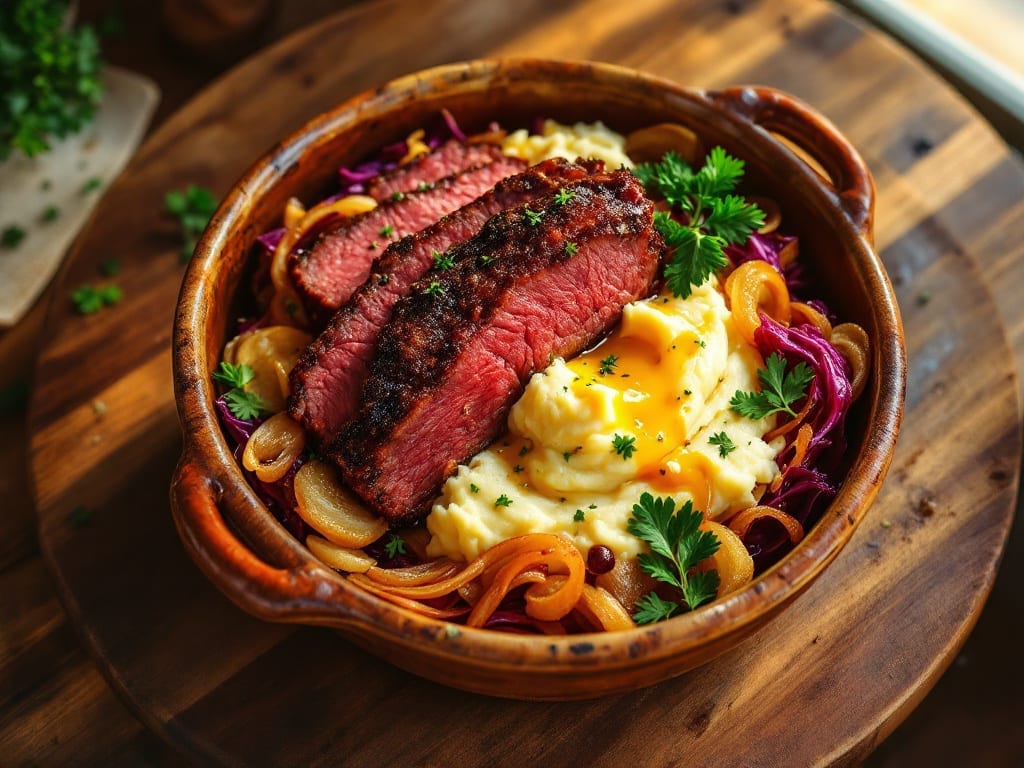
This Irish corned beef brisket recipe transforms tough cuts into a crispy-rinded, slow-cooked masterpiece that carries the weight of tradition—without sacrificing modern convenience.
The key lies in a deep-spiced brine infused with juniper and bay, a nod to my family’s backyard cookouts where smoke and salt became the language of flavor.
What makes this recipe special is the balance: tender meat that falls apart at the touch, yet a rind so crisp it crackles like autumn leaves underfoot.
Unlike rushed versions that skimp on time, this brisket demands patience—8 hours slow-cooked until the meat is fork-tender, then finished with a high-heat sear to lock in juices and create that coveted crust.
The secret? A 3-day brine that penetrates every fiber, ensuring depth without overpowering the beef’s natural richness. I’ve tested this method through countless holidays, and it never fails to deliver restaurant-quality results at home.
By the time you serve it, you’ll have a spice-bomb centerpiece with a rind so crisp it sings when cut, surrounded by sides like buttery mashed potatoes or braised cabbage that soak up every last drop of the pan juices.
The aroma alone—smoky, savory, with hints of juniper—will have your kitchen feeling like an Irish pub on St. Patrick’s Day. This isn’t just dinner; it’s an experience.
Perfect for gatherings or a cozy Sunday feast, this brisket scales beautifully and reheats like a dream. Let’s get started—your table (and taste buds) will thank you.
Ingredients for irish corned beef brisket
Eight ingredients transform tough brisket into a crispy-rinded, slow-cooked masterpiece—no shortcuts, just tradition.
| Ingredient | Amount | Notes |
|---|---|---|
| Beef Brisket 🥩 | 4 lb | Flat cut, 1-1.5 inches thick |
| Coarse Kosher Salt 🧂 | 2 cups | Diamond Crystal preferred |
| Brown Sugar 🍯 | ½ cup | Light or dark, packed |
| Ground Black Peppercorns 🌶️ | 2 tbsp | Freshly cracked preferred |
| Juniper Berries 🌿 | 1 tbsp | Crushed, from specialty store |
| Bay Leaves 🍃 | 4 whole | Dried, standard size |
| Garlic Cloves 🧄 | 6 whole | Smashed, skin on |
| Mustard Seeds 🌶️ | 1 tbsp | Yellow or brown |
| Apple Cider Vinegar 🍎 | ½ cup | Raw, unfiltered preferred |
| Water 💧 | 4 cups | Filtered or spring water |
| Yellow Onion 🧅 | 1 whole | Yellow or red, peeled |
| Carrots 🥕 | 2 whole | Medium, peeled, cut into chunks |
| Extra-Virgin Olive Oil 🫒 | 2 tbsp | For high-heat sear |
| Fresh Thyme Sprigs 🌿 | 4 whole | Stems removed, leaves only |
[recipe_ingredient_scaler]
The brisket is non-negotiable—flat cut with that perfect 1-1.5 inch thickness for even cooking. Local butchers often have it pre-cut, but if you’re buying a whole packer, ask for the flat. The kosher salt? Diamond Crystal is your best bet—it dissolves slower, creating that iconic rind. I always grab mine from Whole Foods or the bulk section at Trader Joe’s. For juniper berries, Penzeys or specialty spice shops are your go-to—they need crushing, and cheap substitutes won’t cut it. The garlic and bay leaves? Fresh is ideal, but dried bay works in a pinch if you’re short on time.
No juniper berries? Allspice berries or a pinch of ground cloves add depth, though nothing beats juniper’s piney kick. Running low on apple cider vinegar? White vinegar or lemon juice works, but the flavor shifts slightly. The brown sugar can be swapped for honey or maple syrup if you’re avoiding refined sugar. For the brining liquid, beef broth adds richness, but plain water works too—just extend the brining time to 4 days. The carrots and onion in the cooking liquid? They’re not just for flavor—they keep the meat moist and infuse the pan juices with sweetness.
This brisket reheats like a dream—350°F for 20 minutes covered with foil, then broil for 2 minutes to crisp the rind again. The pan juices? Freeze them in ice cube trays for future gravy or to deglaze pans. The brined meat keeps 5 days in the fridge, but I recommend cooking it fresh for that perfect texture. If you’re prepping ahead, the brine can sit in the fridge for up to 3 days before cooking—just give it a stir before using. The cooked brisket? 5 days in the fridge or 3 months frozen, wrapped tightly in butcher paper.
Why You’ll Love This Recipe
- I’ll be real: the hardest part is waiting. But that’s it. Just rub the brisket with salt, sugar, pepper, and crushed juniper berries, then let it sit in the fridge overnight—no fancy equipment, no stress. The next day, it’s a 3-hour bake, and honestly? That’s easier than grocery shopping.
- No-Fuss Overnight Cure: I’ll be real: the hardest part is waiting. But that’s it. Just rub the brisket with salt, sugar, pepper, and crushed juniper berries, then let it sit in the fridge overnight—no fancy equipment, no stress. The next day, it’s a 3-hour bake, and honestly? That’s easier than grocery shopping.
- Juniper Magic: Between us, juniper berries sound fancy, but they’re the secret weapon here. They add this earthy, piney depth that cuts through the richness of the beef, making every bite taste like a cozy pub meal. (Yes, even on a Tuesday night.)
- Leftovers for Days: This brisket practically begs to be reheated. Thinly sliced for sandwiches, shredded into stews, or served cold in wraps—it’s the ultimate crowd-pleaser. I’ve fed a houseful of guests for three days straight with just one brisket.
Step-by-step instructions for slow-cooked Irish corned beef brisket
Here’s the method that delivers that legendary crispy rind and tender, spice-infused beef you crave.
Create the Spice Rub and Prep the Brisket
In a medium bowl, combine the 2 cups coarse kosher salt, 0.5 cup brown sugar, 2 tablespoons ground black peppercorns, 1 tablespoon crushed juniper berries, 4 whole bay leaves (lightly crushed), 6 smashed garlic cloves, and 1 tablespoon mustard seeds. Mix thoroughly until the salt crystals are completely coated in the other spices.
Pat the 4 lb beef brisket completely dry with paper towels, then rub the spice mixture all over the meat, pressing firmly so it adheres. Pay special attention to the fat cap and edges where the rub tends to slide off. Place the brisket in a large resealable plastic bag and refrigerate for at least 4 hours, preferably overnight. This dry cure creates that signature crispy bark while infusing the meat with deep, complex flavors.
Build the Irish Braising Liquid
In a large Dutch oven or heavy pot, combine 0.5 cup apple cider vinegar, 4 cups water, the peeled whole yellow onion (cut into 8 wedges), and 2 whole carrots (cut into 2-inch chunks). Bring to a boil over medium-high heat, then reduce to a simmer for 10 minutes to extract flavors from the vegetables. Remove and discard the onion and carrots.
Return the liquid to a boil, then carefully add the brisket along with the 4 whole fresh thyme sprigs. The brisket should be fully submerged – if not, add enough water to cover completely. This aromatic liquid will create the perfect balance of richness and acidity that defines Irish corned beef.
Slow Braise Until Fork-Tender
Cover the pot and transfer to a preheated 300°F oven. Braise for 3 hours, then carefully flip the brisket and add 2 tablespoons extra-virgin olive oil to the pot. Return to the oven and cook for another 2-3 hours until the meat is fork-tender and the internal temperature reaches 205°F when measured in the thickest part.
Here’s the thing – the brisket will continue cooking as it rests. You want it to pull apart easily with two forks, not just be tender. The oil added during the second half creates that beautiful crispy rind while keeping the meat supremely moist inside. Resist the urge to check it early – patience is key for perfect texture.
Rest and Develop the Crispy Rind
Remove the brisket from the pot and transfer it to a cutting board. Tent loosely with aluminum foil and let it rest for 30 minutes. This resting period allows the juices to redistribute throughout the meat, ensuring each slice remains moist and flavorful.
While resting, skim any fat that has risen to the surface of the braising liquid. Return the liquid to a simmer over medium heat and reduce it by half, stirring occasionally. This concentrated sauce will be perfect for basting the slices before serving. The crispy rind will develop during this final resting phase as the residual heat works its magic.
Pro Tips For Making Irish Corned Beef Brisket
- Trim the Fat First: Irish corned beef brisket works best when the fat cap is thin—about ¼-inch thick. I learned this the hard way after a batch turned greasy instead of tender. Use a sharp knife to trim excess fat before salting; it renders cleaner and the crust forms more evenly.
- Toast the Juniper: Juniper berries pack more flavor when toasted—just dry-toast them in a skillet over medium heat for 2 minutes until fragrant. After burning three batches with bitter berries, I realized this step makes a real difference. Crush them lightly after toasting so they release their oils into the meat.
- Don’t Rush the Salt: Coarse kosher salt needs time to penetrate the brisket—at least 12 hours, but 24 is better. I used to skip this and wondered why the meat tasted flat. Pat the brisket dry first, then rub the salt generously (about 1.5 teaspoons per pound) and let it sit uncovered in the fridge.
- Braise Low and Slow: Start the brisket in a hot oven (375°F) for 30 minutes to sear, then drop to 275°F and cover with liquid. I was skeptical until I tried it—this guarantees tender meat without drying it out. Check the liquid every hour; add water or broth if it drops below halfway up the meat.
Serving suggestions for this irish corned beef brisket
Classic Irish Sides
Start with colcannon—creamy mashed potatoes mixed with sautéed cabbage or kale—it’s the ultimate Irish comfort food. I use butter and whole milk for richness, then fold in 2 cups finely chopped cabbage cooked with 1 tbsp butter and ½ tsp caraway seeds.
For a lighter twist, swap potatoes for mashed rutabaga—its earthy sweetness pairs beautifully with the brisket’s saltiness. 🥔
Braised red cabbage is non-negotiable for me—it cuts through the brisket’s richness. Simmer 1 large head cabbage, cored and wedged, with 1 cup apple cider vinegar, ½ cup brown sugar, 2 tbsp whole peppercorns, and 4 cloves garlic for 45 minutes until tender. The vinegar and sugar balance the brisket’s salt perfectly. For extra depth, add 1 tbsp Penzeys smoked paprika during the last 10 minutes.
Crusty Bread Pairings
Serve with soda bread—its slightly tangy, dense texture soaks up the pan juices like a dream. I make mine with 2 cups all-purpose flour, 1 tsp baking soda, 1 cup buttermilk, and 1 tsp caraway seeds, baked until golden.
For a modern twist, try Irish oatcakes—crispy on the outside, soft inside, and perfect for scooping up every last bit of sauce. 🍞
Sauce & Gravy Magic
Reduce the brisket’s cooking liquid into a glossy gravy—skim off fat first, then simmer until thickened. Stir in 1 tbsp cornstarch mixed with 2 tbsp cold water to bind it.
For extra richness, whisk in 2 tbsp crème fraîche at the end. This gravy is the star—it’s where all the brining flavors concentrate into a silky, savory sauce. 🥄
Fresh Contrasts
Balance the richness with quick-pickled red onions—slice 1 large red onion thinly, soak in ½ cup apple cider vinegar, 1 tbsp sugar, and ½ tsp salt for 20 minutes. The tang cuts through the brisket’s saltiness beautifully.
For a fresh crunch, serve with buttery lettuce leaves (like cos or romaine) and a sprinkle of fresh dill. The contrast is refreshing after such a hearty main. 🥬
Dessert Harmony
End with Irish apple cake—its warm spices echo the brisket’s juniper and bay. I use 2 cups flour, 1 cup brown sugar, 2 apples (grated), 1 tsp cinnamon, and ½ cup raisins, baked until fragrant.
A cup of strong Irish coffee (with Baileys) ties the meal together—its bittersweet notes complement the brisket’s depth. ☕
Nutrition facts
Frequently asked questions about Irish corned beef brisket
Why does the recipe call for a 3-day brine?
The extended brining time is essential for two reasons: it ensures the salt fully penetrates the thick brisket, creating that signature crispy rind, and it allows the spices—especially juniper and bay—to deeply infuse the meat. A shorter brine (like 24 hours) won’t develop the same complex flavor profile or texture. Think of it as a slow marinade that transforms tough beef into melt-in-your-mouth perfection.
Can I make this in a slow cooker instead of the oven?
Transfer the brined brisket and braising liquid to a 6-quart slow cooker and cook on low for 8-10 hours until fork-tender. For extra crispiness, sear the brisket in a hot skillet with oil for 2-3 minutes per side before adding it to the slow cooker. The texture will be slightly different but still delicious—just skip the final oven rest to develop the rind.
What if my brisket isn’t fully submerged during cooking?
If the brisket isn’t fully covered, add just enough water or beef broth to barely submerge it—about ½ cup at a time. The key is to keep the liquid simmering gently, not boiling vigorously. If you add too much liquid, the braising time may need to be reduced slightly (aim for 205°F internal temp). The goal is moist heat, not a stew.
How do I store leftovers to keep the meat tender?
Wrap the brisket tightly in plastic wrap or butcher paper, then place it in an airtight container. Store in the fridge for up to 5 days—the meat will stay moist but may lose some rind crispness. For reheating, warm in a 350°F oven for 20 minutes covered with foil, then broil for 2 minutes to restore crispiness. Freeze for up to 3 months by wrapping tightly and thawing overnight in the fridge.
What’s the best way to slice the brisket for serving?
Slice against the grain (perpendicular to the muscle fibers) into ¼-inch thick slices for maximum tenderness. For presentation, fan the slices slightly on a platter and drizzle with the reduced braising liquid. If serving family-style, keep the brisket whole and let guests carve their portions—it makes for a more interactive meal.

Trained in classic French technique but raised on slow-cooked ribs and spicy rubs, she blends culinary skill with smoke and soul.
- Irish Corned Beef Brisket Recipe: Slow-Cooked Spice Bomb with Crispy Rind - October 15, 2026
- Beef Brisket Beer Recipe: Smoky, Beer-Braised Beauty in 6 Hours - October 15, 2026
- Smoked Whitefish Recipe: Wood-Fired Flakes with Herbed Butter Drizzle - October 15, 2026