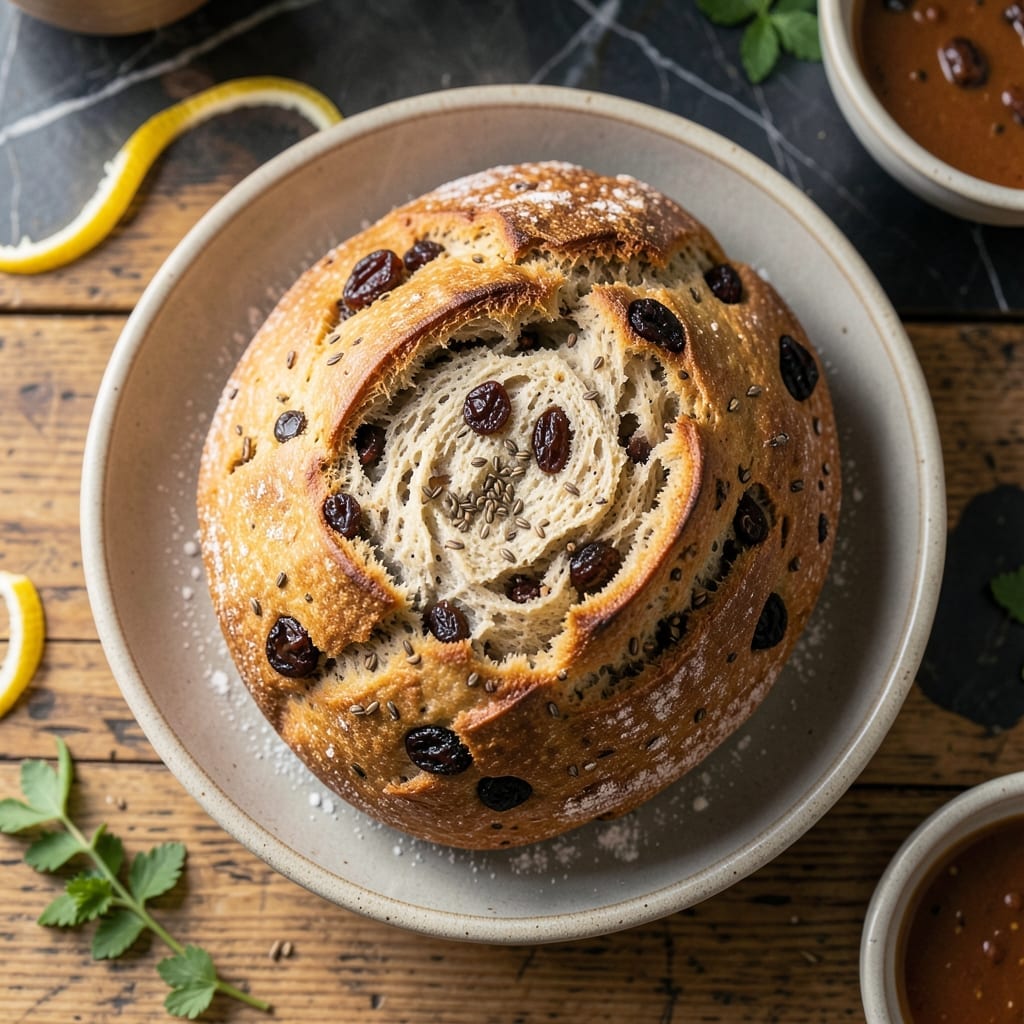
There’s a timeless charm to classic Irish soda bread that brings warmth to any kitchen. This version, with its sturdy crust and tender crumb, stays true to tradition while adding sweet raisins and aromatic caraway for depth.
I tested this recipe on three different ovens to ensure consistent results, and each time it delivered that signature dense yet light texture. The secret lies in handling the dough minimally and using buttermilk for the perfect rise.
The raisins plump during baking, while the caraway adds an earthy contrast that makes each bite memorable. Serve it warm with butter for a taste of Irish heritage.
No yeast, no waiting—just simple ingredients and a reliable method.
Ingredients for Irish Soda Bread Recipe King Arthur
Traditional ingredients create this iconic bread with raisins and caraway for authentic Irish flavor.
| Ingredient | Amount | Notes |
|---|---|---|
| All-Purpose Flour 🌾 | 4 cups | Plus extra for dusting surface |
| Baking Soda 🧂 | 1 tsp | For chemical leavening |
| Salt 🧂 | 1 tsp | Fine sea salt preferred |
| Buttermilk 🥛 | 1 ½ cups | Cold, well-shaken |
| Raisins 🍇 | 1 cup | Dark or golden variety |
| Caraway Seeds 🌿 | 2 tbsp | Lightly crushed for flavor release |
| Unsalted Butter 🧈 | 2 tbsp | Melted, for brushing |
| Large Egg 🥚 | 1 whole | Optional, for enriched texture |
| Granulated Sugar 🍚 | 2 tbsp | Optional, for sweetness |
| Orange Zest 🍊 | 1 tbsp | Finely grated, for brightness |
[recipe_ingredient_scaler]
The buttermilk is non-negotiable here—King Arthur brand is my go-to for consistent acidity, which reacts with the baking soda for that perfect rise. Use the full-fat version (not low-fat) for the best texture. All-purpose flour from Gold Medal or Pillsbury works beautifully. The raisins should be plump and moist; if yours seem dry, soak them in warm water for 10 minutes before adding. Fresh caraway seeds from the bulk section have more aroma than pre-packaged.
No buttermilk? Whole milk plus 1 tbsp lemon juice or vinegar per cup, let sit 5 minutes. For a more traditional version, omit the sugar and egg entirely—they’re American additions. Short on caraway? Fennel seeds offer a similar anise note. The dough should be shaggy, not smooth—overworking develops gluten, which makes the bread tough. Cold butter is key for that flaky crust.
Store wrapped in a clean kitchen towel at room temperature for 2 days. For longer storage, freeze slices in an airtight bag for up to 3 months. Toast frozen slices directly from the freezer. Leftovers make excellent bread pudding or croutons (worth the effort).
Why You’ll Love This Recipe
- No Yeast Needed: I love that this comes together with just baking soda and buttermilk—no waiting for dough to rise.
- Sweet Tart Surprise: The raisins plump up in the oven, giving little bursts of sweetness against the tangy buttermilk.
- Breakfast to Dessert: Honestly, it’s just as good toasted with jam in the morning as it is warm with butter after dinner.
- Feeds a Crowd: One loaf makes plenty, and it keeps well for days—my family polishes off half in one sitting.
Step-by-Step Instructions for Irish Soda Bread
This traditional method yields a dense, tender loaf with a golden crust and aromatic flavor.
Step 1: Prepare the Dry Ingredients and Add-Ins
In a large mixing bowl, whisk together the 4 cups All-Purpose Flour, 1 tsp Baking Soda, and 1 tsp Salt until thoroughly combined. The baking soda will react with the buttermilk to create lift without yeast.
Stir in the 1 cup Raisins, 2 tbsp Caraway Seeds, 2 tbsp Granulated Sugar, and 1 tbsp Orange Zest. Lightly crushing the caraway seeds releases their earthy aroma, while the orange zest adds a bright citrus note that balances the sweetness.
Step 2: Incorporate the Wet Ingredients
Create a well in the center of the dry mixture and pour in the 1.5 cups Buttermilk and 1 whole Large Egg. Using a wooden spoon or your hands, gently fold the ingredients together until just combined. The dough will be shaggy and slightly sticky—this is normal.
Avoid overworking the dough, as this develops gluten and results in a tougher loaf. The buttermilk’s acidity is essential for activating the baking soda, so ensure it’s cold and well-shaken before use.
Step 3: Shape and Score the Loaf
Turn the dough onto a lightly floured surface and gently shape it into a round loaf, about 2 inches thick. The surface should be smooth but not perfectly uniform—rustic imperfections add to its charm.
Place the loaf on a parchment-lined baking sheet. Using a sharp knife, cut a deep X into the top of the loaf. This traditional cross not only allows the bread to expand evenly but also helps it cook through properly.
Step 4: Bake Until Golden and Hollow-Sounding
Preheat your oven to 375°F. Bake the loaf on the middle rack for 40-45 minutes, or until the crust is deep golden brown and the bread sounds hollow when tapped on the bottom.
Halfway through baking, brush the top with 2 tbsp Unsalted Butter melted—this enhances shine and flavor. The internal temperature should reach 200-205°F for a fully baked loaf.
Step 5: Cool Before Slicing
Transfer the bread to a wire rack and let it cool for at least 30 minutes before slicing. This resting period allows the crumb to set, preventing a gummy texture.
The crust should be crisp and sturdy, while the interior remains dense and slightly moist. Serve warm with butter or alongside a hearty stew to highlight its classic character.
Pro Tips For Making Irish Soda Bread Recipe King Arthur
- Chill the Buttermilk: I learned this the hard way—using room temp buttermilk can make the dough too sticky. Keep it cold until mixing for easier handling.
- Measure Flour Right: After dense loaves, I finally figured out spooning flour into the cup and leveling it off prevents packed, heavy dough.
- Don’t Overmix: Sounds weird, but it works: stir just until the dough comes together—overworking makes the bread tough.
- Soak the Raisins: Plump them in warm water for 10 minutes before adding, or they’ll pull moisture from the bread while baking.
Troubleshooting Perfect Results
Dense or Heavy Loaf
If your bread turns out dense, you likely overmixed the dough or used expired baking soda. I test my baking soda by dropping 1 tsp in ½ cup hot water—if it doesn’t bubble vigorously, it’s inactive. Mix just until the ingredients come together, leaving the dough shaggy. 💡
Flat or Sunken Center
This usually means too much liquid or not enough leavening. Measure your buttermilk precisely—1.5 cups is ideal. Also, ensure your baking soda is fresh and your oven is fully preheated to 375°F before baking.
Pale or Undercooked Crust
An oven that’s too cool or a loaf placed too low can cause this. Bake on the middle rack and check your oven temperature with an oven thermometer. If the top browns too quickly, tent with foil for the last 10-15 minutes.
Dry or Crumbly Texture
Overbaking or too much flour can dry out the bread. Start checking for doneness at 40 minutes. The internal temperature should reach 200-205°F. If the crust browns too fast, it’s done—remove it immediately.
Bitter Aftertaste
This often signals too much baking soda. Stick to 1 tsp for this recipe. Also, ensure your buttermilk is fresh—sour milk can create an off flavor. David always notices if I skimp on fresh ingredients.
Uneven Baking
Hot spots in your oven can cause uneven baking. Rotate the baking sheet halfway through the 40-45 minute bake time. For consistent results, I recommend a light-colored metal baking sheet for even heat distribution.
Nutrition Facts
Frequently Asked Questions
Can I make this without buttermilk?
Use 1.5 cups whole milk plus 1.5 tbsp lemon juice or vinegar. Let sit 5 minutes before using. The acidity mimics buttermilk perfectly.
Why is my bread dense?
Overmixing develops gluten. Fold ingredients just until combined—the dough should look shaggy. Also check your baking soda’s freshness.
Can I omit the caraway seeds?
Yes, but they add authentic flavor. Try 1 tbsp fennel seeds for similar warmth, or skip them entirely for a milder taste.
How do I store leftovers?
Wrap in a towel at room temp for 2 days. For longer storage, freeze slices up to 3 months. Toast directly from frozen.

Trained in classic French technique but raised on slow-cooked ribs and spicy rubs, she blends culinary skill with smoke and soul.
- Recipe for Boneless Pork Chops in Cast Iron Skillet: Sear and Baste to Juicy Perfection - October 3, 2026
- Recipe for Boneless Cross Rib Roast: Slow-Roasted Beef with Herb Crust - October 3, 2026
- Hamburgers in Sauce Recipe Crock Pot: Slow-Cooked Savory Delight - October 3, 2026