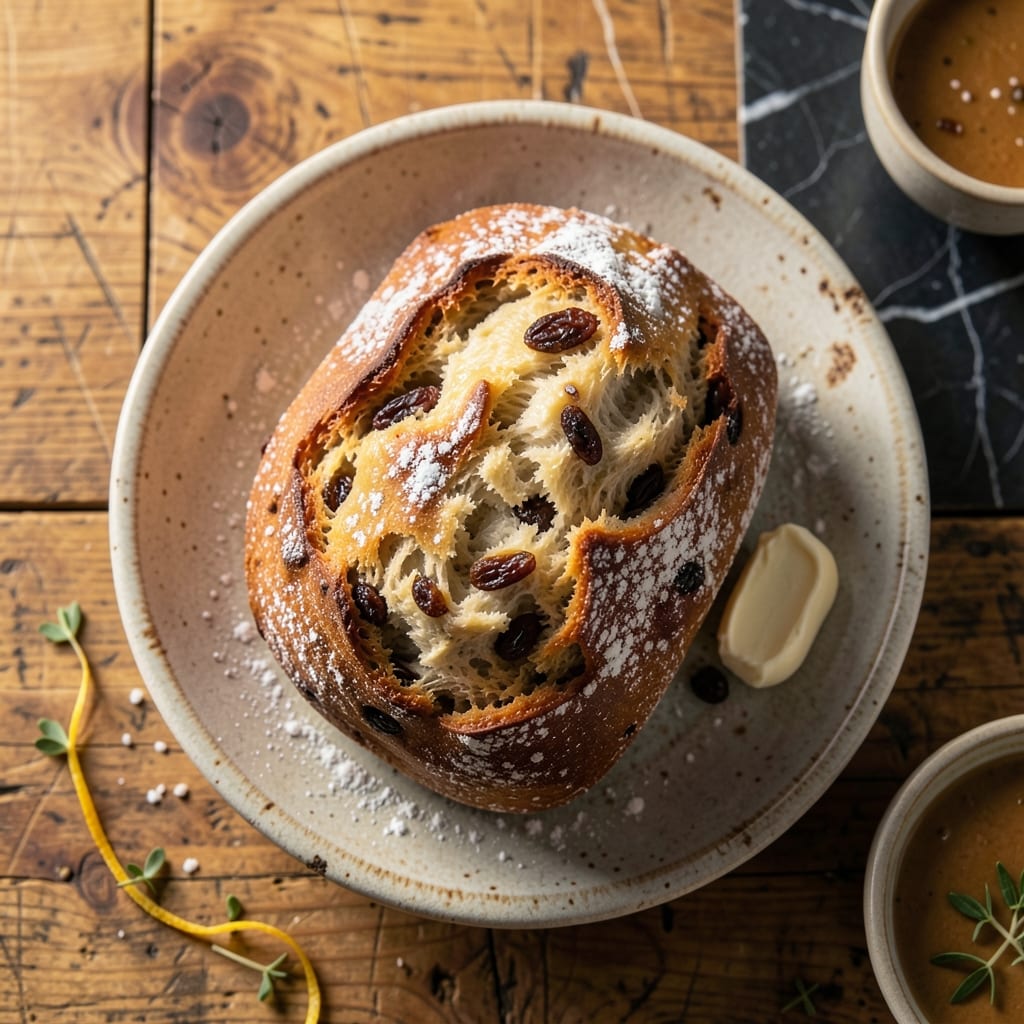
Traditional Irish soda bread holds a special place in rustic baking, and this version captures its essence with simplicity and authenticity.
Using buttermilk as the leavening agent creates a tender crumb with a slightly tangy flavor that defines this classic bread.
The beauty lies in its straightforward method—no kneading, no yeast, just a quick mix and bake for a loaf with a rustic, craggy crust.
This recipe stays true to its roots while delivering a warm, comforting bread that pairs perfectly with soups, stews, or simply butter.
Ingredients for Irish Soda Bread Recipe Paul Hollywood
Simple ingredients create this rustic, buttermilk-infused traditional bread with authentic Irish character.
| Ingredient | Amount | Notes |
|---|---|---|
| All-Purpose Flour 🌾 | 4 cups | Plus extra for dusting work surface |
| Baking Soda 🧂 | 1 tsp | Ensures proper rise and texture |
| Sea Salt 🧂 | 1 ½ tsp | Fine grain for even distribution |
| Buttermilk 🥛 | 1 ¾ cups | Cold, full-fat for tanginess |
| Unsalted Butter 🧈 | 2 tbsp | Melted, for richness |
| Raisins 🍇 | ¾ cup | Optional, for sweetness |
| Whole Milk 🥛 | ¼ cup | For adjusting dough consistency |
[recipe_ingredient_scaler]
The flour is the foundation here. King Arthur all-purpose is ideal for its consistent protein content, ensuring the right crumb structure. Use fresh baking soda—test it by adding a spoonful to vinegar; if it fizzes vigorously, it’s active. Sea salt adds a subtle mineral note that enhances the buttermilk’s tang. For authentic results, avoid self-rising flour as it contains added leavening agents.
No buttermilk on hand? Whole milk with 1 tbsp lemon juice or vinegar per cup works as a substitute—let it curdle for 5 minutes before using. For a richer flavor, full-fat buttermilk is non-negotiable. Raisins are optional but add a traditional touch; golden raisins are preferred for their milder sweetness. If omitting, consider adding 1 tbsp sugar to balance the tang.
Store flour and baking soda in airtight containers in a cool, dry place for up to 6 months. Buttermilk keeps for 1 week refrigerated. Baked bread stays fresh for 2-3 days wrapped in a clean tea towel, or freeze for up to 3 months sliced and wrapped tightly.
Why You’ll Love This Recipe
- No Yeast Needed: I love that this comes together with just baking soda and buttermilk—no waiting for dough to rise.
- Buttery Crumb: The cold butter creates little pockets of flaky goodness in every bite.
- Breakfast to Dinner: Honestly, it’s just as good with jam at dawn as it is mopping up stew at night.
- Pantry Staples: All-purpose flour, salt, and buttermilk—things I always have on hand, so I can bake this on a whim.
Step-by-Step Instructions for Irish Soda Bread
Master this traditional method for a rustic loaf with a tender crumb and golden crust.
Step 1: Prepare the Dry Ingredients
In a large mixing bowl, whisk together the 4 cups All-Purpose Flour, 1 tsp Baking Soda, and 1.5 tsp Sea Salt until evenly combined. I always sift the baking soda to prevent any clumps that could leave bitter spots in the finished bread.
The fine grain sea salt ensures even distribution throughout the dough. This dry mixture forms the foundation of your soda bread, so take your time to blend it thoroughly. The flour should be aerated and the baking soda completely dispersed.
Step 2: Incorporate the Wet Ingredients
Create a well in the center of the dry ingredients. Pour in the 1.75 cups Buttermilk and 2 tbsp Unsalted Butter melted and cooled slightly. Using a wooden spoon or your hands, gently mix until the dough just comes together.
Buttermilk’s acidity reacts with the baking soda to create the bread’s rise, so avoid overmixing. The dough will be shaggy and slightly sticky—that’s perfect. If it feels too dry, add the 0.25 cup Whole Milk one tablespoon at a time until it reaches the right consistency.
Step 3: Fold in Raisins and Shape the Loaf
Gently fold in the 0.75 cup Raisins until evenly distributed. Turn the dough onto a lightly floured surface and shape it into a round loaf about 1.5 inches thick. Don’t knead the dough—this would develop gluten and make the bread tough instead of tender.
I find that dusting my hands with a bit of extra flour helps prevent sticking while handling the dough. The raisins should be visible throughout the loaf, but not clustered in one spot. The loaf should hold its shape but still feel slightly tacky to the touch.
Step 4: Score and Bake to Golden Perfection
Place the shaped loaf on a parchment-lined baking sheet. Using a sharp knife, cut a deep cross into the top of the loaf, extending nearly to the edges. This traditional scoring helps the bread expand properly during baking and creates that characteristic soda bread appearance.
Bake in a preheated 425°F oven for 30-35 minutes until the loaf is deep golden brown and sounds hollow when tapped on the bottom. The cross should open up beautifully, and the crust should be firm to the touch.
Step 5: Cool and Serve Warm
Transfer the bread to a wire rack and let it cool for at least 20 minutes before slicing. This resting period allows the crumb to set properly. I know it’s tempting to dive in immediately, but patience ensures the bread won’t be gummy inside.
Serve warm, sliced into wedges following the scored cross. The interior should be dense yet tender, with a slightly crumbly texture and bursts of sweetness from the raisins. This bread is best enjoyed fresh but will keep for 2-3 days wrapped in a clean kitchen towel.
Pro Tips For Making Irish Soda Bread Recipe Paul Hollywood
- Chill the Buttermilk: I learned this the hard way—cold buttermilk reacts better with baking soda for that signature rise. Straight from the fridge works best.
- Don’t Overmix: After burning three batches, I finally figured out that a light hand with the dough keeps the texture tender. Just bring it together, then stop.
- Score Deeply: My grandmother swore by this, and she was right: cut a deep cross into the dough before baking to help it expand and cook evenly.
- Use Room-Temp Butter: Sounds weird, but it works: soft butter blends seamlessly into the flour without leaving streaks, giving you a more even crumb.
Storing and Reheating Leftovers
Room Temperature Storage
For the first day, I keep my soda bread wrapped in a clean linen tea towel on the counter. This traditional method lets the crust breathe while keeping the interior moist. The towel absorbs excess moisture without making the crust soggy. 💪
Refrigerator Storage
If storing longer than a day, wrap the cooled loaf tightly in aluminum foil or place in an airtight container. Refrigerate for up to 5 days. The cold can dry it out slightly, so I always warm slices before serving.
Freezing for Later
Slice the loaf before freezing for easy portions. Wrap individual slices in plastic wrap, then place all slices in a ziplock freezer bag. This bread freezes beautifully for up to 3 months without losing texture or flavor.
Oven Reheating
Preheat oven to 350°F and wrap the bread in aluminum foil. Heat for 10-15 minutes until warmed through. For extra crispiness, unwrap and bake for an additional 5 minutes. This method restores that fresh-baked taste. 🔥
Toaster or Air Fryer
For quick reheating, toast individual slices in a toaster on medium setting for 1-2 minutes. An air fryer at 300°F for 3-4 minutes also works wonders, giving the crust a delightful crunch.
Reviving Stale Bread
If your bread has dried out, sprinkle slices with a little water and wrap in foil. Warm in a 300°F oven for 10 minutes. The steam will refresh the crumb beautifully, almost like magic.
Nutrition Facts
Frequently Asked Questions
Why use buttermilk in soda bread?
Buttermilk reacts with baking soda to create lift without yeast. Its tangy flavor adds depth to the bread.
Can I make this without raisins?
Omit the raisins and add 1 tbsp sugar to balance the tang. The texture remains the same.
What if my dough is too sticky?
Dust your hands and surface with extra flour. The dough should be shaggy but manageable, not wet.
How do I know when it’s done?
Look for a deep golden crust and a hollow sound when tapped. Bake 30-35 minutes at 425°F.

Trained in classic French technique but raised on slow-cooked ribs and spicy rubs, she blends culinary skill with smoke and soul.
- Recipe for Boneless Pork Chops in Cast Iron Skillet: Sear and Baste to Juicy Perfection - October 3, 2026
- Recipe for Boneless Cross Rib Roast: Slow-Roasted Beef with Herb Crust - October 3, 2026
- Hamburgers in Sauce Recipe Crock Pot: Slow-Cooked Savory Delight - October 3, 2026