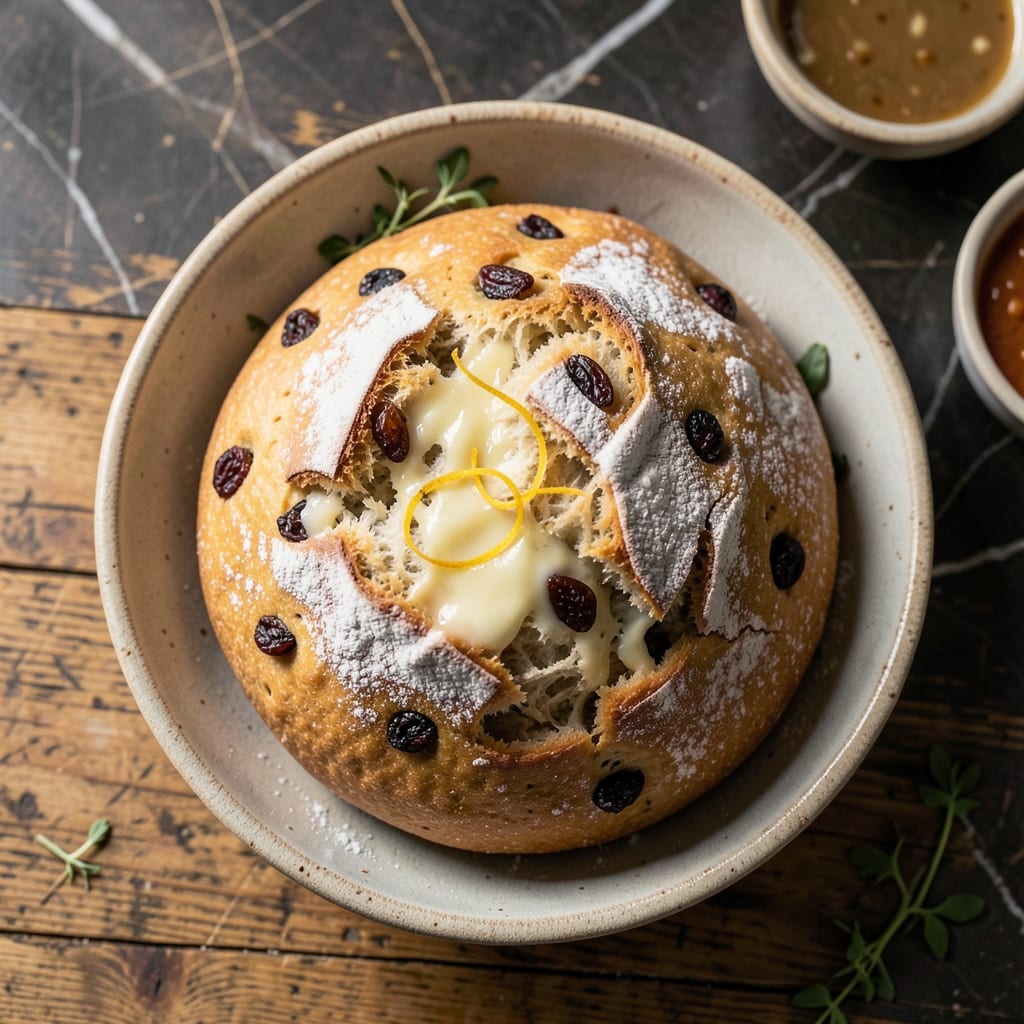
There’s something deeply satisfying about baking a loaf of bread that requires no yeast, no waiting, just a few simple ingredients. This traditional Irish creation comes together in minutes, yet delivers a rustic, hearty result that’s perfect for any meal.
The secret lies in the chemical reaction between buttermilk and baking soda, which creates lift without the need for proofing. I’ve perfected this method to ensure a tender crumb with a golden, slightly crisp crust every time.
What emerges from the oven is a beautiful round loaf with a subtle tang from the buttermilk and a texture that’s dense yet light. It’s the kind of bread that tastes even better when served warm with a spread of butter.
Serve it alongside soups, stews, or simply enjoy it on its own. This is bread making at its most straightforward and rewarding.
Ingredients for Irish Soda Bread Recipe Pioneer Woman
Seven ingredients transform into a rustic, no-yeast loaf with buttermilk tang and golden crust.
| Ingredient | Amount | Notes |
|---|---|---|
| All-Purpose Flour 🌾 | 4 cups | Plus extra for dusting |
| Baking Soda 🧂 | 1 tsp | For chemical leavening |
| Salt 🧂 | 1 tsp | Fine grain preferred |
| Buttermilk 🥛 | 1 ¾ cups | Full-fat for richness |
| Unsalted Butter 🧈 | 2 tbsp | Melted and cooled |
| Raisins 🍇 | ¾ cup | Optional for sweetness |
| Egg 🥚 | 1 whole | For egg wash finish |
[recipe_ingredient_scaler]
The buttermilk is non-negotiable here—full-fat from a reliable dairy gives you that signature tang and tenderness. King Arthur or Gold Medal flour work beautifully, but any all-purpose will do. I always keep a box of baking soda in the pantry just for this. If your butter isn’t unsalted, skip the added salt in the dough. The raisins are traditional but totally optional (I skip them half the time).
No buttermilk? Whole milk with 1 tbsp vinegar or lemon juice per cup does the trick. Out of raisins? Currants or chopped dates work just as well. For a savory twist, swap the raisins for 1 cup grated cheddar—still vegetarian, still delicious. The egg wash is for shine, but a splash of buttermilk brushed on top gets you close.
This bread is best the day it’s made but still tasty for 2-3 days. Wrap it tightly in foil or plastic once cooled. Freezes beautifully for up to 1 month—slice before freezing for easy toast-up portions. Always bring it to room temp before serving.
Why You’ll Love This Recipe
- No Fuss Mixing: I just stir the flour, baking soda, salt, buttermilk, and melted butter together—no yeast, no waiting, no kneading required.
- Buttery Crumb: The cold butter creates these little flaky pockets that melt in your mouth, and the buttermilk gives it that tangy depth I crave.
- Breakfast to Dinner: Honestly, it’s just as good toasted with jam at sunrise as it is mopping up stew at dinner.
- Pennywise Loaf: Five basic ingredients I always have on hand, and it makes enough for leftovers that toast up like new the next day.
Step-by-Step Instructions for Irish Soda Bread
This straightforward method ensures a rustic loaf with a perfect crust and tender crumb.
Step 1: Prep Dry Ingredients and Raisins
Preheat your oven to 400°F. In a large mixing bowl, whisk together the 4 cups All-Purpose Flour, 1 tsp Baking Soda, and 1 tsp Salt until evenly combined. This chemical leavening creates the bread’s rise without yeast.
Add the 0.75 cup Raisins and toss to coat them in the flour mixture. This prevents them from sinking to the bottom during baking. Set this aside while you prepare the wet ingredients.
Step 2: Combine Wet Ingredients
In a separate bowl, whisk the 1.75 cups Buttermilk until smooth. Buttermilk’s acidity reacts with the baking soda to create lift. Pour this into the dry ingredients along with the 2 tbsp Unsalted Butter, which should be melted and cooled to room temperature.
Use a wooden spoon or spatula to gently fold everything together until just combined. The dough will be shaggy and slightly sticky—don’t overmix, as this develops gluten and makes the bread dense.
Step 3: Shape and Prepare for Baking
Lightly dust your work surface with extra All-Purpose Flour. Turn the dough out and gently shape it into a round loaf about 1.5 inches thick. The dough will still be slightly sticky; don’t add too much extra flour or the bread will be dry.
Place the loaf on a parchment-lined baking sheet. Use a sharp knife to cut a deep cross into the top of the loaf—this helps it bake evenly and gives it the traditional soda bread appearance.
Step 4: Apply Egg Wash and Bake
In a small bowl, beat the 1 whole Egg until uniform. Brush this egg wash generously over the entire surface of the loaf. This creates a beautiful golden crust as it bakes.
Bake on the center rack for 35-40 minutes until the loaf is deep golden brown and the internal temperature reaches 190°F. The bottom should sound hollow when tapped—this is your auditory cue that it’s fully baked.
Step 5: Cool Before Slicing
Transfer the bread to a wire rack and let it cool for at least 20 minutes before slicing. This resting period allows the crumb to set properly. The bread should have a crisp crust with a tender, slightly dense interior studded with sweet raisins.
Serve warm with butter or alongside your favorite soup. The flavor develops further as it cools, so while it’s tempting to slice immediately, the texture improves with brief patience.
Pro Tips For Making Irish Soda Bread Recipe Pioneer Woman
- Chill the Buttermilk: I learned this the hard way—cold buttermilk keeps the butter from melting too fast when you mix it in, which means flakier layers in your finished loaf.
- Don’t Overmix: After burning three batches, I finally figured out that stirring just until the dough comes together prevents a dense, tough crumb.
- Use Fresh Baking Soda: Sounds weird, but it works: old baking soda loses its punch, and your bread won’t rise properly without that fresh lift.
- Score the Top: My grandmother swore by this, and she was right: a deep X on the top before baking lets the bread expand evenly and gives it that classic rustic look.
Regional Styles of This Recipe
Classic Irish Style
Traditional Irish soda bread stays true to its roots with just 4 basic ingredients: flour, baking soda, buttermilk, and salt. I love how this version highlights the buttermilk’s tang without any added sweeteners. The cross on top isn’t just decorative—it helps the bread cook through evenly. 💛
Sweet Irish-American
What many Americans know as Irish soda bread often includes raisins and a touch of sugar. This sweeter version became popular in Irish-American communities, especially around St. Patrick’s Day. I remember my grandmother adding currants when she made it for Sunday dinner.
Savory Cheese Variation
In Northern Ireland, you’ll find soda bread with grated cheddar and sometimes herbs mixed in. The cheese creates little pockets of gooey goodness. For best results, use sharp Irish cheddar and reduce the buttermilk by 2 tbsp to account for the added moisture.
Whole Wheat Version
For a nuttier flavor, replace 2 cups of All-Purpose Flour with whole wheat flour. The texture becomes slightly denser but gains wonderful depth. I find adding 1 extra tbsp buttermilk helps compensate for the whole wheat’s dryness.
Spiced Brown Bread
This Dublin-style version incorporates 1 cup whole wheat flour, 1 tsp molasses, and warming spices like cinnamon. The molasses gives it that characteristic deep brown color. It’s particularly good served with smoked salmon. ✨
Soda Bread Rolls
Instead of one large loaf, divide the dough into 8 equal portions and shape into rolls. Bake for 20-25 minutes. These are perfect for individual servings and make great sandwich rolls the next day.
Nutrition Facts
Frequently Asked Questions
Why is buttermilk essential in this bread?
Buttermilk reacts with baking soda to create the lift, giving the bread its signature texture. Its acidity also tenderizes the gluten for a softer crumb.
Can I make this without raisins?
Omit them for a traditional savory version. The dough works beautifully plain or with add-ins like cheddar cheese or herbs.
How do I know when it’s fully baked?
The loaf should be deep golden brown with an internal temp of 190°F. Tap the bottom—it should sound hollow.
Why cut a cross on top before baking?
The cross helps the bread bake evenly and prevents cracking. It’s also a nod to traditional Irish symbolism for good luck.

Trained in classic French technique but raised on slow-cooked ribs and spicy rubs, she blends culinary skill with smoke and soul.
- Recipe for Boneless Pork Chops in Cast Iron Skillet: Sear and Baste to Juicy Perfection - October 3, 2026
- Recipe for Boneless Cross Rib Roast: Slow-Roasted Beef with Herb Crust - October 3, 2026
- Hamburgers in Sauce Recipe Crock Pot: Slow-Cooked Savory Delight - October 3, 2026