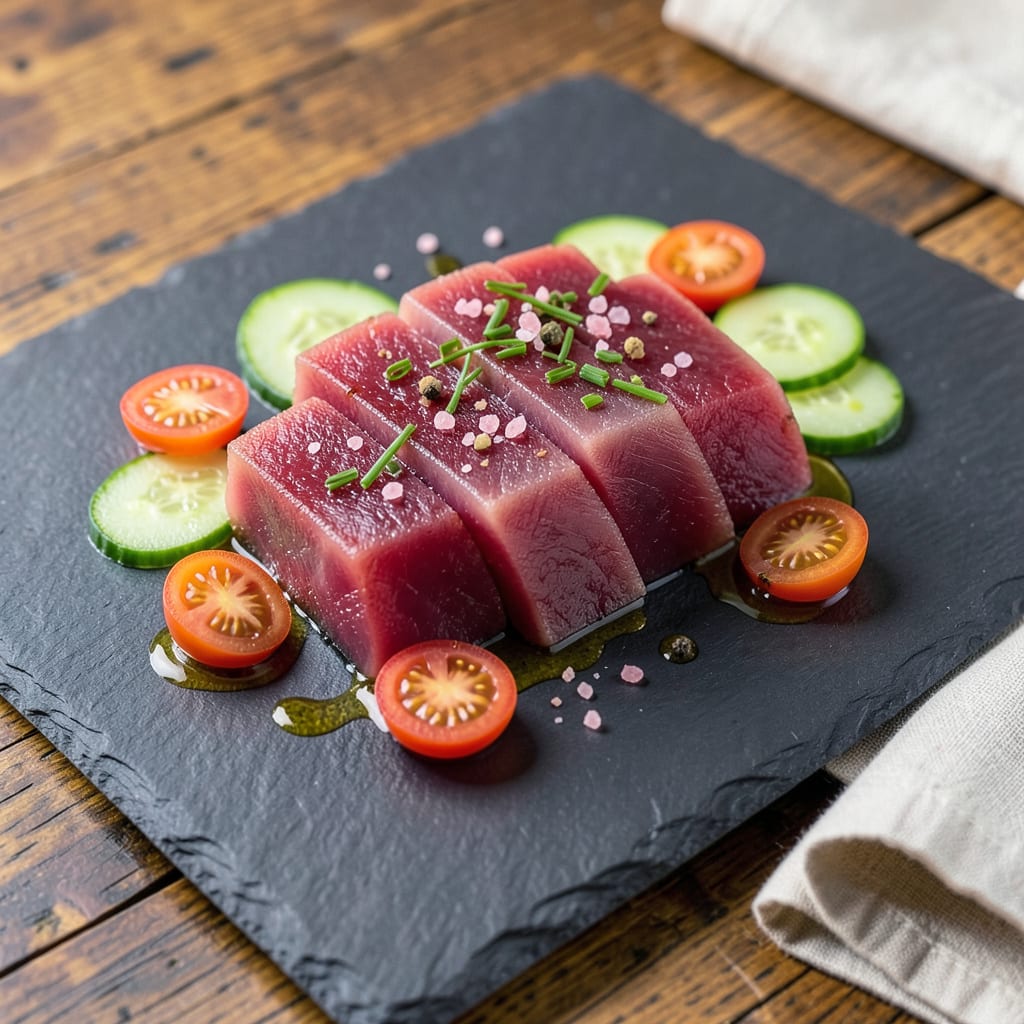
Ahi tuna can be safely eaten raw if it’s labeled sushi-grade or sashimi-grade, meaning it’s been frozen to kill parasites. Always purchase from trusted suppliers and consume fresh to minimize health risks like foodborne illness.
This isn’t just about taste—it’s about understanding the science behind safe raw fish consumption. 🔥 The sushi-grade label means the tuna has undergone commercial freezing at -4°F for 7 days or flash-frozen at -31°F for 15 hours, which eliminates parasites like anisakis. I’ve seen many home cooks assume “fresh” means safe, but without proper freezing, even the freshest tuna can carry risks. The key is trusting suppliers who follow strict handling protocols from boat to counter.
What most people don’t realize is that color and smell alone can’t guarantee safety. ✨ That vibrant red hue might look appealing, but it’s the processing history that matters most. I always check for the sushi-grade label and ask about the freezing process—reputable fishmongers will have this information readily available. This extra step gives me confidence when serving raw ahi, whether in poke bowls or classic sashimi.
💡 In This Article
- Why Sushi-Grade Ahi Tuna Is Safer for Raw Consumption
- How to Select and Handle Raw Ahi Tuna at Home
Why Sushi-Grade Ahi Tuna Is Safer for Raw Consumption
The secret lies in the commercial freezing process that transforms regular tuna into sushi-grade. The FDA mandates specific protocols: either -4°F for 7 days or flash-freezing at -31°F for 15 hours. These extreme temperatures target parasites like anisakis, which can survive in fresh fish but die under these conditions.
I’ve toured processing facilities where they use specialized blast freezers that drop temperatures faster than home freezers could ever achieve.
What makes sushi-grade different isn’t just the freezing—it’s the entire handling chain. These fish are typically bled immediately after catch, gutted at sea, and placed in slush ice to maintain quality. The grading process examines color, fat content, and texture, with premium ahi showing deep red color and marbling.
Regular tuna at the grocery store might look similar but lacks this controlled processing history.
Here’s what most home cooks miss: freshness alone doesn’t equal safety. A fish caught yesterday could still contain parasites if not properly frozen. The sushi-grade label indicates the tuna has undergone these critical freezing steps.
I always verify this with my supplier—reputable fishmongers maintain detailed records of their freezing protocols and can show you the paperwork.
The science behind this is fascinating. Parasites like anisakis have evolved to survive in marine environments, but they can’t withstand the cellular damage caused by extreme freezing. The process also affects the fish’s texture—properly frozen and thawed ahi maintains its firm yet buttery mouthfeel that makes it perfect for sashimi.
This is why you’ll never see high-quality sushi restaurants using non-sushi-grade fish.
Temperature control during storage is equally crucial. Sushi-grade tuna should be kept at 28-32°F—colder than your typical fridge but not frozen. This “super-chilled” state preserves quality while preventing bacterial growth.
I use a dedicated seafood drawer in my fridge set to 30°F and always consume raw ahi within 24-48 hours of purchase for optimal safety and flavor.
There’s also the matter of sourcing. Wild-caught ahi from the Pacific (especially Hawaiian waters) is generally preferred over farmed varieties for raw consumption. The diet and environment of wild tuna result in cleaner, more flavorful flesh.
When I’m selecting ahi for my coastal rides, I look for suppliers who can trace their fish back to specific boats and fishing grounds—this transparency is non-negotiable for raw consumption.
Remember, the sushi-grade label isn’t federally regulated, so it’s about trusting your supplier’s processes. The best fishmongers will happily explain their freezing methods, handling procedures, and even show you the whole fish before cutting. This level of transparency gives me confidence when serving raw ahi, whether in delicate sashimi or hearty poke bowls. 🌟

Trained in classic French technique but raised on slow-cooked ribs and spicy rubs, she blends culinary skill with smoke and soul.
- Recipe for Boneless Pork Chops in Cast Iron Skillet: Sear and Baste to Juicy Perfection - October 3, 2026
- Recipe for Boneless Cross Rib Roast: Slow-Roasted Beef with Herb Crust - October 3, 2026
- Hamburgers in Sauce Recipe Crock Pot: Slow-Cooked Savory Delight - October 3, 2026