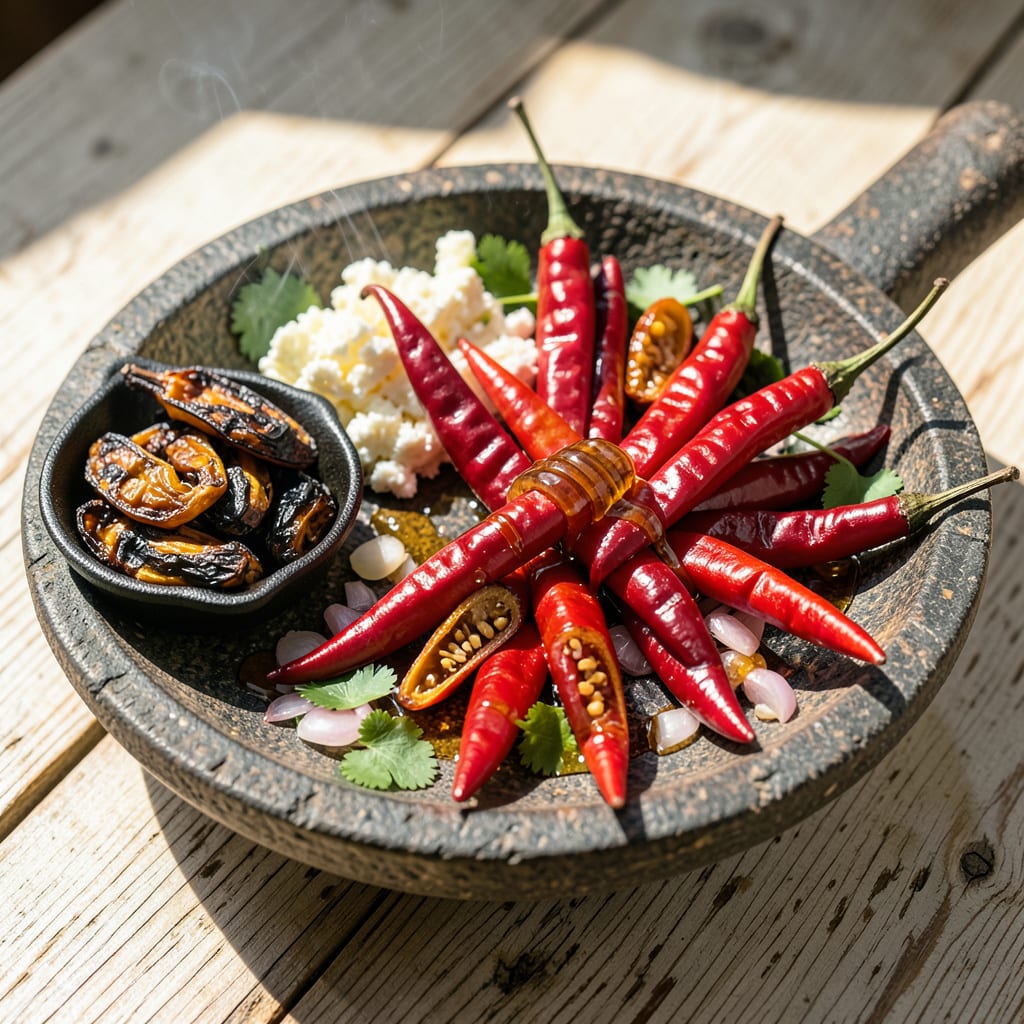
Yes, chile puya is quite spicy, typically ranking between 5,000–15,000 Scoville Heat Units—comparable to serrano peppers but milder than habaneros. Its heat is sharp and immediate, with a slightly tangy, earthy flavor that lingers.
I’ve worked with dozens of peppers, and what sets puya apart is its fast-hitting intensity that doesn’t overwhelm like a ghost pepper but still demands respect. 🔥 The tangy undertones make it perfect for salsas where you want complexity beyond just heat. Unlike jalapeños that build slowly, puya announces itself immediately—ideal when you need a quick flavor punch without prolonged burn.
In my kitchen, I treat puya like a serrano’s feisty cousin—great for raw applications where its bright heat can shine, but requiring careful dosing. The earthy notes pair beautifully with citrus and tomatoes, which is why it’s a staple in many Mexican street foods. Just remember: a little goes a long way, especially if you’re sensitive to capsaicin. ✨
💡 In This Article
- How Chile Puya’s Scoville Rating Compares to Other Peppers
- Cooking with Chile Puya: Heat Management Tips
How Chile Puya’s Scoville Rating Compares to Other Peppers
The Scoville scale measures capsaicin concentration, and puya chiles clock in at 5,000–15,000 SHU—putting them solidly in the medium-hot range. For comparison, jalapeños average 2,500–8,000 SHU, while serranos hit 10,000–23,000 SHU. This means puya delivers about twice the heat of a mild jalapeño but won’t blister your mouth like a habanero (100,000–350,000 SHU).
The heat comes from capsaicinoids concentrated in the white pith and seeds. 🔥
What makes puya unique is its fast-acting burn that dissipates relatively quickly. Unlike habaneros that build to an inferno, puya’s heat peaks within seconds and fades to a warm tingle. This is because its capsaicin profile contains more nordihydrocapsaicin (which has a quicker metabolic breakdown) than the longer-lasting homo-capsaicin found in hotter peppers.
The tangy, slightly smoky flavor also helps balance the heat perception. ✨
Growing conditions dramatically affect puya’s spiciness. Peppers grown in hotter climates (like central Mexico) develop more capsaicin as a defense mechanism, often testing at the higher end of the scale. Meanwhile, puyas from cooler regions or with consistent watering tend to be milder.
I’ve noticed that smaller, redder puyas pack more heat than their larger green counterparts—likely due to extended ripening time concentrating capsaicinoids. 🌶️
For practical cooking, think of puya as a serrano with training wheels. It offers similar brightness and grassy notes but with slightly less aggressive heat. This makes it perfect for dishes where you want noticeable spice without overwhelming other flavors—like in salsa verde or ceviche.
The heat threshold is low enough that most people can enjoy it, but high enough to satisfy chile heads looking for more than jalapeño-level kick. ⚡
Here’s a quick heat reference:
- Jalapeño: 2,500–8,000 SHU (mild to medium)
- Chile Puya: 5,000–15,000 SHU (medium-hot)
- Serrano: 10,000–23,000 SHU (hot)
- Habanero: 100,000–350,000 SHU (very hot)
The puya’s heat profile makes it particularly well-suited for raw applications where its bright, immediate spice can shine. When cooked, the heat mellows slightly while the earthy undertones become more pronounced—a transformation I love exploiting in slow-simmered sauces.
The key is balancing its intensity with acidic ingredients like lime or vinegar, which help distribute the capsaicin more evenly across your palate. 💫

Trained in classic French technique but raised on slow-cooked ribs and spicy rubs, she blends culinary skill with smoke and soul.
- Recipe for Boneless Pork Chops in Cast Iron Skillet: Sear and Baste to Juicy Perfection - October 3, 2026
- Recipe for Boneless Cross Rib Roast: Slow-Roasted Beef with Herb Crust - October 3, 2026
- Hamburgers in Sauce Recipe Crock Pot: Slow-Cooked Savory Delight - October 3, 2026