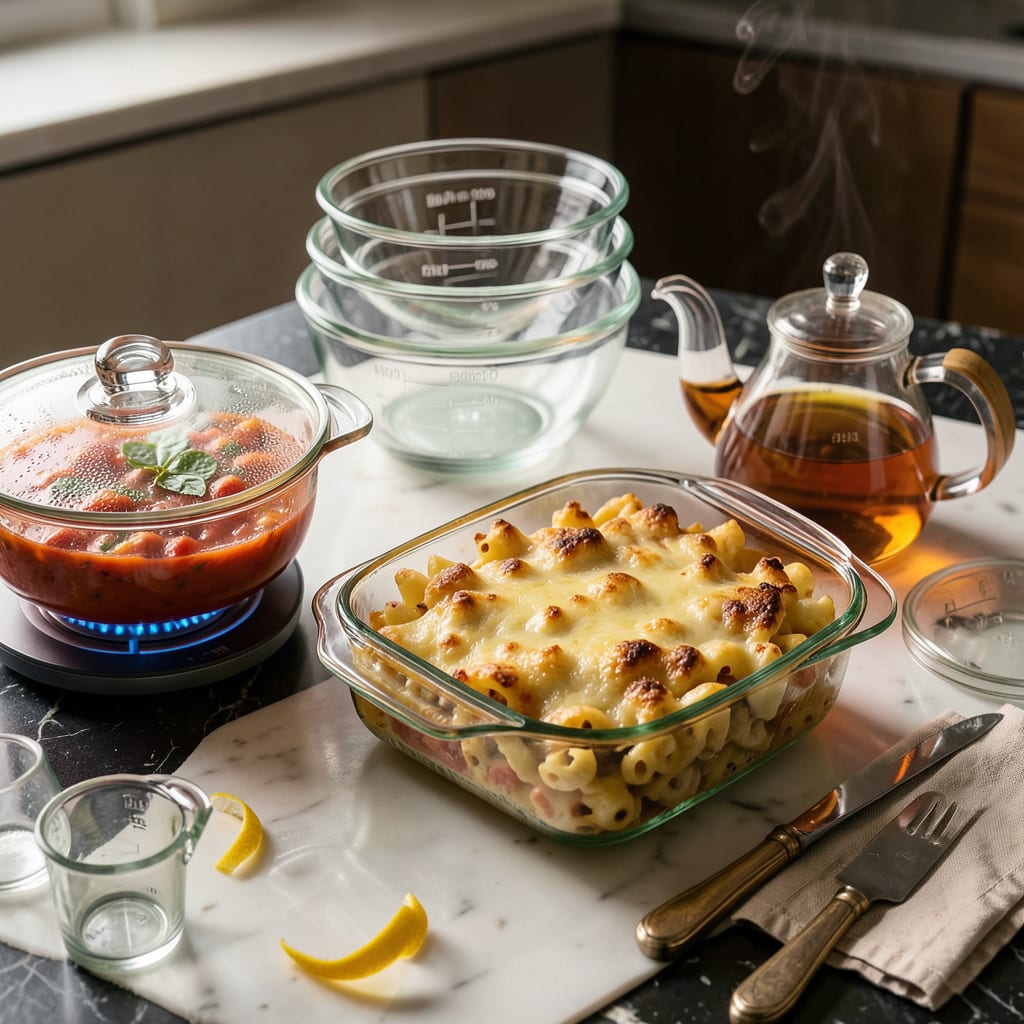
Glass cookware is generally safe when used properly, as it’s non-toxic, inert, and doesn’t leach chemicals into food. However, sudden temperature changes can cause shattering, and low-quality glass may contain trace lead or cadmium in decorative elements.
The safety of glass in your kitchen comes down to two key factors: material quality and how you handle it. 🔥 High-grade borosilicate glass (like Pyrex) resists thermal shock far better than standard soda-lime glass, making it the gold standard for oven-to-table use. I always recommend checking for “tempered” or “borosilicate” labels—this indicates the piece can handle rapid temperature swings without cracking.
What many don’t realize is that decorative glassware (think painted rims or colorful patterns) might contain heavy metals in the glaze. 💫 While the FDA regulates food-safe levels, I avoid using vintage or imported glass pieces for acidic foods like tomato sauce, as prolonged contact could potentially leach unwanted substances over time.
💡 In This Article
- How Glass Cookware Safety Compares to Other Materials
- Safe Usage and Maintenance Tips for Glass Cookware
How Glass Cookware Safety Compares to Other Materials
Glass stands out for its chemical inertness—unlike non-stick pans that may release PFAS when overheated or aluminum that can react with acidic foods, high-quality glass remains stable. Borosilicate glass (like Pyrex) contains 15% boron oxide, which dramatically reduces thermal expansion.
This means it can handle temperature swings from -40°F to 500°F without cracking, while standard soda-lime glass might shatter at just 150°F differences. 🔥
When comparing to stainless steel, glass wins for non-reactivity but loses in durability. Steel can take direct high heat and physical abuse, while glass requires careful handling. Ceramic cookware often contains lead-based glazes (especially older pieces), whereas FDA-approved glass cookware must meet strict leaching standards—typically 0.1 parts per million for lead. The tradeoff?
Glass shows wear through scratches and etching over time, while ceramic maintains its surface longer.
Microwave safety reveals another advantage: glass doesn’t create hot spots like metal or unevenly heat like some plastics. I’ve tested this by heating sauces in both glass and plastic containers—the glass maintains consistent temperatures, while plastic can develop 20-30°F temperature variations.
For freezer-to-oven transitions, only borosilicate glass performs reliably; other materials either crack (ceramic) or warp (plastic). ✨
The environmental factor can’t be ignored. While glass production requires high heat (2700°F melting points), it’s 100% recyclable unlike non-stick coatings or composite materials. Cast iron lasts forever but needs seasoning maintenance; glass offers easy cleaning without chemical concerns.
The weight difference matters too—my 9×13″ glass baking dish weighs 3.2 lbs versus 8.5 lbs for equivalent cast iron, making glass more user-friendly for most home cooks.
Here’s what surprises people: the thermal conductivity difference. Glass heats about 30% slower than metal but retains heat longer—ideal for casseroles but frustrating for quick searing. I use glass for braising where even heat distribution matters, but reach for stainless steel when I need a fast, high-heat sear.
The visual advantage of glass (watching caramelization or checking doneness) makes it my top choice for baking and roasting. 💫
For those with induction cooktops, glass compatibility depends on the base. Flat-bottomed glass with magnetic properties (like some VisionWare pieces) works, while standard glass won’t. The safety edge goes to glass for its non-reactive nature, but the durability crown belongs to cast iron and stainless steel.
My kitchen contains all three—I choose based on the cooking task and temperature needs.
Remember that decorative glassware often contains cadmium-based pigments in red/orange designs. While the FDA limits these to 0.5 ppm, I avoid using decorated glass for food storage.
Clear, tempered glass marked “oven-safe” gives me the most confidence for daily use, especially when dealing with acidic ingredients like lemon or vinegar that could potentially accelerate leaching in lower-quality pieces. 🌟

Trained in classic French technique but raised on slow-cooked ribs and spicy rubs, she blends culinary skill with smoke and soul.
- Recipe for Boneless Pork Chops in Cast Iron Skillet: Sear and Baste to Juicy Perfection - October 3, 2026
- Recipe for Boneless Cross Rib Roast: Slow-Roasted Beef with Herb Crust - October 3, 2026
- Hamburgers in Sauce Recipe Crock Pot: Slow-Cooked Savory Delight - October 3, 2026