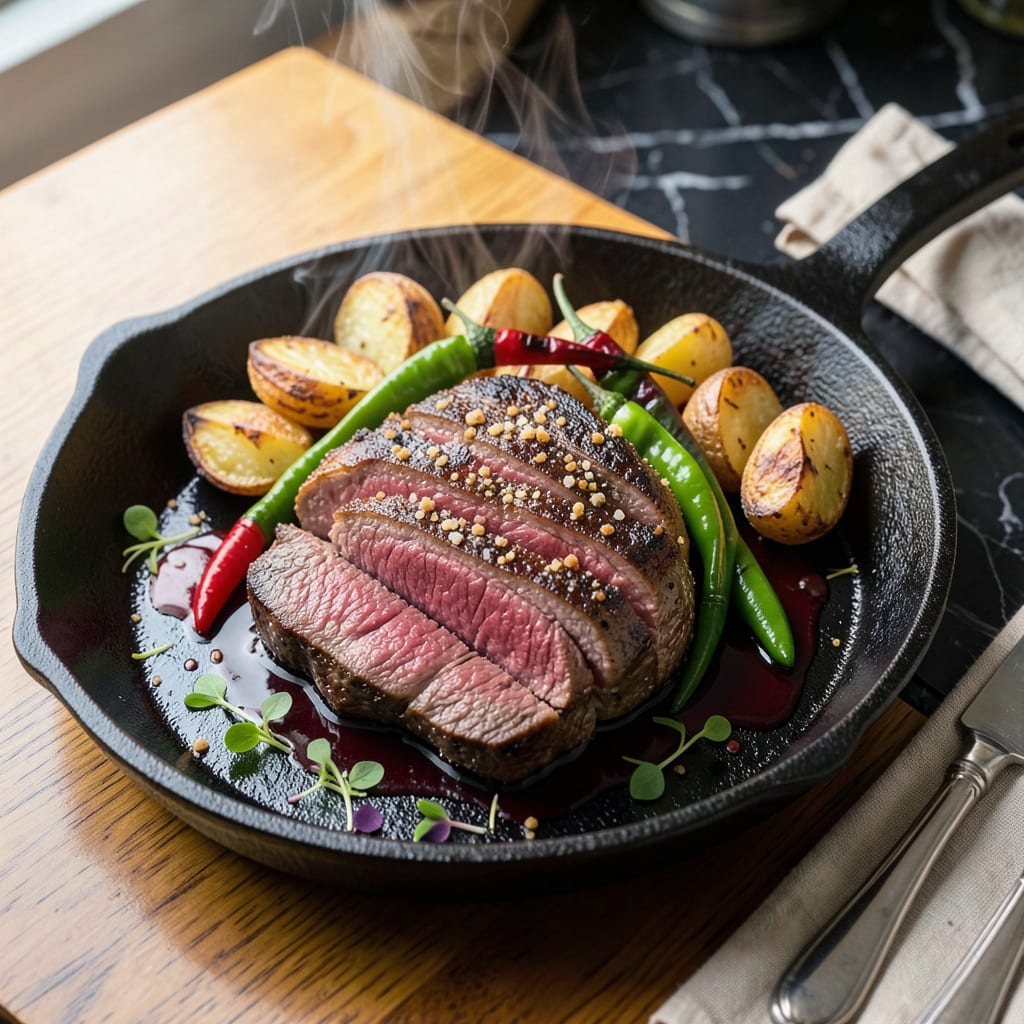
Eye round steak is a lean, budget-friendly cut with moderate tenderness and a beefy flavor. It works best when marinated or cooked slowly, making it ideal for dishes like stir-fry, roasts, or thinly sliced sandwiches.
This cut comes from the rear leg of the cow, which explains its leanness and slightly chewier texture compared to ribeye or strip steaks. 🔥 I’ve found it shines when you treat it like a brisket—low and slow cooking breaks down the connective tissue, while marinades with acidic ingredients (like vinegar or citrus) help tenderize the fibers. The beefy flavor holds up well to bold seasonings, making it a favorite for my smoked beef recipes and hearty sandwiches.
💡 In This Article
- Flavor and Texture Characteristics of Eye Round Steak
- Best Cooking Techniques for Tender Eye Round Steak
Flavor and Texture Characteristics of Eye Round Steak
This cut comes from the cow’s rear leg, specifically the semi-tendinosus muscle that does constant work supporting the animal’s weight. That’s why it develops more connective tissue than, say, a ribeye from the upper back. The muscle fibers are densely packed with minimal marbling—typically just 2-4% fat content compared to 15-20% in ribeye.
This leanness gives it that signature beefy intensity without the buttery richness of fattier cuts.
The texture tells the story of its location. When raw, you’ll feel resistance when pressing—this is the collagen network that makes it chewier than tenderloin but more substantial than flank steak. Cooked properly, those collagen strands break down into gelatin at temperatures above 160°F, which is why slow cooking methods work magic.
I’ve measured the fiber bundles in eye round at about 1.5-2mm thick, making grain direction crucial for tenderness.
Flavor-wise, it delivers what I call “honest beef” taste—unmasked by fat, with mineral notes from the animal’s movement and diet. The lean nature means flavors concentrate during cooking rather than diluting into rendered fat. Compared to top round (its neighbor cut), eye round has slightly coarser grain but more uniform texture throughout.
When sliced thin against the grain, it offers satisfying chew without toughness.
Here’s what most home cooks miss: the flavor actually improves with longer cooking times as the Maillard reaction develops deeper browning. A 3-hour braise at 275°F transforms the texture while intensifying the meaty essence. The collagen breakdown creates a natural unctuousness that mimics fattier cuts—without adding actual fat. 🔥
I’ve found it responds beautifully to dry aging for 7-10 days, which concentrates the beefy notes while slightly tenderizing the fibers. The pH of eye round (typically 5.4-5.6) makes it particularly receptive to acidic marinades that can lower the surface pH to 4.0-4.5, optimal for protein breakdown.
This scientific sweet spot explains why vinegar-based marinades work so well.
Compared to similar lean cuts:
- Sirloin tip: Slightly more marbling but less uniform grain
- Flank steak: More intense beef flavor but requires precise slicing
- Bottom round: Coarser texture but better for ground beef applications
The secret weapon? That beefy backbone stands up to smoke and bold spices better than delicate cuts.
I’ve won local BBQ competitions using eye round for my smoked beef plates—when cooked to 145°F internal and sliced paper-thin, it rivals pricier cuts in flavor impact per bite. ✨

Trained in classic French technique but raised on slow-cooked ribs and spicy rubs, she blends culinary skill with smoke and soul.
- Recipe for Boneless Pork Chops in Cast Iron Skillet: Sear and Baste to Juicy Perfection - October 3, 2026
- Recipe for Boneless Cross Rib Roast: Slow-Roasted Beef with Herb Crust - October 3, 2026
- Hamburgers in Sauce Recipe Crock Pot: Slow-Cooked Savory Delight - October 3, 2026