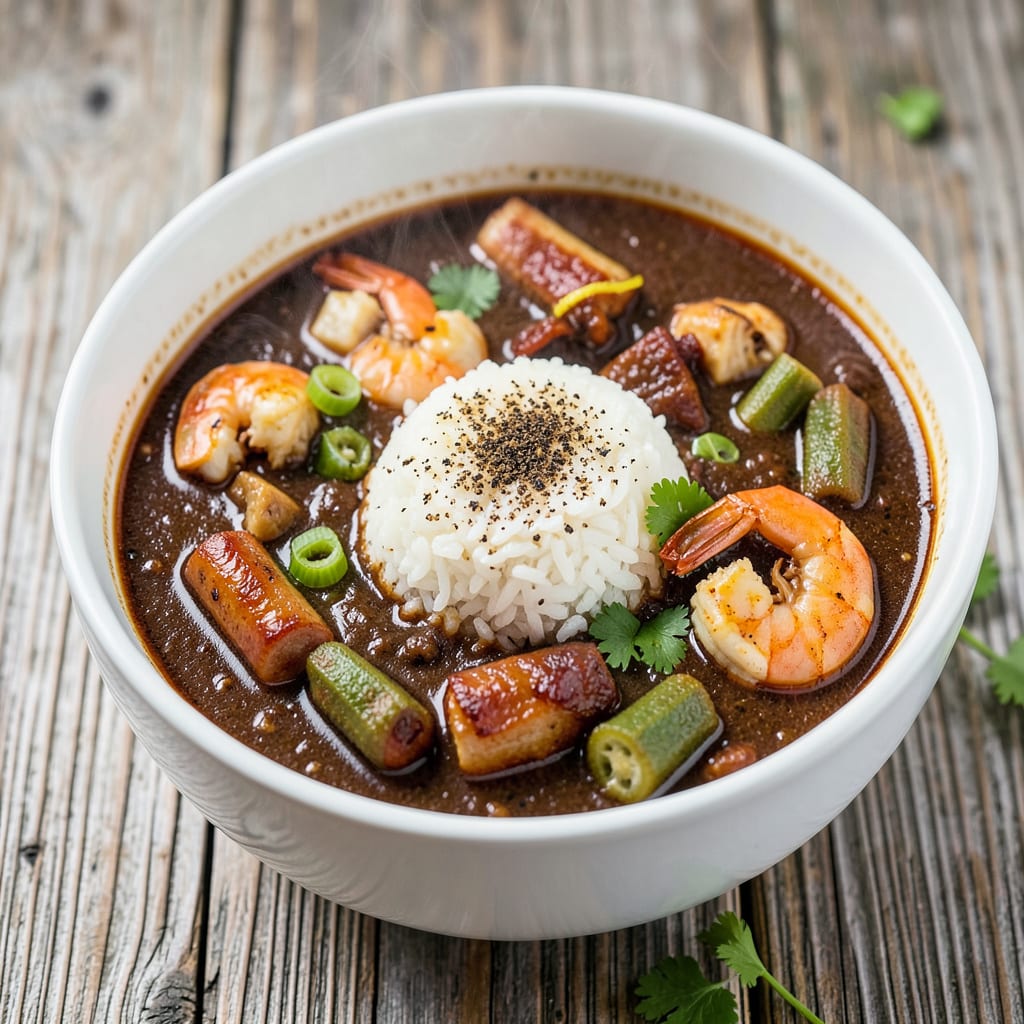
Gumbo should have a medium-thick consistency—thicker than broth but thinner than stew. A proper roux base gives it body while allowing ingredients to float slightly, not sink or sit too heavily.
This signature texture comes from the careful balance between the roux’s thickening power and the liquid ingredients. 🔥 I’ve found that the best gumbo coats the back of a spoon but still drizzles smoothly—think of it like heavy cream rather than gravy or water. The magic happens when the roux’s fat-to-flour ratio creates just enough resistance to suspend ingredients without turning the dish into a paste. What’s fascinating is how this consistency actually enhances the flavor experience, letting each bite carry the perfect amount of broth with every piece of meat or seafood.
💡 In This Article
- What Determines Gumbo’s Perfect Texture
- Fixing Gumbo That’s Too Thin or Too Thick
What Determines Gumbo’s Perfect Texture
The foundation of gumbo’s signature texture lies in the roux—a cooked mixture of fat and flour that transforms through heat. A medium-dark roux (cooked to the color of peanut butter) provides optimal thickening power, while a blonde roux yields a lighter consistency.
The science here involves the Maillard reaction, where flour proteins and sugars break down at 350-375°F, creating complex flavor compounds and thickening properties. This process takes 20-45 minutes of constant stirring to develop the perfect balance of body and taste. 🔥
Beyond roux, natural thickeners play crucial roles. Okra releases mucilage when cooked—a slippery, gel-like substance that adds viscosity without heaviness. For every 4 cups of liquid, about 1 cup of sliced okra can increase thickness by 30-40%.
Filé powder (ground sassafras leaves) works differently by binding with liquids to create a silky texture when added at the end. The ratio matters: 1 teaspoon per quart of gumbo is ideal. Both methods create distinct mouthfeels—okra gives a slight chew, while filé creates smoothness. ✨
Liquid ratios and cooking time form the final pieces of the puzzle. Traditional gumbo uses a 1:1 ratio of roux to liquid (about 4-6 cups total for a standard pot). Simmering for 1.5-2 hours allows flavors to meld while reducing liquid by 15-20%—just enough to concentrate flavors without over-thickening.
The proteins from seafood or meat also contribute slightly to viscosity as they break down. I’ve noticed that gumbo made with shrimp stock naturally develops more body than versions using water alone. 💫
Temperature control during serving makes a surprising difference. Gumbo continues to thicken as it cools, with the roux’s starch molecules absorbing more liquid. Serving at 160-170°F maintains the ideal flow, while cooler temperatures can make it gloppy.
The acidity from tomatoes (in Creole gumbo) or vinegar can slightly thin the mixture by breaking down starch bonds. This is why Cajun gumbo without tomatoes often feels heartier. The perfect bowl should let ingredients suspend briefly when stirred, then settle gently—not sink like stones or float like buoys. ⚡
Regional variations show how versatile this balance can be. New Orleans-style gumbo with filé tends to be silkier, while rural Louisiana versions with more okra develop a heartier texture. I once tasted a version from the bayou that used both okra and filé—creating a dual-layered thickness that was revelatory.
The key is understanding that gumbo’s consistency isn’t just about thickness, but about creating a medium that carries flavor in every spoonful. 🌟

Trained in classic French technique but raised on slow-cooked ribs and spicy rubs, she blends culinary skill with smoke and soul.
- Recipe for Boneless Pork Chops in Cast Iron Skillet: Sear and Baste to Juicy Perfection - October 3, 2026
- Recipe for Boneless Cross Rib Roast: Slow-Roasted Beef with Herb Crust - October 3, 2026
- Hamburgers in Sauce Recipe Crock Pot: Slow-Cooked Savory Delight - October 3, 2026