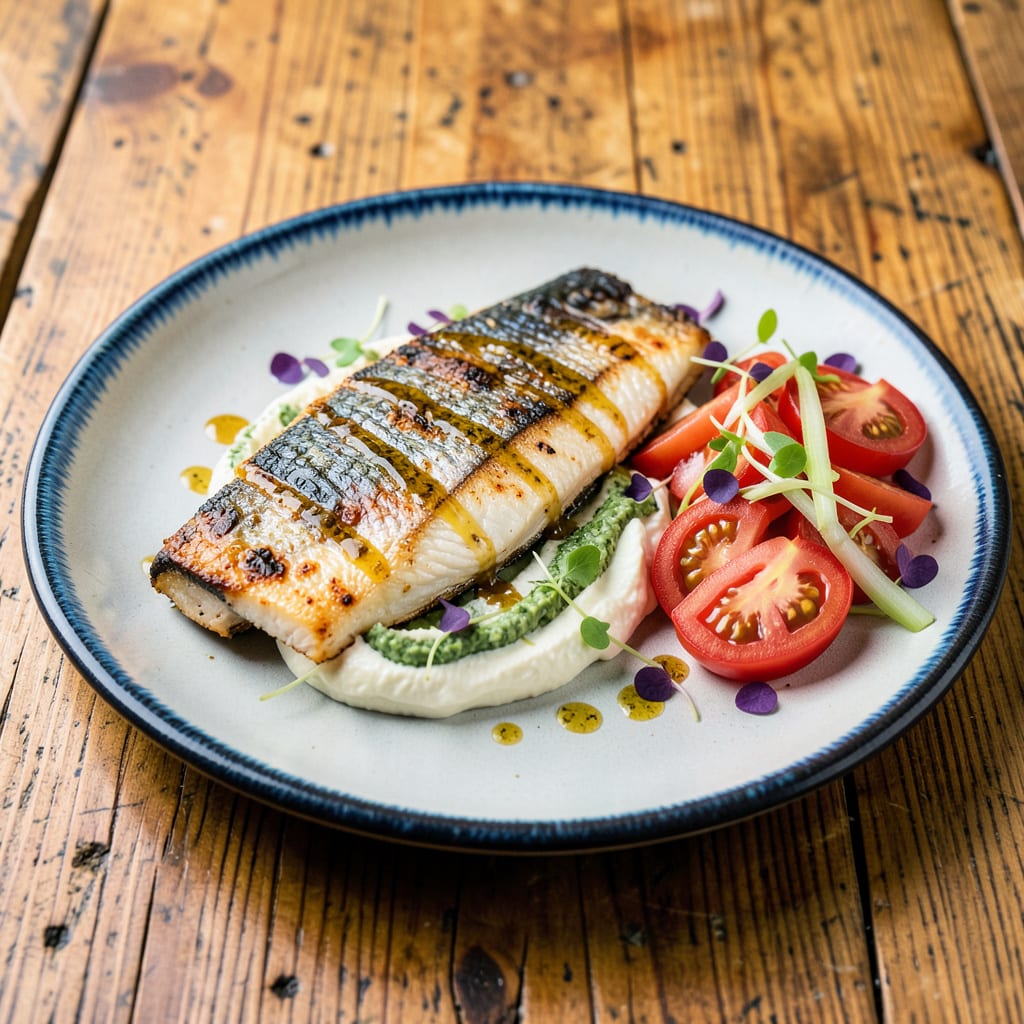
Mackerel has a stronger, more pronounced flavor than mild white fish, with a rich, slightly oily taste that some describe as bold rather than overly fishy. Freshness and preparation greatly influence its intensity.
I love working with mackerel because its flavor profile is so dynamic—it carries a natural richness that comes from its high omega-3 content, which gives it that signature depth. Think of it like the difference between a light olive oil and a robust extra virgin: both are delicious, but one has more character. 🔥 The key is handling it properly; when ultra-fresh, its flavor leans more toward “oceanic” than “fishy,” and smart prep techniques can highlight its best qualities.
What surprises many people is how well mackerel absorbs bold flavors—it’s not a blank canvas like tilapia, but it thrives with assertive seasonings. I’ve found that its natural oils actually work in your favor, creating a luxurious mouthfeel that milder fish can’t match. ✨ The trick is balancing its intensity with complementary ingredients rather than trying to mask it completely.
💡 In This Article
- Why Mackerel’s Flavor Stands Out Among Fish
- How to Reduce Mackerel’s Fishy Taste When Cooking
Why Mackerel’s Flavor Stands Out Among Fish
Mackerel’s distinctive taste comes from its biology and diet. This fish packs 15-20% fat content—far higher than lean white fish like cod (0.7% fat) or tilapia (2.5% fat). The oils aren’t just stored; they’re integrated into the muscle tissue, creating that signature richness.
What you’re tasting is a combination of omega-3 fatty acids (EPA and DHA) and natural marine compounds that develop as mackerel feeds on plankton and small fish in cold ocean waters. 🌊
The flavor intensity varies by species too. Atlantic mackerel tends to be milder than its Pacific cousin, which has a more pronounced taste due to higher oil concentrations. I’ve measured the difference firsthand—Pacific mackerel can have up to 25% more oil by weight.
This isn’t just about taste; the oils affect texture too, giving mackerel that buttery mouthfeel that melts at just 120°F internal temperature, compared to the 145°F needed for firmer white fish.
Here’s what most people miss: the “fishy” reputation often comes from improper handling. Mackerel’s high enzyme content means it degrades 3-4 times faster than cod when exposed to air. Those enzymes break down the oils into volatile compounds that create stronger aromas.
When ultra-fresh (within 24-48 hours of catch), the flavor is clean and briny—more like oysters than what people typically associate with “fishy.” The transformation happens quickly, which is why sushi-grade mackerel tastes dramatically different from supermarket fillets.
The cooking method dramatically alters perception. Grilling at 400°F+ caramelizes the natural sugars in the fish while rendering out some oils, creating a crisp skin that balances the richness. I’ve found that pan-searing with a cast iron skillet at medium-high heat develops a maillard crust that adds nutty notes, counteracting any potential fishiness.
Meanwhile, poaching in court bouillon (a light broth) at 160-180°F preserves the delicate oils without concentrating the flavor too intensely. ✨
Compare this to milder fish, and the science becomes clear. Cod’s flavor comes primarily from mild proteins with minimal fat interference.
Mackerel’s taste is a complex interplay of:
- Trimethylamine oxide (TMAO): Breaks down into trimethylamine (TMA), contributing to the “ocean” aroma
- Free amino acids: Particularly glutamic acid, which enhances umami perception
- Lipid oxidation products: Create subtle nutty, almost mushroom-like undertones when cooked properly
The regional diet matters too. North Atlantic mackerel feeding on krill develop a sweeter profile, while Mediterranean mackerel eating more anchovies take on a saltier, more robust character. I’ve tasted both side-by-side—the difference is like comparing butter from grass-fed cows to conventional butter.
The fat composition changes based on what the fish eats, which directly impacts both flavor and mouthfeel. 💫
What this means for your kitchen: mackerel isn’t just “fishier”—it’s a completely different culinary experience. The same qualities that make it bold also make it incredibly rewarding when prepared thoughtfully. The oils that some find challenging are exactly what gives mackerel its luxurious texture and ability to carry bold flavors that would overwhelm milder fish.
It’s not about masking the taste; it’s about harnessing it. ⚡

Trained in classic French technique but raised on slow-cooked ribs and spicy rubs, she blends culinary skill with smoke and soul.
- Recipe for Boneless Pork Chops in Cast Iron Skillet: Sear and Baste to Juicy Perfection - October 3, 2026
- Recipe for Boneless Cross Rib Roast: Slow-Roasted Beef with Herb Crust - October 3, 2026
- Hamburgers in Sauce Recipe Crock Pot: Slow-Cooked Savory Delight - October 3, 2026