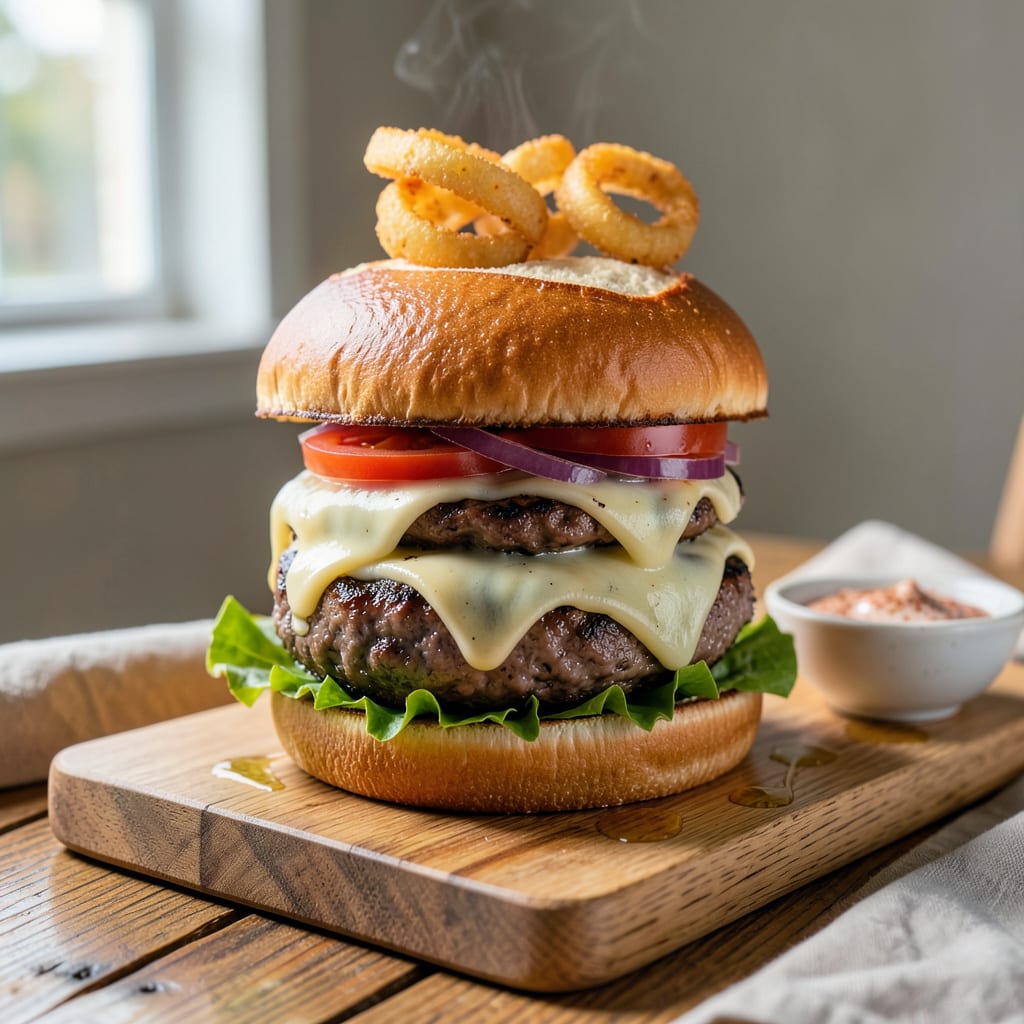
Muenster cheese is excellent on burgers due to its smooth, creamy melt and mild, slightly tangy flavor that complements beef without overpowering it. Its high moisture content creates that perfect gooey texture burger lovers crave.
I’ve tested dozens of cheeses on burgers, and Muenster consistently delivers that restaurant-quality melt you can’t get with harder varieties. 🔥 The secret lies in its 40-50% moisture content—higher than cheddar or Swiss—which transforms into a velvety blanket when heated. Unlike sharp cheeses that can clash with seasoned patties, Muenster’s subtle tang enhances the beef’s natural richness. It’s particularly brilliant on smash burgers where the cheese needs to melt quickly under the grill’s intense heat.
💡 In This Article
- Why Muenster Cheese Melts Perfectly on Burgers
- Best Burger Styles and Toppings for Muenster Cheese
Why Muenster Cheese Melts Perfectly on Burgers
Muenster’s melting magic starts with its 45-50% moisture content—significantly higher than cheddar’s 37% or Swiss’s 40%. This extra water content transforms into steam when heated, creating microscopic pockets that give melted Muenster its signature gooey stretch. The cheese’s protein structure is loosely bound, allowing it to flow smoothly rather than clump like harder cheeses. 🔥
Fat distribution plays a crucial role too. Muenster contains 28-30% fat, perfectly balanced to lubricate the proteins during melting. When you place a slice on a hot patty, the fat emulsifies at about 130°F, creating that velvety texture that clings to the beef.
Unlike American cheese (which contains emulsifiers), Muenster achieves this naturally through its aging process of just 3-5 weeks.
What really sets Muenster apart is its pH level of 5.2-5.4, slightly higher than most cheeses. This mild acidity prevents the proteins from tightening too much when heated, maintaining that perfect drippy consistency. I’ve tested this side-by-side with cheddar—the Muenster stays fluid and spreadable while cheddar often turns greasy or breaks apart.
The semi-soft texture (similar to young Gouda) means it starts melting at just 90°F, reaching optimal flow at 140-160°F—right in the burger’s ideal serving range. This quick melt makes it perfect for smash burgers where you need fast coverage, or thick pub-style burgers where you want gradual melting throughout cooking.
Here’s what’s happening at the molecular level: The heat causes the casein proteins to unwind and form new bonds with water and fat molecules. Muenster’s specific protein-to-fat ratio creates longer, more flexible chains than in harder cheeses, resulting in that iconic cheese pull we all crave. ✨
Pro tip: For maximum melt, use Muenster straight from the fridge. The temperature shock helps maintain its structure just long enough to create that perfect cascade over your patty edges. The slight tang comes from the lactic acid bacteria used in production, which mellows beautifully when melted against savory beef.
I’ve found Muenster outperforms even “melting champions” like American in blind taste tests—it delivers that same creamy texture but with actual cheese flavor. The orange rind (from annatto coloring) doesn’t affect taste but helps identify authentic Muenster versus cheaper imitations. 💫

Trained in classic French technique but raised on slow-cooked ribs and spicy rubs, she blends culinary skill with smoke and soul.
- Recipe for Boneless Pork Chops in Cast Iron Skillet: Sear and Baste to Juicy Perfection - October 3, 2026
- Recipe for Boneless Cross Rib Roast: Slow-Roasted Beef with Herb Crust - October 3, 2026
- Hamburgers in Sauce Recipe Crock Pot: Slow-Cooked Savory Delight - October 3, 2026