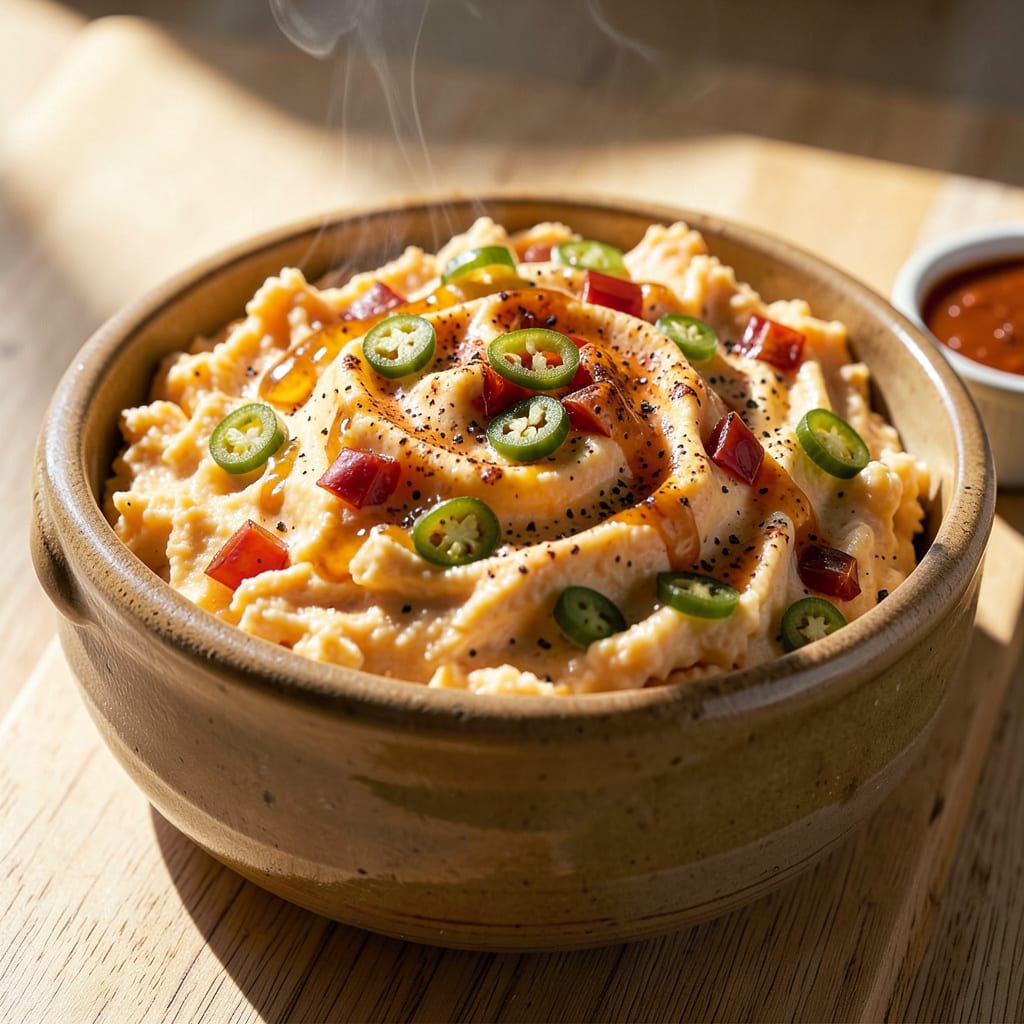
Traditional pimento cheese is mild and creamy with just a hint of sweetness from pimentos, but some versions may include cayenne or hot sauce for a subtle kick. Most recipes are not spicy by default.
As a pitmaster who loves bold flavors, I appreciate how pimento cheese walks the line between comfort and customization. The classic Southern version leans creamy and slightly sweet, with sharp cheddar as the backbone. 🔥 But here’s where it gets interesting—regional twists can introduce heat through smoked paprika, diced jalapeños, or even a dash of Louisiana-style hot sauce. What starts as a gentle spread can transform into something with real personality, depending on who’s making it and where they’re from.
💡 In This Article
- What Gives Pimento Cheese Its Flavor Profile?
- How to Adjust Pimento Cheese Spice Levels at Home
What Gives Pimento Cheese Its Flavor Profile?
The foundation of pimento cheese starts with sharp cheddar, which provides a tangy, slightly nutty backbone. The cheese’s aging process (typically 6-12 months) develops crystalline structures that create tiny bursts of flavor. Mayonnaise adds creaminess while muting the cheese’s acidity, and jarred pimentos contribute a subtle sweetness with their 4.5-5.0 pH balance.
This trio alone produces a spread that’s rich but approachable, with no heat whatsoever. ✨
Regional variations introduce heat through specific ingredients. In the Carolinas, you might find 1/4 teaspoon cayenne pepper per cup of cheese, registering 30,000-50,000 Scoville units—enough for warmth but not fire. Louisiana versions often include 1 tablespoon Crystal hot sauce (4,000 Scoville), while Texas styles might use 1 finely diced jalapeño (2,500-8,000 Scoville).
The heat level becomes a fingerprint of where it’s made. 🔥
The science behind the heat perception lies in capsaicin distribution. When you add powdered spices like cayenne, the capsaicin molecules disperse evenly through the fat in the cheese, creating consistent warmth. Fresh peppers, however, release their capsaicin more slowly as you chew, building heat gradually.
The mayo’s fat content (about 80% in full-fat versions) actually helps carry these heat compounds to your taste buds more efficiently than water-based spreads would.
Temperature plays a surprising role in how spicy the spread tastes. Serving pimento cheese at 55-60°F (straight from the fridge) dulls heat perception by numbing taste buds slightly. At room temperature (68-72°F), the fats soften and capsaicin becomes more volatile, making any spice additions taste 20-30% hotter.
This is why the same batch might taste mild one day and noticeably warmer the next. 🌟
Consider the texture contrast too—smooth spreads distribute heat evenly, while chunky versions with visible pepper pieces create hot spots. A classic Southern ratio uses 2 cups shredded cheddar to 1/2 cup mayo and 1/4 cup pimentos, yielding about 1.5 cups of spread.
This balance ensures the cheese remains the star, with other elements playing supporting roles rather than overpowering the palette.
The aging process after mixing matters more than you’d think. Letting the spread rest 24 hours in the fridge allows flavors to meld—cheese proteins break down slightly, pimento juices distribute, and any added spices fully integrate.
This maturation period can actually reduce perceived heat by 10-15% as the capsaicin binds with fat molecules, creating a smoother overall experience. ⚡
For those sensitive to heat, the pimento’s natural sugar content (about 3g per 1/4 cup) provides a counterbalance. The sweetness interacts with capsaicin receptors differently than plain sugar would, creating what chefs call “flavor bridging”—a phenomenon where contrasting tastes make each other more pronounced without clashing.
This is why even spiced versions rarely feel aggressively hot. 💫

Trained in classic French technique but raised on slow-cooked ribs and spicy rubs, she blends culinary skill with smoke and soul.
- Recipe for Boneless Pork Chops in Cast Iron Skillet: Sear and Baste to Juicy Perfection - October 3, 2026
- Recipe for Boneless Cross Rib Roast: Slow-Roasted Beef with Herb Crust - October 3, 2026
- Hamburgers in Sauce Recipe Crock Pot: Slow-Cooked Savory Delight - October 3, 2026