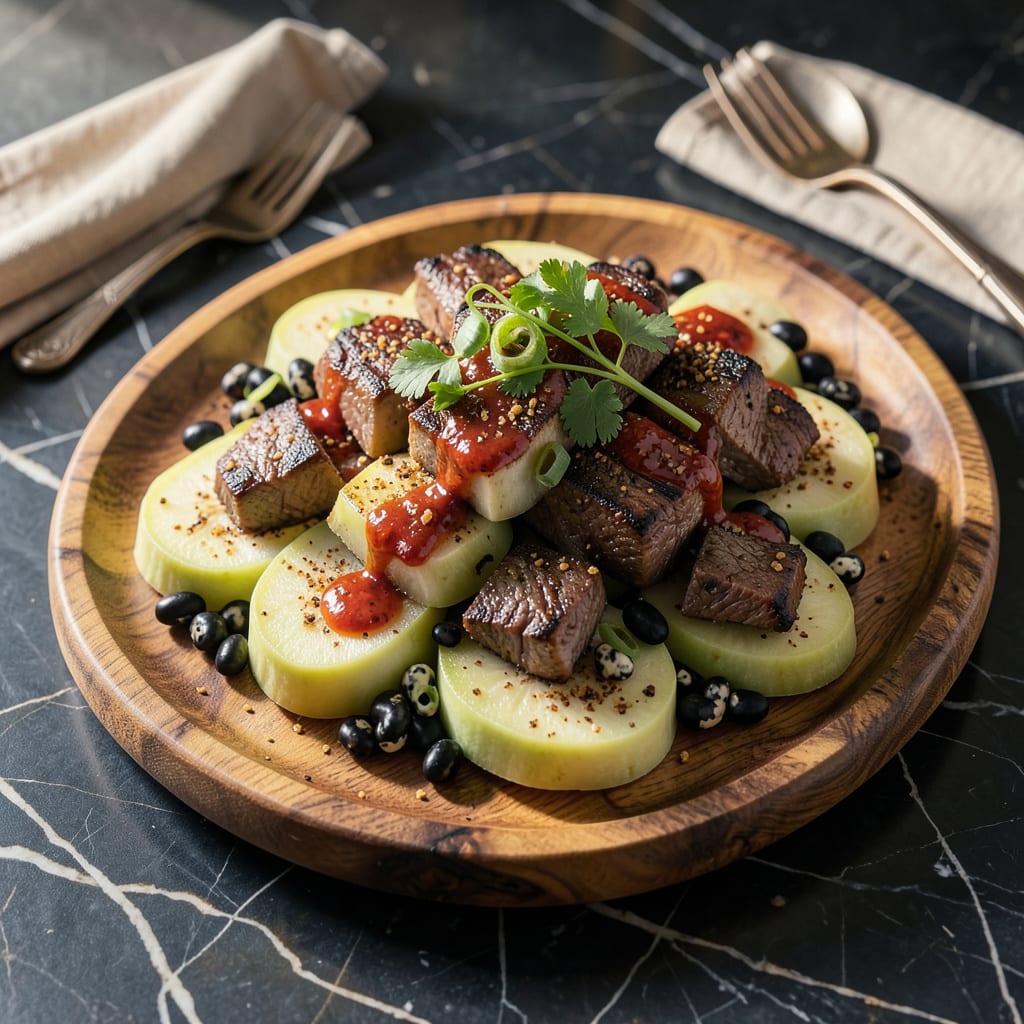
Unripe plantain is a starchy, firm banana variety harvested before ripening, featuring a neutral taste and potato-like texture. It’s a staple in Caribbean, African, and Latin American cuisines, often boiled, fried, or mashed in savory dishes.
This versatile ingredient transforms dishes with its unique ability to absorb flavors while maintaining structure. 🔥 I love how it acts like a culinary chameleon—equally at home in crispy tostones as it is in creamy mofongo. The high resistant starch content makes it ideal for those watching their glycemic index, and its firmness holds up beautifully to frying or boiling. Unlike sweet plantains, the unripe version offers a blank canvas for spices and herbs, which is why it’s my go-to for savory applications.
💡 In This Article
- Why Unripe Plantain Differs from Ripe Plantains
- Top 5 Unripe Plantain Recipes to Try at Home
Why Unripe Plantain Differs from Ripe Plantains
The transformation from unripe to ripe plantain is all about chemistry. When green, plantains contain 60-70% resistant starch—a complex carbohydrate that behaves like fiber in your digestive system. This starch gives unripe plantains their firm, almost waxy texture that holds up to boiling or frying without disintegrating.
As they ripen, enzymes break down these starches into simple sugars, causing the dramatic shift from starchy to sweet.
Texture is where the magic happens. A green plantain’s flesh measures 2.5-3 times firmer on a penetrometer than a ripe one, making it ideal for dishes requiring structure. 🔥 Try slicing one raw—it resists the knife like a raw potato, while a ripe plantain yields like overripe banana.
This firmness comes from tightly packed cellulose structures that only soften as pectin breaks down during ripening. The color change from green to yellow to black visually tracks this starch-to-sugar conversion.
Culinary applications diverge completely based on ripeness. Unripe plantains absorb flavors like a sponge during cooking, which is why they shine in savory dishes. In Puerto Rican mofongo, the green plantains’ starchiness creates that signature dense, dough-like consistency when mashed with garlic and pork cracklings.
Compare that to ripe plantains which caramelize beautifully when fried—perfect for maduros but useless for holding shape in stews.
The glycemic index tells another important story. Unripe plantains score around 35-50 on the GI scale (similar to lentils), while ripe ones can spike to 80+ (like white bread). This makes green plantains a smarter choice for blood sugar management.
The resistant starch also feeds beneficial gut bacteria, acting as a prebiotic—something lost as the fruit ripens and sugars dominate.
Global cuisines leverage these differences brilliantly. Nigerian dodo uses ripe plantains for their sweetness, while Ghanaian kelewele combines slightly ripe ones with spices for a sweet-spicy balance. But for Cuban tostones or Jamaican boiled plantains, only the unripe version delivers that satisfying starchy bite that soaks up bold flavors without turning mushy. ✨
Here’s a pro tip: The peel color isn’t always reliable for ripeness. Instead, press the plantain—unripe ones feel as hard as a cucumber, while ripe ones yield slightly like an avocado. For cooking, I always choose plantains with 70-80% green peel for maximum starch content and structural integrity in dishes.
The remaining yellow patches indicate just enough ripening to ease peeling without sacrificing texture.
What most home cooks miss is the peeling technique. Unripe plantains require a knife to score the thick peel lengthwise before prying it off—unlike ripe ones that peel like bananas. This extra step preserves the flesh’s integrity for clean slices or cubes.
💫 Always cut on a stable surface and use a sharp chef’s knife to avoid slipping; the starchiness makes them surprisingly slippery when raw!

Trained in classic French technique but raised on slow-cooked ribs and spicy rubs, she blends culinary skill with smoke and soul.
- Recipe for Boneless Pork Chops in Cast Iron Skillet: Sear and Baste to Juicy Perfection - October 3, 2026
- Recipe for Boneless Cross Rib Roast: Slow-Roasted Beef with Herb Crust - October 3, 2026
- Hamburgers in Sauce Recipe Crock Pot: Slow-Cooked Savory Delight - October 3, 2026