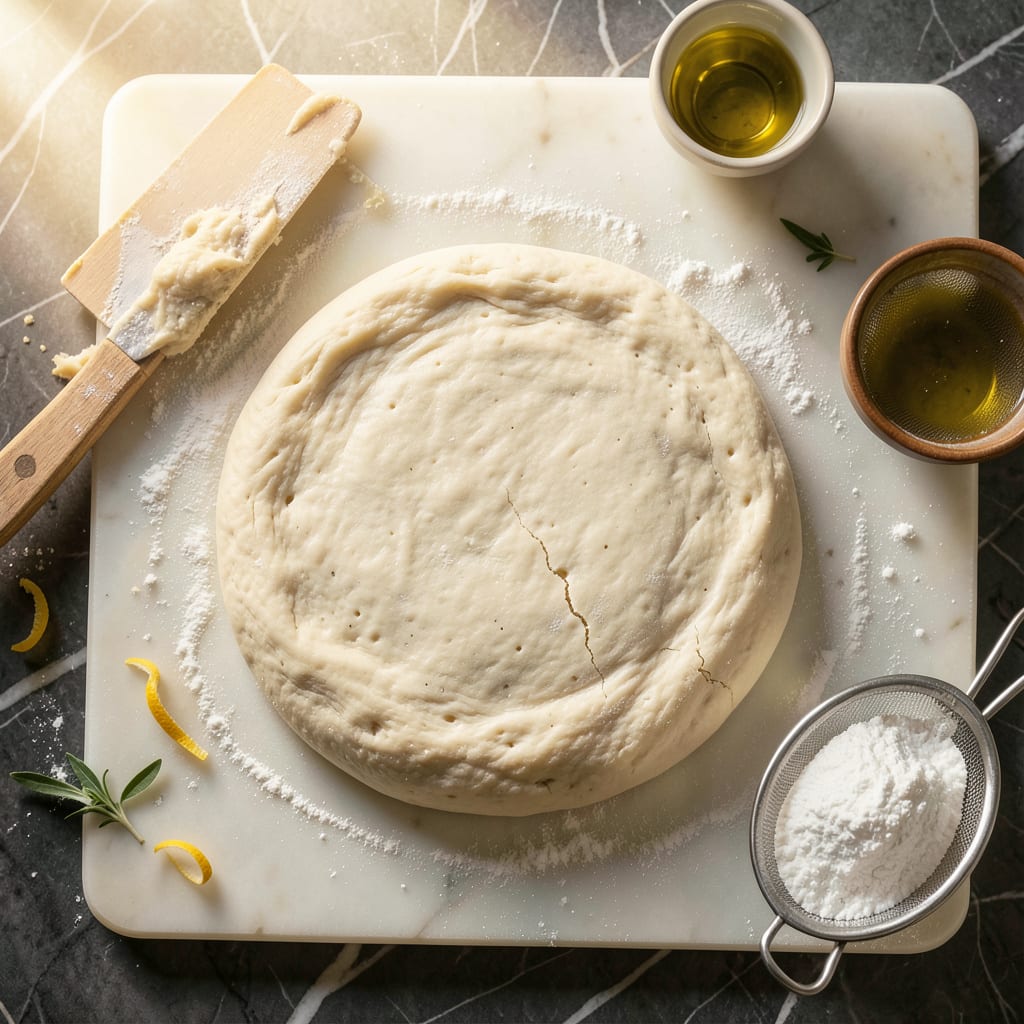
Pizza dough should be slightly tacky but not overly sticky. If it clings to your fingers excessively, it likely needs more flour or kneading. The ideal texture is soft, smooth, and elastic enough to stretch without tearing.
This balance comes down to gluten development and hydration levels. 🔥 When I work with dough, I notice that high-hydration recipes (like Neapolitan-style) will feel stickier than low-hydration ones, but they shouldn’t leave residue on your hands. The key is patience—letting the dough rest allows gluten strands to relax, reducing stickiness naturally. Too much flour can make your crust dense, so I always recommend gradual adjustments rather than dumping in extra flour all at once.
What many home cooks don’t realize is that humidity and room temperature play huge roles. ✨ On damp days, you might need slightly more flour to achieve that perfect tacky-but-not-sticky consistency. I’ve found that using a dough scraper helps handle the dough without adding unnecessary flour, preserving the delicate balance of moisture and structure.
💡 In This Article
- Why Pizza Dough Texture Varies from Sticky to Smooth
- How to Fix Sticky Pizza Dough Without Ruining It
Why Pizza Dough Texture Varies from Sticky to Smooth
The stickiness of pizza dough comes down to two key factors: hydration level and gluten development. High-hydration doughs (65-75% water-to-flour ratio) naturally feel stickier because there’s more moisture competing with the flour’s ability to absorb it. This creates a looser, more extensible dough perfect for Neapolitan-style pies with airy crusts.
In contrast, low-hydration doughs (55-60%) feel firmer and less tacky, ideal for crispier New York-style crusts. 🔥
Gluten formation plays an equally important role. When you knead dough, gluten strands develop that give structure and elasticity. Under-kneaded dough lacks sufficient gluten networks, making it feel shaggy and sticky. Over-kneading can make dough tough, but proper development (about 8-10 minutes by hand) creates that signature smooth, slightly tacky texture.
The fermentation process further strengthens these gluten bonds while producing gases that make the dough more extensible.
Temperature and humidity dramatically affect dough behavior. On warm, humid days, flour absorbs moisture from the air, requiring slight adjustments to your recipe. I’ve found that dough left to proof too long can become overly sticky as enzymes break down starches into sugars.
The ideal proofing window depends on your recipe, but most home doughs perform best after 1-2 hours at room temperature or 8-12 hours in the fridge for cold fermentation. ✨
Different flour types create varying textures too. Bread flour with its higher protein content (12-14%) develops more gluten, resulting in dough that’s stronger but can feel slightly drier.
All-purpose flour (10-12% protein) makes a more balanced dough, while Italian “00” flour (8-12% protein) creates that classic Neapolitan texture—soft, extensible, and just tacky enough to handle without sticking to everything. The fineness of “00” flour also contributes to its silky feel.
Here’s what most home cooks overlook: the autolyse method can transform sticky dough. By letting flour and water rest together for 20-30 minutes before adding salt and yeast, you give the flour time to fully hydrate. This simple step reduces initial stickiness by allowing gluten to begin forming naturally without kneading.
I use this technique religiously when working with high-hydration doughs—it’s a game-changer for manageability. 💫
The final texture should pass what I call the “finger test”: when you press gently into the dough, it should spring back slowly and leave just a slight impression on your fingertip. If it sticks to your finger when you pull away, it needs more kneading or a touch more flour.
But remember—some stickiness is normal and even desirable for certain styles. The art comes in knowing when it’s just right versus when it needs adjustment.

Trained in classic French technique but raised on slow-cooked ribs and spicy rubs, she blends culinary skill with smoke and soul.
- Recipe for Boneless Pork Chops in Cast Iron Skillet: Sear and Baste to Juicy Perfection - October 3, 2026
- Recipe for Boneless Cross Rib Roast: Slow-Roasted Beef with Herb Crust - October 3, 2026
- Hamburgers in Sauce Recipe Crock Pot: Slow-Cooked Savory Delight - October 3, 2026