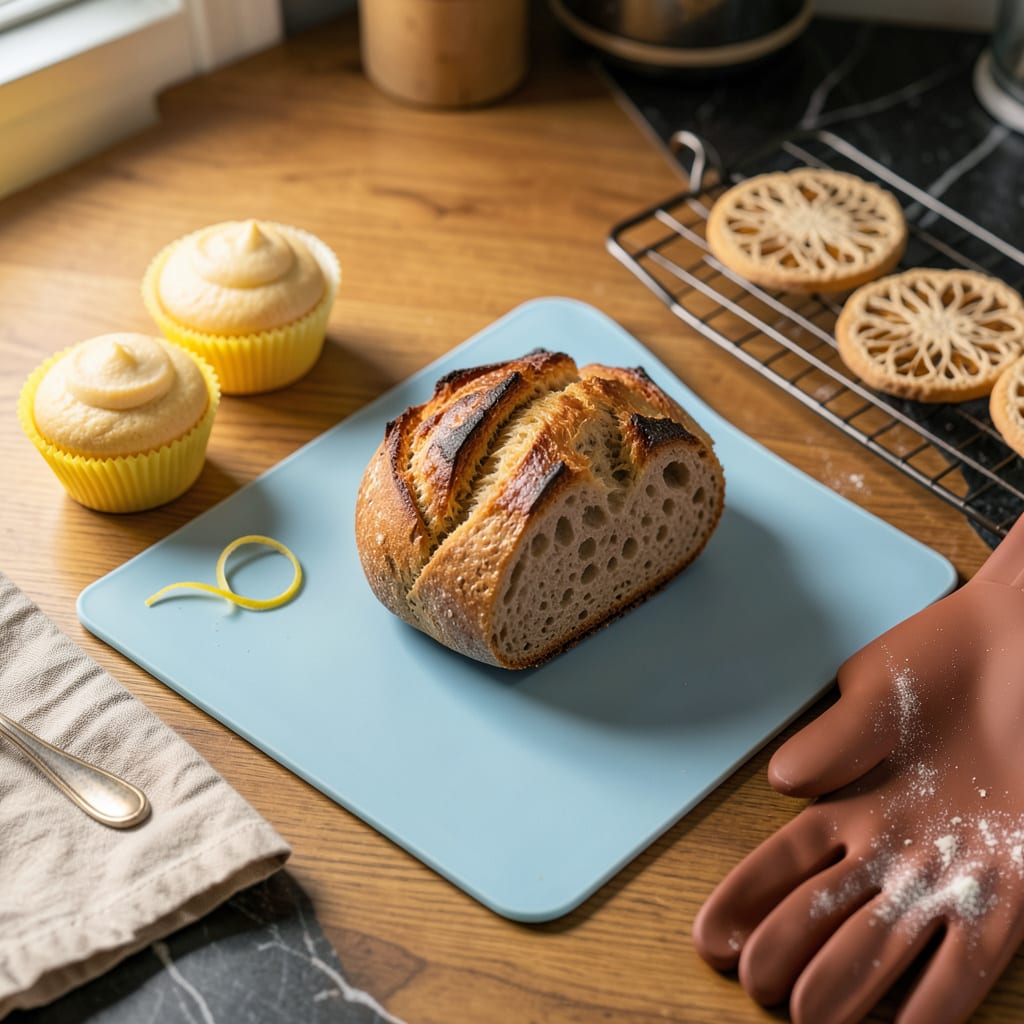
Food-grade silicone is safe for baking when FDA-approved and used correctly. It withstands temperatures up to 450°F (232°C), doesn’t leach chemicals, and is non-toxic, but always check for the food-safe certification mark.
I’ve tested countless silicone molds in my kitchen, and what impresses me most is their chemical stability. Unlike some plastics that degrade under heat, high-quality silicone maintains its structure even at extreme temperatures. The FDA’s rigorous testing ensures these products won’t release harmful substances into your food—something I verify by always looking for that little food-safe symbol. 🔥
What many home bakers don’t realize is that silicone’s non-stick properties come from its molecular makeup, not chemical coatings. This means you can bake everything from delicate soufflés to sticky caramels without worrying about residue. Just remember: not all silicone is created equal, so I stick with brands that specify “platinum-cure” for the purest, most durable results.
💡 In This Article
- How Food-Grade Silicone Resists Heat and Chemicals
- Best Practices for Using Silicone Bakeware Safely
How Food-Grade Silicone Resists Heat and Chemicals
The secret lies in silicone’s molecular structure—a chain of silicon-oxygen atoms bonded with organic groups. This creates an inert polymer that doesn’t react with food or break down under heat.
Unlike plastics that may leach BPA or phthalates when heated, FDA-approved silicone remains stable up to 450°F (232°C), with some premium grades handling 500°F (260°C) for short periods. The silicon-oxygen backbone is what gives it that remarkable thermal resistance. 🔥
FDA testing for food-grade silicone is rigorous. Manufacturers must prove their products won’t migrate chemicals into food at various temperatures. The platinum-curing process (used in high-quality bakeware) creates a purer product than peroxide-cured alternatives. I’ve noticed platinum-cured silicone has a slightly smoother texture and maintains flexibility longer—it’s the gold standard for professional bakers.
When heated, it doesn’t release odors or flavors, unlike some metals that can impart a metallic taste.
What makes silicone special is its non-porous surface that resists bacteria growth. The material doesn’t absorb flavors or odors, so you can bake garlic bread one day and vanilla cake the next without cross-contamination. I’ve used the same silicone mat for savory and sweet recipes for years with no flavor transfer.
The flexibility also means even heat distribution—no more burnt edges on your cookies! ✨
The temperature threshold matters more than you think. While silicone can handle 450°F, prolonged exposure above 400°F may shorten its lifespan. I’ve seen cheap silicone molds warp after repeated high-heat use, while premium brands maintain shape for years. The key difference? Reinforced fiberglass mesh in quality products prevents stretching.
Always check for that food-safe symbol—a small icon that looks like a wine glass and fork. 💫
Compared to alternatives, silicone offers unique advantages. Unlike metal that can create hot spots, silicone distributes heat gently. It’s lighter than ceramic but more durable than parchment paper. The flexibility means you can pop out delicate pastries without greasing—something I appreciate when making intricate chocolate designs.
Just remember: while silicone is dishwasher-safe, hand washing extends its life by preventing micro-tears from harsh detergents. ⚡
One test I recommend: the twist test. High-quality silicone should return to its original shape when twisted, not stay creased. This elasticity indicates proper curing and durability. I’ve found that thicker molds (about 1/8 inch) perform better than thin, flimsy ones.
The weight and density often correlate with quality—another reason I invest in professional-grade silicone for my baking needs. 🌟

Trained in classic French technique but raised on slow-cooked ribs and spicy rubs, she blends culinary skill with smoke and soul.
- Recipe for Boneless Pork Chops in Cast Iron Skillet: Sear and Baste to Juicy Perfection - October 3, 2026
- Recipe for Boneless Cross Rib Roast: Slow-Roasted Beef with Herb Crust - October 3, 2026
- Hamburgers in Sauce Recipe Crock Pot: Slow-Cooked Savory Delight - October 3, 2026