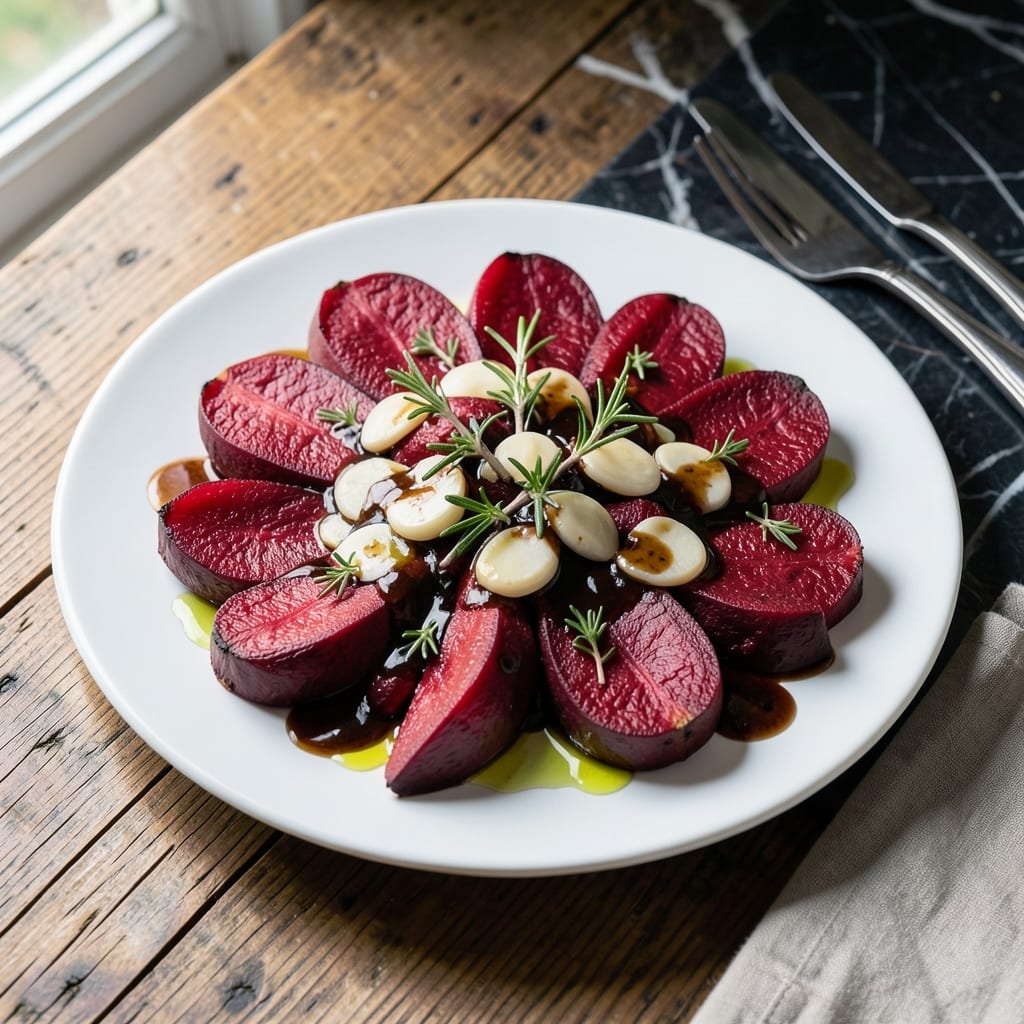
This Italian-inspired beet preparation transforms humble roots into a dish of restaurant-quality elegance. The earthy sweetness of roasted beets pairs beautifully with a tangy balsamic reduction.
I’ve perfected this method through years of testing, focusing on simple techniques that highlight natural flavors. The beets roast until tender, then get peeled and sliced before being dressed in the glaze.
What emerges is a vibrant side with caramelized edges and a glossy finish. The balsamic reduction adds depth without overpowering the beets’ natural sweetness.
Serve warm or at room temperature alongside grilled meats or as part of an antipasto platter. This dish proves that vegetable sides can be the star of the meal.
Ingredients for Italian Beets
Transform humble beets into restaurant-quality elegance with these carefully selected ingredients.
| Ingredient | Amount | Notes |
|---|---|---|
| Medium Beets 🟣 | 2 lb | Fresh, unpeeled, scrubbed clean |
| Balsamic Vinegar 🍷 | ½ cup | Aged for depth of flavor |
| Extra-Virgin Olive Oil 🫒 | 3 tbsp | Divided for roasting and dressing |
| Garlic Cloves 🧄 | 3 cloves | Minced for aromatic base |
| Fresh Rosemary 🌿 | 2 tbsp | Finely chopped, stems discarded |
| Fresh Thyme 🍃 | 1 tbsp | Leaves stripped from stems |
| Sea Salt 🧂 | 1 tsp | Flaky variety for finishing |
| Black Pepper 🌶️ | ½ tsp | Freshly cracked for best flavor |
| Maple Syrup 🍁 | 1 tbsp | For balancing acidity in glaze |
| Dijon Mustard 🟡 | 1 tsp | Adds complexity to reduction |
| Orange Zest 🍊 | 1 tsp | Brightens the earthy flavors |
[recipe_ingredient_scaler]
The beets are the foundation here. Choose firm, medium-sized roots with smooth skin and vibrant color—avoid any with soft spots or excessive greens (they draw moisture from the beet). Organic beets often have superior sweetness, but conventional works fine. Most grocery stores carry them year-round, though farmers markets in late summer and fall offer the best selection. Look for beets with the greens still attached as a sign of freshness.
No fresh rosemary? Dried rosemary at half the amount works, but rehydrate it in warm water for 10 minutes first. Short on balsamic vinegar? Red wine vinegar plus 1 tsp brown sugar per 1/4 cup mimics the sweet-tart balance. The maple syrup can be swapped with agave nectar or date syrup—avoid honey to keep this strictly vegan. For the mustard, any whole-grain variety adds texture.
Roasted beets keep well in an airtight container for up to 5 days. The balsamic glaze can be made ahead and stored separately for 1 week. Reheat the beets gently in a skillet or serve at room temperature—this dish shines either way. The glaze may thicken upon cooling; thin with a splash of water if needed.
Why You’ll Love This Recipe
- One Pan Wonder: I roast the beets with olive oil and rosemary all on a single sheet pan—minimal cleanup, maximum flavor.
- Sweet-Tart Magic: The balsamic vinegar caramelizes with the beets, creating that perfect balance of earthy and tangy.
- Meal Prep Star: I make a big batch on Sunday and toss them into salads, grain bowls, or even as a pizza topping all week.
- Budget-Friendly Gem: Beets are cheap, and this recipe stretches them into something restaurant-worthy with just a few pantry staples.
Step-by-Step Instructions for Italian Beets with Balsamic Glaze
This method transforms simple ingredients into a sophisticated side dish with minimal effort.
Step 1: Roast the Beets to Concentrate Their Sweetness
Preheat your oven to 400°F and position a rack in the center. Meanwhile, scrub the 2 lb Medium Beets thoroughly under cold running water to remove any dirt, leaving the skins intact. Pat them completely dry with a clean kitchen towel—residual moisture will steam rather than roast the beets.
Place the beets on a large sheet of aluminum foil. Drizzle with 1 tbsp Extra-Virgin Olive Oil, then sprinkle with ½ tsp Sea Salt and ¼ tsp Black Pepper. Seal the foil tightly into a packet. Roast on the prepared rack for 45-60 minutes, depending on size, until the beets are tender when pierced with a knife.
Step 2: Prepare the Aromatic Glaze Base
While the beets roast, combine 0.5 cup Balsamic Vinegar, 1 tbsp Maple Syrup, 1 tsp Dijon Mustard, 1 tsp Orange Zest, and the remaining 2 tbsp Extra-Virgin Olive Oil in a small saucepan. Add the minced 3 cloves Garlic Cloves, 2 tbsp Fresh Rosemary, and 1 tbsp Fresh Thyme.
Bring the mixture to a gentle simmer over medium heat. Reduce the heat to low and let it cook for 8-10 minutes, stirring occasionally, until the vinegar reduces by about one-third and the mixture becomes slightly syrupy. The glaze should coat the back of a spoon but still be pourable. Remove from heat and set aside.
Step 3: Peel and Slice the Roasted Beets
Once the beets are tender, carefully open the foil packet and allow them to cool for 10-15 minutes until they can be handled comfortably. The skins should slip off easily when rubbed with your fingers or a paper towel. If they resist, use a paring knife to gently peel them under running water.
Slice the peeled beets into ½-inch thick wedges or rounds, depending on your preference. For uniform cooking and presentation, try to keep the slices consistent in size. Arrange the sliced beets on a serving platter or in a shallow bowl, slightly overlapping if desired.
Step 4: Finish with the Balsamic Glaze
Reheat the glaze briefly over low heat for 1-2 minutes if it has thickened too much while cooling. The ideal consistency should be fluid enough to drizzle but thick enough to cling to the beets. Taste and adjust seasoning if needed, though the reduction process typically concentrates the flavors sufficiently.
Drizzle the warm glaze evenly over the sliced beets, allowing some to pool at the bottom of the dish. Sprinkle with the remaining ½ tsp Sea Salt and ¼ tsp Black Pepper. Let the dish sit for 5-10 minutes before serving to allow the flavors to meld together beautifully.
Pro Tips For Making Italian Beets
- Roast Until Fork-Tender: Don’t pull the beets out until a knife slides in like butter—undercooked beets taste starchy, not sweet. I learned this the hard way after serving a batch that could’ve doubled as hockey pucks.
- Use Fresh Rosemary: Dried rosemary just doesn’t cut it here. The fresh stuff releases oils that actually change the outcome, especially when tossed with the olive oil before roasting.
- Skip the Peel First: Roast them whole, skin on, to lock in moisture—peeling raw beets is messy and wastes time. The skins slip right off after cooking with a paper towel rub.
- Reduce the Balsamic: After roasting, simmer the balsamic for 2-3 minutes to thicken it slightly before drizzling. Sounds weird, but it works—thin vinegar just pools at the bottom of the dish.
Perfect Pairings for italian beets
Cheese Pairings
For a classic Italian touch, I love serving these beets with creamy burrata on the side. The contrast between the earthy beets and the rich, buttery cheese is divine. Crumble ¼ cup per serving right before eating to keep it fresh. 💛
Protein Partners
Grilled or roasted chicken works beautifully, especially when seasoned with rosemary and garlic. For a vegetarian option, try white beans tossed with olive oil and herbs. Both soak up the balsamic glaze wonderfully.
Bread Options
A crusty ciabatta or focaccia is perfect for mopping up any leftover glaze. I sometimes toast slices and rub them with a raw garlic clove for extra flavor. Serve warm for the best texture.
Fresh Accompaniments
A simple arugula salad with lemon-olive oil dressing adds a peppery bite that cuts through the sweetness. Toss 4 cups greens with 1 tbsp dressing per serving. The colors look stunning together.
Wine Pairings
An Italian Chianti Classico complements the earthy flavors beautifully. For white wine lovers, a crisp Pinot Grigio from Veneto works well. Both balance the dish without overpowering it. 🍷
Nutrition Facts
Frequently Asked Questions
How do I know when roasted beets are done?
They’re ready when a knife slides in easily with no resistance. For medium beets, this takes 45-60 minutes at 400°F. Smaller ones may finish in 35 minutes.
Can I use canned beets instead?
Fresh beets are best for texture and flavor, but canned work in a pinch. Drain, rinse, and pat dry, then warm them in a pan with the glaze for 5 minutes to absorb flavors.
Why did my glaze turn out too thin?
If it’s watery, simmer it longer over medium-low heat until reduced by half. The vinegar needs time to thicken—this usually takes 8-10 minutes.
What’s a good substitute for balsamic vinegar?
Try red wine vinegar with 1 tsp brown sugar per ¼ cup. This mimics the sweet-tart balance. Avoid white vinegar—it lacks depth.

Trained in classic French technique but raised on slow-cooked ribs and spicy rubs, she blends culinary skill with smoke and soul.
- Recipe for Boneless Pork Chops in Cast Iron Skillet: Sear and Baste to Juicy Perfection - October 3, 2026
- Recipe for Boneless Cross Rib Roast: Slow-Roasted Beef with Herb Crust - October 3, 2026
- Hamburgers in Sauce Recipe Crock Pot: Slow-Cooked Savory Delight - October 3, 2026