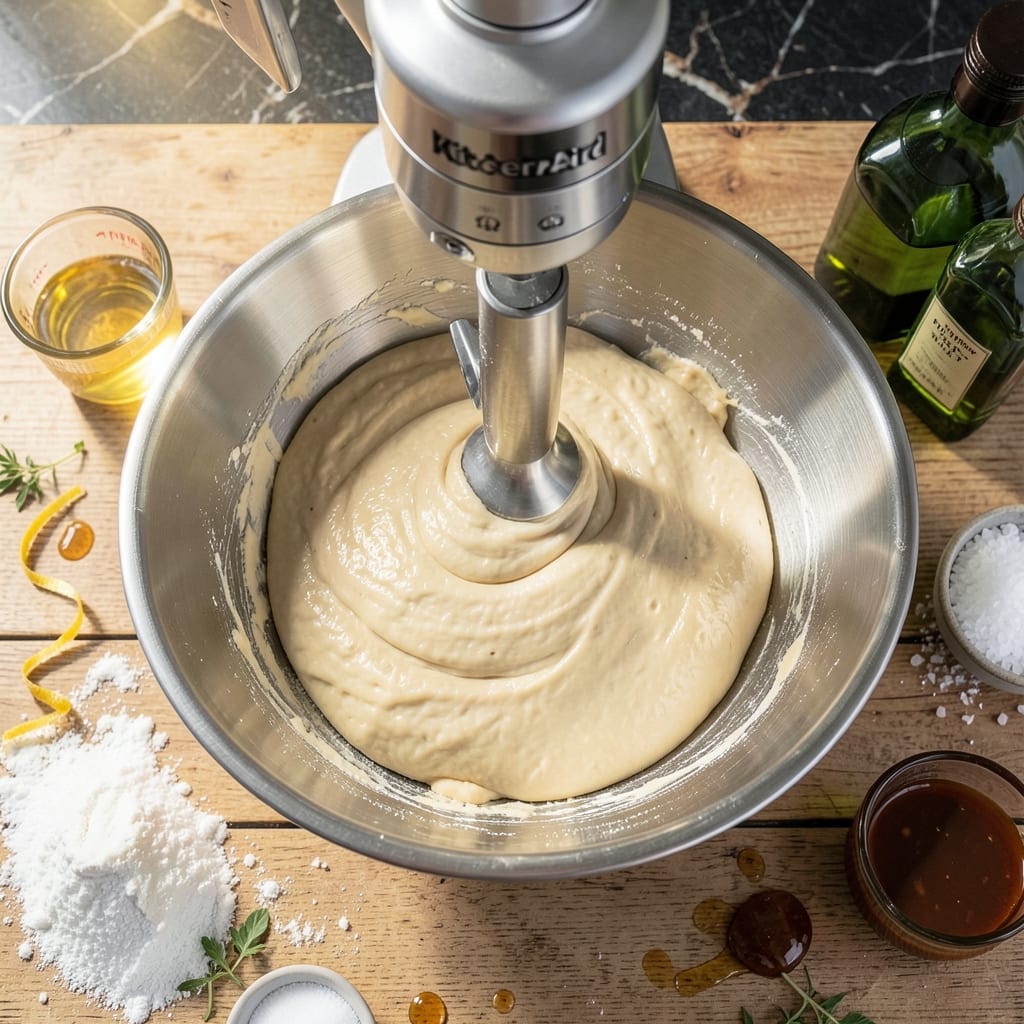
There’s nothing quite like the aroma of fresh-baked bread filling your kitchen. This method brings artisan quality within reach of any home baker, using your KitchenAid mixer to handle the heavy lifting.
Standing in my grandmother’s Sicilian kitchen, I learned that great bread requires patience and precision. This recipe honors those lessons while making the process accessible with modern tools.
The mixer does the kneading, but you’ll still feel the satisfaction of shaping the dough and watching it rise. The result is a golden, crusty loaf with a soft, airy interior that rivals any bakery.
With just a few simple ingredients and your KitchenAid, you can create this Italian classic. The machine makes it effortless, but the taste is all tradition.
Ingredients for Italian Bread Recipe for Kitchenaid Mixer
Simple pantry staples transform into a bakery-worthy loaf with your mixer’s help.
| Ingredient | Amount | Notes |
|---|---|---|
| Bread Flour 🌾 | 4 cups | Plus extra for dusting |
| Warm Water 💧 | 1 ½ cups | 110°F to 115°F |
| Active Dry Yeast 🍞 | 2 ¼ tsp | One packet, proofed |
| Granulated Sugar 🍚 | 1 tbsp | Feeds the yeast |
| Olive Oil 🫒 | 2 tbsp | Extra-virgin for flavor |
| Kosher Salt 🧂 | 2 tsp | Diamond Crystal preferred |
| Honey 🍯 | 1 tbsp | For subtle sweetness |
| Cornmeal 🌽 | ¼ cup | For dusting baking sheet |
| Large Egg 🥚 | 1 whole | For egg wash finish |
| Water 💧 | 1 tbsp | For egg wash thinning |
[recipe_ingredient_scaler]
The flour is the foundation here. King Arthur Bread Flour is my go-to—higher protein means better structure for that chewy interior. Yeast matters too: check the expiration date (old yeast is a silent killer of bread dreams). Fleet Farm or any bulk section usually has fresh stock. Warm water should feel like bathwater—too hot kills the yeast, too cold just annoys it.
No bread flour? All-purpose works at a 1:1 ratio, but the crumb won’t be as airy. Out of honey? Sugar or maple syrup does the job. Skip the egg wash for a vegan version—just brush with olive oil instead. Cornmeal not on hand? Semolina or extra flour keeps the loaf from sticking. The olive oil can be any neutral oil if you’re out.
Dough rises best in a warm, draft-free spot—turn your oven light on for the perfect proofing environment. Baked loaves stay fresh for 2-3 days wrapped in foil. Slice and freeze for up to 3 months (toast straight from frozen). Always let bread cool completely before slicing—worth the wait.
Why You’ll Love This Recipe
- Hands-Off Mixing: I let my KitchenAid do all the kneading while I sip my coffee—no sticky countertops or sore arms here.
- Olive Oil Magic: The olive oil gives it that golden crust and tender crumb that makes it taste like a bakery loaf.
- Sandwich Star: Between us, this bread turns even a simple turkey and cheese into something worth writing home about.
- Budget Buster: A pound of bread flour costs pennies and makes two loaves—I save more than my local bakery charges for one.
Step-by-Step Instructions for Italian Bread for KitchenAid Mixer
Here’s the method that guarantees a golden, crusty loaf with minimal hands-on effort.
Step 1: Proof the Yeast and Activate the Dough
In your KitchenAid mixer bowl, combine the 1.5 cups Warm Water, 2.25 tsp Active Dry Yeast, 1 tbsp Granulated Sugar, and 1 tbsp Honey. Let it sit for 5-10 minutes until the mixture becomes foamy and bubbly—this confirms your yeast is alive and ready to work.
I always check the water temperature with a thermometer to ensure it’s between 110°F to 115°F. Too hot and you’ll kill the yeast; too cold and it won’t activate properly. This step is non-negotiable for a good rise.
Step 2: Mix and Knead the Dough
Add the 4 cups Bread Flour and 2 tsp Kosher Salt to the yeast mixture. Using the dough hook attachment, mix on low speed for 2 minutes until the ingredients come together into a shaggy dough. Then increase to medium speed and knead for 6-8 minutes.
The dough should pull away from the sides of the bowl and feel smooth but slightly tacky. If it’s sticking to the bowl, add 1 tablespoon of bread flour at a time until it releases. Don’t add too much flour—you want a slightly sticky dough for a light, airy loaf.
Step 3: First Rise Until Doubled
Pour in the 2 tbsp Olive Oil and knead for another 30 seconds to incorporate. Transfer the dough to a lightly oiled bowl, turn to coat, and cover with a damp towel. Let it rise in a warm, draft-free place for 1 to 1.5 hours or until doubled in size.
I like to turn my oven on to its lowest setting for 2 minutes, then turn it off and place the bowl inside. This creates the perfect warm environment. The dough is ready when it springs back slowly when pressed gently with a finger.
Step 4: Shape, Second Rise, and Prepare for Baking
Punch down the dough and turn it onto a lightly floured surface. Shape it into a round loaf and place it on a baking sheet dusted with the 0.25 cup Cornmeal. Cover and let it rise for another 30-45 minutes until puffy.
Preheat your oven to 425°F during the last 15 minutes of rising. In a small bowl, whisk together the 1 whole Large Egg and 1 tbsp Water for the egg wash. Just before baking, brush the loaf generously with the egg wash for a shiny, golden crust.
Step 5: Bake to Golden Perfection
Bake the loaf for 25-30 minutes or until it’s deep golden brown and sounds hollow when tapped on the bottom. If the top browns too quickly, tent loosely with foil.
Transfer to a wire rack and let it cool for at least 20 minutes before slicing. I know it’s tempting to cut into it right away, but cooling allows the crumb to set properly. The result should be a crusty exterior with a soft, airy interior—perfect for sandwiches or dipping in olive oil.
Pro Tips For Making Italian Bread Recipe For Kitchenaid Mixer
- Proof the Yeast: I learned this the hard way—always bloom your active dry yeast in the warm water with sugar for 5-10 minutes until frothy. If it doesn’t bubble, your dough won’t rise, no matter how long you wait.
- Use Bread Flour: Skip the all-purpose and stick with bread flour—its higher protein content gives Italian bread that chewy, elastic texture you’re after.
- Don’t Over-Knead: Let the KitchenAid do the work, but stop the mixer once the dough pulls away from the bowl and feels smooth. Over-kneading makes the bread tough, and nobody wants that.
- Oil the Bowl: After the first rise, coat the dough lightly with olive oil before shaping. It keeps the surface from drying out and adds a subtle richness to the crust.
Flavor Customization for This Recipe
Herb Infusions
Stir 1 tbsp dried rosemary or 2 tbsp fresh basil into the flour before mixing. I love the aroma these herbs release as the dough kneads—just like Nonna’s kitchen in Sicily. The flavors develop beautifully during baking. 🌿
Cheesy Twist
Add ½ cup grated Parmesan or Pecorino Romano with the flour for a sharp, salty depth. For a melty surprise, fold in ½ cup shredded mozzarella during the final knead. Both create a delicious Italian-American touch.
Garlic Lovers
Mix in 2 minced garlic cloves or 1 tsp garlic powder with the wet ingredients. For bold flavor, I sometimes add 1 tbsp chopped sun-dried tomatoes too. The result is aromatic and perfect for dipping in olive oil.
Sweet Version
Replace the Kosher Salt with 1 tsp cinnamon and add ½ cup raisins or chopped candied fruit during the last knead. Brush with melted butter instead of egg wash for a tender crust. This reminds me of holiday breads from my childhood.
Seed Topping
Before baking, sprinkle the loaf with 2 tbsp sesame seeds or poppy seeds. Press them lightly into the dough so they adhere. I prefer fennel seeds for an authentic Sicilian flavor that pairs perfectly with the egg wash. ✨
Spicy Kick
For heat, add ½ tsp red pepper flakes or 1 tsp crushed Calabrian chili to the flour. The warmth balances the bread’s natural sweetness. This is a favorite among my East Coast Italian community friends.
Nutrition Facts
Frequently Asked Questions
Do I need to use bread flour?
Bread flour gives the best texture, but all-purpose works in a pinch. The higher protein in bread flour creates a chewier crumb. For a lighter loaf, stick with bread flour.
How do I know when the dough is kneaded enough?
It should pull away from the bowl and feel smooth but slightly tacky. If it’s too sticky, add flour 1 tablespoon at a time. Over-kneading can make the bread tough.
Can I make this without a KitchenAid mixer?
Yes, but kneading by hand takes 10-12 minutes of vigorous work. The mixer just saves time and effort. The result will be just as delicious!
Why did my bread not rise properly?
Check your yeast freshness and water temperature (110°F to 115°F). Old yeast or water that’s too hot/cold will prevent rising. Also, ensure it’s in a warm, draft-free spot.

Trained in classic French technique but raised on slow-cooked ribs and spicy rubs, she blends culinary skill with smoke and soul.
- Recipe for Boneless Pork Chops in Cast Iron Skillet: Sear and Baste to Juicy Perfection - October 3, 2026
- Recipe for Boneless Cross Rib Roast: Slow-Roasted Beef with Herb Crust - October 3, 2026
- Hamburgers in Sauce Recipe Crock Pot: Slow-Cooked Savory Delight - October 3, 2026