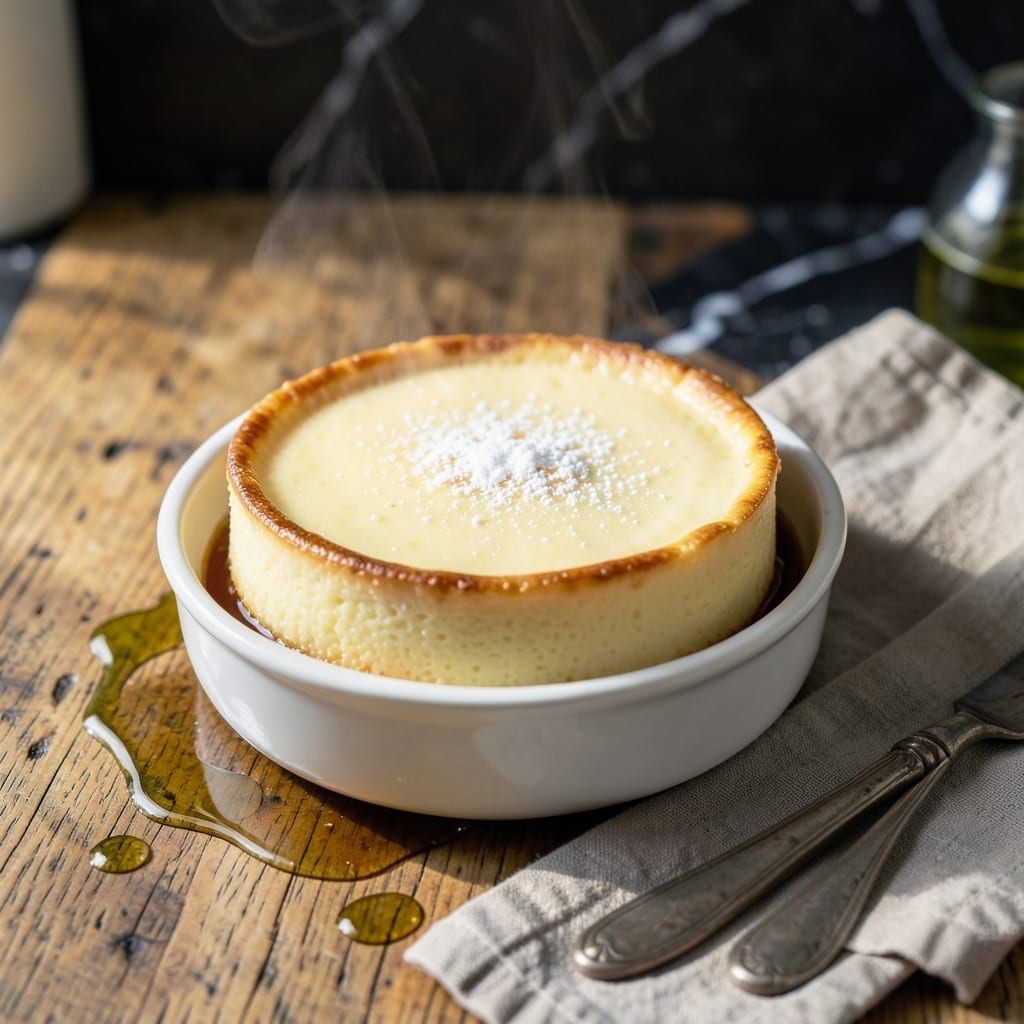
This Italian flan delivers a custard so silky it redefines dessert expectations. The caramelized topping adds a perfectly balanced sweetness that contrasts beautifully with the creamy base.
I’ve refined this method to ensure a smooth texture without curdling. The key is gentle baking and precise temperature control, which transforms simple ingredients into something extraordinary.
What emerges from the oven is a glossy, golden flan with a rich caramel layer that cascades over the edges. The custard holds its shape while remaining velvety and delicate.
Serve chilled for the best experience, letting each bite highlight the contrast between the caramel’s depth and the custard’s lightness.
Ingredients for Italian Flan
Simple ingredients transform into a luxurious, silky dessert with caramelized perfection.
| Ingredient | Amount | Notes |
|---|---|---|
| Granulated Sugar 🍚 | 1 cup | Divided for caramel and custard |
| Large Eggs 🥚 | 4 whole | Room temperature for smooth texture |
| Whole Milk 🥛 | 2 cups | Full-fat for creaminess |
| Sweetened Condensed Milk 🥛 | 1 can | 14 oz size standard |
| Vanilla Extract 🌿 | 1 tsp | Pure, not imitation |
| Water 💧 | ¼ cup | For caramel sauce |
| Salt 🧂 | ¼ tsp | Fine grain preferred |
| Heavy Cream 🥛 | ½ cup | Optional for richer texture |
| Unsalted Butter 🧈 | 2 tbsp | Melted for caramel base |
| Lemon Zest 🍋 | ½ tsp | Finely grated for brightness |
[recipe_ingredient_scaler]
The custard base demands quality dairy. Whole milk and sweetened condensed milk are non-negotiable for that velvety texture. Organic Valley or local dairy farms offer superior richness. For the caramel, use fine granulated sugar—larger crystals won’t dissolve evenly. Room temperature eggs incorporate more smoothly, preventing lumps in the final product.
No condensed milk? Simmer 1 cup whole milk with 2/3 cup sugar until reduced by half—cool before using. Swap vanilla for vanilla bean paste for visible specks. The butter in caramel can be replaced with coconut oil for a dairy-free version (though texture differs slightly). Heavy cream can be omitted, but the custard will be slightly less decadent.
Flan keeps beautifully refrigerated for up to 5 days. Store covered once fully chilled. The caramel will soften over time but remains luscious. For best results, make 1 day ahead—this allows flavors to meld completely. Serve straight from the fridge for that perfect chilled contrast.
Why You’ll Love This Recipe
- 5-Minute Mix: I just whisk eggs, milk, and sweetened condensed milk—no fancy steps, just pour and bake.
- Caramel Magic: That first bite of silky custard with the deep caramel top from melted sugar? Ridiculously good.
- Crowd Pleaser: From Sunday suppers to potlucks, this Italian flan disappears fast—even the picky eaters ask for seconds.
- Budget Dessert: Five pantry staples and under $5 total. Honestly, it’s my go-to when I need something impressive without breaking the bank.
Step-by-Step Instructions for Italian Flan
Master the technique for this classic dessert with its signature caramelized top and creamy custard.
Step 1: Prepare the Caramel Base
In a saucepan, combine ½ cup Granulated Sugar and the 0.25 cup Water. Place over medium-high heat and bring to a boil without stirring. Watch as the mixture transforms to a deep amber color—this should take 8-12 minutes.
Once the caramel reaches a rich golden hue, immediately remove from heat and stir in the 2 tbsp Unsalted Butter. The butter will bubble vigorously, so use caution. Pour the caramel into your flan mold, tilting to coat the bottom evenly. The caramel will harden as it cools, forming the base for your custard.
Step 2: Create the Custard Mixture
In a blender, combine the 4 whole Large Eggs, 2 cups Whole Milk, 1 can Sweetened Condensed Milk, ½ cup Granulated Sugar, 1 tsp Vanilla Extract, 0.25 tsp Salt, and 0.5 tsp Lemon Zest. Blend until the mixture is completely smooth and homogenous, about 30-45 seconds.
For an even richer texture, add the 0.5 cup Heavy Cream and blend for another 10 seconds. The mixture should be velvety with no visible streaks. Strain through a fine-mesh sieve to remove any air bubbles or undissolved sugar, ensuring a silky final product.
Step 3: Pour and Bake the Flan
Preheat your oven to 350°F. Pour the custard mixture over the hardened caramel in your mold. Place the mold in a larger baking dish and carefully pour hot water into the baking dish until it reaches halfway up the sides of the flan mold. This bain-marie method ensures gentle, even cooking.
Bake for 50-60 minutes until the center is just set but still slightly jiggly when gently shaken. The edges should be golden and slightly puffed. Avoid overbaking, as the custard will continue to set as it cools. Remove from the water bath and let cool to room temperature on a wire rack.
Step 4: Chill and Serve
Once cooled to room temperature, cover the flan with plastic wrap and refrigerate for at least 4 hours, or preferably overnight. Chilling is crucial as it allows the custard to fully set and the caramel to soften slightly.
To serve, run a thin knife around the edge of the flan to loosen it from the mold. Place a serving plate on top and invert quickly and confidently. The caramel will flow over the custard, creating its signature glossy topping. Slice into wedges and serve immediately for the best texture.
Pro Tips For Making Italian Flan
- Preheat the Oven: Set your oven to 350°F and let it fully heat before baking—I learned this the hard way after a sunken center ruined my first three flans.
- Strain the Eggs: Whisk your eggs, then strain them through a fine sieve. Sounds tedious, but it removes any stubborn bits for that silky-smooth texture Italian flan is known for.
- Skip the Boiling: Resist the urge to boil the sugar for the caramel. A medium-high heat and constant swirling until it’s a deep amber (about 5-7 minutes) prevents bitterness.
- Warm the Milks: Gently heat the whole milk and sweetened condensed milk together until just warm to the touch—this blends better with the eggs and avoids curdling.
Regional Styles of italian flan
Roman Tradition
In Rome, flan takes a simpler approach with just eggs, milk, and sugar. The focus is on perfecting the custard’s texture. I love how they serve it with a light dusting of powdered sugar instead of caramel. 🗺️
Sicilian Citrus Twist
Sicilian cooks add orange blossom water or lemon zest to their flan, giving it a bright, floral note. The island’s love for citrus shines through in this version. I’ve tried it with blood orange zest for extra depth.
Northern Creaminess
In the north, especially Lombardy, they enrich the custard with mascarpone cheese for extra creaminess. The result is a denser, more decadent dessert that pairs beautifully with fresh berries.
Venetian Caramel Art
Venetian chefs take caramel to another level by creating intricate designs in the mold before adding the custard. The result is as beautiful as it is delicious. I once saw a flan with a caramel lattice pattern.
Sardinian Almond Flour
On Sardinia, they incorporate almond flour into the custard, adding a nutty depth. This variation has a slightly grainier texture but incredible flavor. It reminds me of marzipan.
Tuscan Coffee Infusion
Tuscan bakers infuse their flan with espresso or coffee liqueur. The coffee flavor cuts through the sweetness perfectly. I like to add a shot of espresso to the custard mixture. ☕
Nutrition Facts
Frequently Asked Questions
Why use a water bath for baking?
A bain-marie ensures gentle, even heat for the custard. It prevents the edges from cooking too quickly while the center stays underdone. This method creates that signature silky texture.
Can I make it without condensed milk?
Yes! Simmer 1 cup whole milk with 2/3 cup sugar until reduced by half. Cool before using to replace the canned version. The texture will be slightly less rich.
How do I prevent bubbles in my custard?
Strain the mixture through a fine-mesh sieve after blending. This removes air bubbles for a perfectly smooth flan. Skimming foam off the top before baking helps too.
What’s the best way to unmold it cleanly?
Run a thin knife around the edge, then invert onto a plate in one quick motion. The caramel will flow out naturally. For stuck spots, briefly warm the bottom of the mold.

Trained in classic French technique but raised on slow-cooked ribs and spicy rubs, she blends culinary skill with smoke and soul.
- Recipe for Boneless Pork Chops in Cast Iron Skillet: Sear and Baste to Juicy Perfection - October 3, 2026
- Recipe for Boneless Cross Rib Roast: Slow-Roasted Beef with Herb Crust - October 3, 2026
- Hamburgers in Sauce Recipe Crock Pot: Slow-Cooked Savory Delight - October 3, 2026