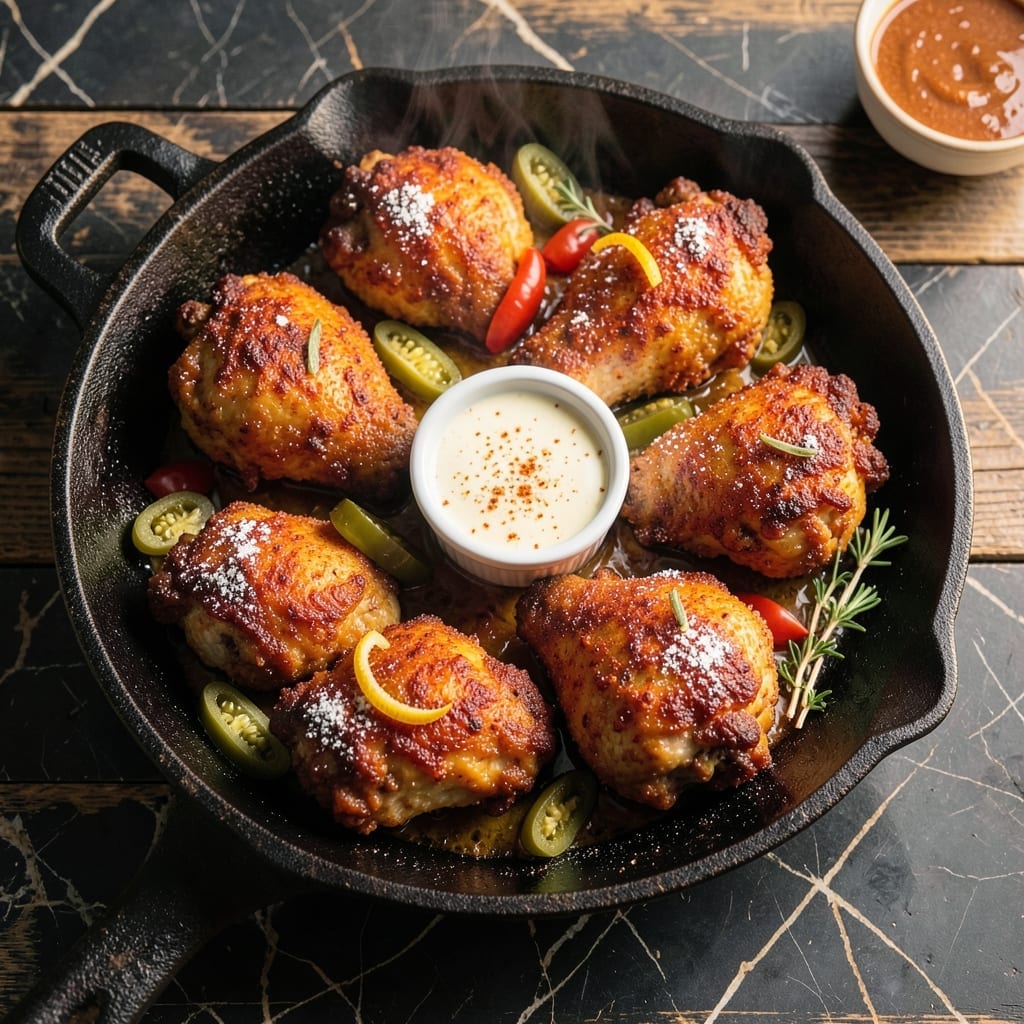
Nashville hot chicken changed how I think about spicy food—this version delivers the crispy skin and fiery kick that made Prince’s famous.
My approach uses a buttermilk marinade for tenderness and a cayenne-laced oil for that signature heat. The double-frying method ensures perfect texture every time.
The result is golden, shatteringly crispy chicken with a smoky, spicy crust. It’s the kind of dish that demands cold beer and extra napkins.
Serve with pickles and white bread to balance the heat. Here’s how to make it right.
Ingredients for Prince’s Hot Chicken
Buttermilk, fiery spices, and a double-fry for that legendary crispy crust. Nothing else comes close.
| Ingredient | Amount | Notes |
|---|---|---|
| Chicken Thighs 🍗 | 4 lb | Bone-in, skin-on preferred |
| Buttermilk 🥛 | 2 cups | Full-fat for tenderness |
| Cayenne Pepper 🌶️ | ½ cup | Adjust for heat preference |
| Lard or Vegetable Shortening 🧈 | 2 cups | For frying, traditional choice |
| All-Purpose Flour 🌾 | 2 cups | For dredging chicken |
| Cornstarch 🌽 | ½ cup | For extra crispiness |
| Large Eggs 🥚 | 2 whole | For binding dredge |
| Hot Sauce 🔥 | ¼ cup | Like Crystal or Tabasco |
| Brown Sugar 🍚 | 2 tbsp | Balances the heat |
| Garlic Powder 🧄 | 1 tbsp | For depth of flavor |
| Onion Powder 🧅 | 1 tbsp | Enhances the marinade |
| Paprika 🌶️ | 1 tbsp | Smoked or sweet variety |
| Salt 🧂 | 1 tbsp | Kosher or sea salt |
| Black Pepper 🌶️ | 1 tsp | Freshly ground preferred |
| Pickles 🥒 | 1 cup | For serving, dill preferred |
| White Bread 🍞 | 4 slices | For serving, soft texture |
[recipe_ingredient_scaler]
The chicken matters most here. Bone-in, skin-on thighs give you that juicy interior and shatteringly crisp skin—boneless just doesn’t hold up to the heat or the frying. I grab mine from Whole Foods if I’m feeling fancy, but any supermarket works. Look for pieces that are similar in size so they cook evenly. The buttermilk? Full-fat is non-negotiable for that tenderizing power.
No buttermilk? Whole milk plus a splash of vinegar gets you 90% there. Out of cayenne? Crushed red pepper flakes at half the amount work, but the heat profile changes—cayenne’s smoother. The lard is traditional, but vegetable shortening or peanut oil work just fine (and are easier to find). If you’re avoiding pork, Crisco is a solid substitute. The flour can be swapped for gluten-free blends, but the texture won’t be quite as crispy.
Fry in batches so the oil stays hot—crowding lowers the temp and you’ll end up with greasy chicken. Leftovers (if there are any) keep in the fridge for 3-4 days, but they’re best fresh. Reheat in the oven at 375°F to revive the crispiness. The oil can be strained and reused once, but it’ll start smoking at lower temps after that.
Why You’ll Love This Recipe
- One Bowl Wonder: I marinate the thighs in buttermilk, then coat them in flour—same bowl, no extra dishes.
- Heat That Sticks: The cayenne in the crust gives that slow-building burn that lingers just right.
- Weeknight Hero: I’ve served this for Sunday supper and midweek cravings—always disappears.
- Leftovers? Gone: Honestly, the chicken stays crispy even reheated, so I double the batch.
Step-by-Step Instructions for Nashville-Style Spicy Fried Chicken
Here’s the method that delivers that signature crispy crust with fiery heat every time.
Step 1: Marinate the Chicken Thighs Overnight
In a large bowl, whisk together the 2 cups Buttermilk, 0.25 cup Hot Sauce, 2 tbsp Brown Sugar, 1 tbsp Garlic Powder, 1 tbsp Onion Powder, 1 tbsp Paprika, 1 tbsp Salt, and 1 tsp Black Pepper until the brown sugar dissolves completely. This creates a flavorful brine that tenderizes while adding depth.
Add the 4 lb Chicken Thighs to the marinade, ensuring each piece is fully submerged. Cover and refrigerate for at least 4 hours, but overnight is ideal. The longer it marinates, the more the flavors penetrate and the juicier your chicken will be. Stir once or twice during marinating to redistribute the flavors.
Step 2: Prepare the Dredging Station
In a large shallow dish, combine the 2 cups All-Purpose Flour and 0.5 cup Cornstarch. Whisk until fully incorporated—the cornstarch is the secret to that ultra-crispy coating. In a separate bowl, beat the 2 whole Large Eggs lightly with 2 tablespoons of the leftover marinade from the chicken.
Set up your dredging station: first the flour mixture, then the egg wash, then the flour mixture again. This double-dredge method ensures maximum crunch. I like to place a wire rack over a baking sheet next to the station to hold the dredged chicken before frying.
Step 3: Create the Spicy Dredge and Coat the Chicken
Add the 0.5 cup Cayenne Pepper to your flour and cornstarch mixture. Stir thoroughly until the cayenne is evenly distributed throughout—the mixture should have a vibrant red-orange hue. This isn’t just for heat; it creates that iconic Nashville color.
Remove each chicken thigh from the marinade, letting excess drip off. Dredge in the flour mixture, pressing firmly to adhere, then dip in the egg wash, and finally coat again in the spiced flour. Place on the wire rack. Let the coated chicken rest for 10-15 minutes—this helps the coating adhere during frying.
Step 4: Fry to Golden, Crispy Perfection
In a large, heavy-bottomed pot or Dutch oven, heat the 2 cups Lard or Vegetable Shortening to 350°F. Use a deep-fry thermometer for accuracy. The fat should be deep enough to submerge the chicken pieces by at least half. Heat the fat gradually to avoid hot spots.
Carefully place several chicken thighs in the hot fat, being careful not to overcrowd the pot. Fry for 12-15 minutes, turning occasionally, until the coating is deep golden brown and the internal temperature reaches 165°F. The coating should be crispy enough to crack when you press it lightly. Drain on a wire rack set over paper towels to maintain crispiness.
Step 5: Rest and Serve with Traditional Sides
Let the fried chicken rest for 5-10 minutes before serving. This allows the juices to redistribute and the coating to set fully. The chicken should be crunchy on the outside, juicy on the inside, with a heat level that builds as you eat.
Serve immediately with the 1 cup Pickles and 4 slices White Bread on the side. The cool tang of the pickles and the soft bread are the perfect foil for the spicy chicken. For the full Nashville experience, place a slice of bread under each piece of chicken to catch any crumbs.
Pro Tips For Making Prince’S Hot Chicken
- Soak Overnight: I learned this the hard way—give the chicken thighs a full 12-24 hours in the buttermilk before dredging. Sounds tedious, but it actually changes the outcome, making the meat juicier and the crust stick better.
- Heat the Lard: After burning three batches, I finally figured out the lard or shortening needs to hit 350°F before the chicken goes in. Anything cooler and you’ll end up with greasy, sad chicken instead of that crispy Prince’s-style crust.
- Double-Dredge for Crisp: Skip the single coat—dip the thighs in flour, back into the buttermilk, then flour again. My grandmother swore by this, and she was right: it’s the thing that matters most for that signature crunch.
- Rest Before Serving: Let the fried chicken rest 5 minutes on a rack before digging in. I was skeptical until I tried it—this keeps the crust from turning soggy under the weight of all that cayenne-spiked oil.
Storing and Reheating princes hot chicken
Fridge Storage
Let your chicken cool completely, then transfer to an airtight container with paper towels to absorb excess oil. It’ll keep in the fridge for 3-4 days, though the coating softens over time. I always make extra for midnight snacks. ❄️
Freezing Tips
Freeze individual pieces on a baking sheet first, then transfer to a freezer bag with parchment between layers. This prevents sticking and maintains crispiness when reheated. It’ll last up to 3 months at 0°F.
Oven Reheating
Preheat to 375°F and place chicken on a wire rack over a baking sheet. Reheat for 10-12 minutes until the coating crisps up. This method works best for larger batches. 🔥
Air Fryer Method
For a quick fix, reheat at 350°F for 4-5 minutes in the air fryer. Spritz with oil first to revive the crunch. Watch closely to avoid over-browning.
Serving Refresh
If the chicken loses its kick, brush with a mix of 1 tbsp hot sauce and 1 tsp cayenne after reheating. Serve with fresh pickles and white bread to balance the heat.
Nutrition Facts
Frequently Asked Questions
Can I use boneless chicken for this?
Bone-in, skin-on thighs work best for juiciness and crispiness. Boneless tends to dry out and won’t hold the coating as well. If you must, reduce frying time by 2-3 minutes per side.
How do I adjust the heat level?
Start with 0.25 cup cayenne for mild heat, or add up to 0.75 cup for extra spicy. Balance with a pinch of sugar if it’s too intense. Remember, the heat builds as you eat!
Can I bake instead of frying?
Yes, but the texture won’t be the same. Bake at 400°F for 25-30 minutes on a wire rack for crispiness. For closer results, finish with a quick broil.
What oil works if I don’t have lard?
Vegetable shortening, peanut oil, or canola oil all work well. Use enough to submerge the chicken halfway. Avoid olive oil—it has a low smoke point.

Trained in classic French technique but raised on slow-cooked ribs and spicy rubs, she blends culinary skill with smoke and soul.
- Recipe for Boneless Pork Chops in Cast Iron Skillet: Sear and Baste to Juicy Perfection - October 3, 2026
- Recipe for Boneless Cross Rib Roast: Slow-Roasted Beef with Herb Crust - October 3, 2026
- Hamburgers in Sauce Recipe Crock Pot: Slow-Cooked Savory Delight - October 3, 2026