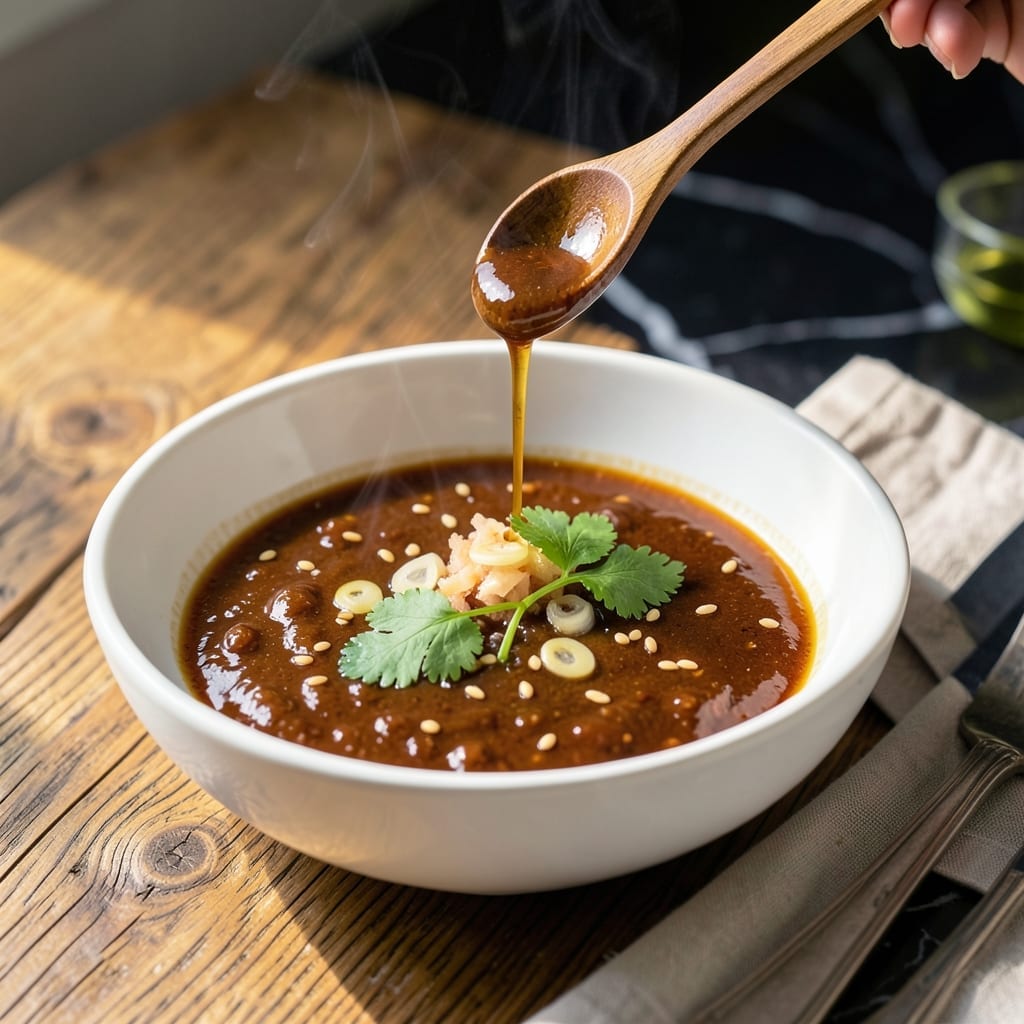
This sauce transforms grilled dishes with its umami-rich depth and subtle sweetness. I developed it to elevate simple proteins into restaurant-quality meals.
With just a few ingredients and 10 minutes of simmering, you’ll have a versatile glaze that works on chicken, beef, or vegetables. Store it in the fridge for up to two weeks.
Ingredients for Japanese Barbecue Sauce
A few pantry staples blend into a glossy, umami-packed glaze worth repeating.
| Ingredient | Amount | Notes |
|---|---|---|
| Soy Sauce 🥢 | ½ cup | Low-sodium preferred for balance |
| Mirin 🍶 | ½ cup | Sweet rice wine for depth |
| Sake 🍷 | ¼ cup | Dry variety for acidity |
| Brown Sugar 🍚 | ¼ cup | Packed for rich sweetness |
| Rice Vinegar 🍯 | 2 tbsp | Brightens the glaze |
| Fresh Ginger 🌿 | 1 tbsp | Finely grated for zing |
| Garlic Cloves 🧄 | 3 cloves | Minced for pungent kick |
| Dashi Stock 🥣 | 2 tbsp | Optional for extra umami |
| Sesame Oil 🫒 | 1 tsp | Toasted for aroma |
| Cornstarch 🌾 | 1 tbsp | Slurry with water to thicken |
[recipe_ingredient_scaler]
Soy sauce is the backbone here. Kikkoman or Yamasa are my go-tos—consistent quality, widely available. Mirin and sake are non-negotiable for that authentic balance; find them at Asian markets or the international aisle. The ginger and garlic? Fresh only (the jarred stuff just doesn’t cut it). If you’re feeling fancy, freshly grated daikon adds a nice brightness, but it’s not essential.
No mirin? Sweet sherry or dry white wine plus a pinch of sugar works in a pinch. Sake can be swapped for dry vermouth. Brown sugar is flexible—light or dark, but skip the white. For a gluten-free version, tamari instead of soy sauce does the trick. The dashi is optional but worth it—instant dashi granules dissolve right in.
This keeps beautifully in the fridge for up to 2 weeks (that soy base preserves it). Freeze extras in ice cube trays for 3 months. The flavors deepen overnight, so make it ahead if you can—just give it a stir before using.
Why You’ll Love This Recipe
- 5-Minute Mix: I dump everything in a saucepan and let the soy sauce and mirin work their magic while I prep the rest of dinner.
- Sweet-Savory Balance: The brown sugar caramelizes with the sake, creating that sticky, umami-rich glaze I can’t stop sneaking tastes of.
- Grill or Bowl: Honestly, it’s just as good slathered on chicken thighs as it is drizzled over rice for a quick lunch.
- Batch & Store: I make a double batch—it keeps for weeks, so I’m never without that bold, tangy kick for spontaneous weeknight meals.
Step-by-Step Instructions for Japanese Barbecue Sauce
Here’s how I make this versatile glaze with minimal effort and maximum flavor impact.
Step 1: Bloom the Aromatics
In a saucepan over medium heat, add the 1 tsp Sesame Oil. Once it shimmers, stir in the 1 tbsp Fresh Ginger and 3 cloves Garlic Cloves. Sauté for 1-2 minutes until fragrant but not browned—you want the raw edge taken off without burning.
This step wakes up the volatile oils in the ginger and garlic, creating a flavor base that’s pungent and aromatic. Keep the heat moderate; burnt garlic will turn bitter and ruin the sauce.
Step 2: Build the Liquid Foundation
Pour in the 0.5 cup Soy Sauce, 0.5 cup Mirin, 0.25 cup Sake, 0.25 cup Brown Sugar, and 2 tbsp Rice Vinegar. Stir until the brown sugar fully dissolves, which should happen as the liquid begins to gently simmer.
Bring the mixture to a low boil, then reduce heat to medium-low. The sugars in the mirin and brown sugar will start to caramelize slightly, adding depth. Let it simmer for 5 minutes to meld the flavors.
Step 3: Thicken with Optional Umami Boost
Stir in the 2 tbsp Dashi Stock if using—this adds a subtle savory depth that enhances the sauce’s complexity. In a small bowl, whisk the 1 tbsp Cornstarch with 1 tbsp water to make a slurry, then slowly pour it into the saucepan while stirring constantly.
Continue simmering for another 3-4 minutes until the sauce thickens to a glaze-like consistency. It should coat the back of a spoon and leave a clear trail when you run a finger through it. If it thickens too much, thin with a splash of water.
Step 4: Cool and Store
Remove the sauce from heat and let it cool to room temperature. The sauce will thicken slightly as it cools, which is normal. Transfer it to a clean jar or airtight container.
This glaze keeps well in the refrigerator for up to 2 weeks. If it separates, just stir or shake before using. Brush it on grilled meats during the last few minutes of cooking for a sticky, glossy finish.
Pro Tips For Making Japanese Barbecue Sauce
- Simmer Low and Slow: Keep the heat at a gentle simmer—boiling hard will burn the brown sugar and make the sauce bitter. I learned this the hard way after ruining two batches.
- Use Real Mirin: Skip the “mirin-fu condiment” and use actual mirin; it’s sweeter and more complex, and the difference in depth of flavor is noticeable.
- Dissolve Sugar First: Whisk the brown sugar into the warm sake and mirin before adding soy sauce to prevent clumps and ensure a smooth, glossy finish.
- Balance with Vinegar: Taste before the final reduction and add rice vinegar last—it brightens the sauce without overpowering the umami from the soy and mirin.
Make-Ahead Tips for Leftovers
Prep Ahead Strategy
This sauce actually improves with time as the flavors meld together. I recommend making it 1-2 days ahead—the ginger and garlic mellow beautifully while the umami deepens. Just store it in an airtight container in the fridge until ready to use. 💡
Batch Cooking
Double or triple the recipe and freeze extras in ice cube trays. Once solid, transfer the cubes to a freezer bag for up to 3 months. Thaw only what you need in the microwave or overnight in the fridge.
Quick Thaw Method
For last-minute meals, place frozen sauce cubes in a small saucepan with 1-2 tbsp water. Heat over low-medium until melted, then simmer for 2 minutes to restore the glaze consistency.
Flavor Boost Tip
If making ahead, add the cornstarch slurry just before using rather than during initial cooking. This prevents separation and maintains the perfect glossy texture when reheated.
Storage Containers
I use 8 oz mason jars for fridge storage—they’re perfect for shaking to recombine. For freezing, silicone muffin molds work great for portion control. Always leave ½ inch headspace for expansion. ❄️
Reheating Note
Gently warm the sauce in a small pan over low heat, stirring frequently. Avoid boiling, as high heat can cause the sugars to caramelize too quickly and alter the flavor balance.
Nutrition Facts
Frequently Asked Questions
Can I use honey instead of brown sugar?
Yes, substitute honey in a 1:1 ratio for brown sugar. It adds a floral note and extra stickiness. Reduce simmer time by 1-2 minutes to prevent over-thickening.
Why does my sauce taste too salty?
Soy sauce varies in saltiness. Use low-sodium soy sauce or balance with 1-2 tbsp extra mirin. A splash of rice vinegar can brighten and offset saltiness.
What’s the best way to use this on the grill?
Brush onto proteins during the last 2-3 minutes of grilling to prevent burning. For kebabs, baste after each turn for even coverage.
Can I make this without sake?
Substitute dry white wine or apple cider vinegar plus 1 tsp sugar. The acidity mimics sake’s brightness, though flavor depth may vary slightly.

Trained in classic French technique but raised on slow-cooked ribs and spicy rubs, she blends culinary skill with smoke and soul.
- Recipe for Boneless Pork Chops in Cast Iron Skillet: Sear and Baste to Juicy Perfection - October 3, 2026
- Recipe for Boneless Cross Rib Roast: Slow-Roasted Beef with Herb Crust - October 3, 2026
- Hamburgers in Sauce Recipe Crock Pot: Slow-Cooked Savory Delight - October 3, 2026