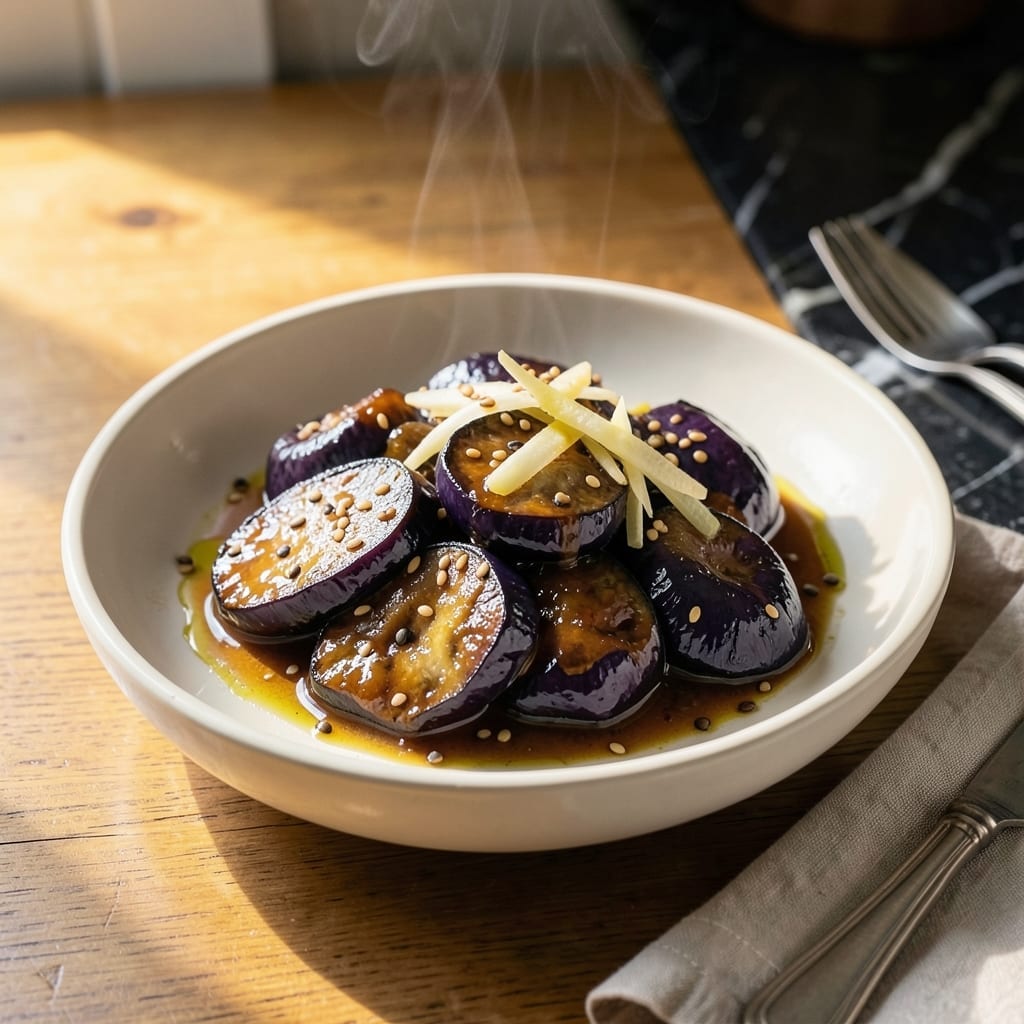
This stir-fry transforms tender Japanese eggplant into a glossy, restaurant-quality dish with minimal effort. The key lies in high heat and quick cooking to preserve the vegetable’s delicate texture.
A simple sauce of garlic, ginger, and soy creates the perfect balance of savory and aromatic flavors. I’ve perfected this method to ensure every bite is infused with that signature wok-tossed taste without becoming mushy.
The eggplant absorbs the sauce beautifully, resulting in a dish that’s both savory and slightly sweet with a perfect tender-crisp texture. Traditional techniques meet modern convenience in this satisfying main course.
Serve with steamed rice to soak up every last bit of the flavorful sauce. Ready in under 20 minutes, this is weeknight cooking at its best.
Ingredients for Japanese Eggplant Recipe Stir Fry
Tender eggplant meets a bold garlic-ginger sauce for restaurant-quality results at home.
| Ingredient | Amount | Notes |
|---|---|---|
| Japanese Eggplant 🍆 | 1 ½ lb | Sliced into 1-inch pieces |
| Vegetable Oil 🫒 | 3 tbsp | High smoke point, divided |
| Garlic Cloves 🧄 | 4 cloves | Minced finely |
| Fresh Ginger Root 🌿 | 1 tbsp | Grated or minced |
| Soy Sauce 💧 | ⅓ cup | Low-sodium or tamari for gluten-free |
| Rice Vinegar 💧 | 2 tbsp | Unseasoned variety |
| Maple Syrup 🍁 | 1 tbsp | Or agave nectar |
| Sesame Oil 🫒 | 1 tsp | Toasted variety for depth |
| Cornstarch 🌾 | 1 tbsp | Mixed with 2 tbsp water |
| Red Pepper Flakes 🌶️ | ½ tsp | Adjust to taste |
| Green Onions 🧅 | 3 whole | Thinly sliced for garnish |
| Sesame Seeds 🌾 | 1 tsp | Toasted, for garnish |
| Steamed Rice 🍚 | 2 cups | For serving, cooked |
[recipe_ingredient_scaler]
Japanese eggplant is the star here—look for the long, slender variety at Asian markets or well-stocked grocery stores. They’re sweeter and more delicate than globe eggplant, with fewer seeds. Organic if possible, since their thin skin isn’t peeled. The soy sauce matters too; Kikkoman or San-J tamari are my go-tos for consistent flavor. Don’t skip the high-smoke-point oil; peanut or avocado oil works if you avoid vegetable oil.
No maple syrup? Brown sugar or coconut sugar dissolves just as well. Out of rice vinegar? Apple cider vinegar at the same amount keeps the balance. If you can’t find Japanese eggplant, regular eggplant works too (just salt and drain it first to avoid bitterness). The cornstarch slurry is non-negotiable for that glossy sauce—don’t swap it for flour.
Leftovers keep beautifully for 3-4 days in the fridge. Reheat gently in a pan with a splash of water to revive the texture. The eggplant can get mushy if microwaved, so avoid that. Freezes for up to 2 months if you’re meal prepping—just thaw in the fridge overnight.
Why You’ll Love This Recipe
- One Pan Wonder: I toss everything in with minimal prep—just slice the eggplant, mince the garlic and ginger, and let the soy sauce do the work.
- Umami Bomb: The combo of garlic, ginger, and soy sauce hits that perfect savory-sweet balance every time. Honestly, I could eat this straight from the pan.
- Flexible Feast: It’s my go-to for busy weeknights or when I need a veggie side that pairs with rice, noodles, or even grilled chicken.
- Budget Stretcher: Japanese eggplant is cheap at my local market, and a little goes a long way. I’ll be real: this dish feeds my family for pennies.
Step-by-Step Instructions for Japanese Eggplant Stir Fry
This glossy, restaurant-worthy dish comes together faster than you can order takeout.
Step 1: Prep and Salt the Eggplant
Begin by slicing the 1.5 lb Japanese Eggplant into 1-inch pieces. I always cut them into rounds for even cooking. Transfer to a colander and sprinkle with 1 teaspoon of salt (not from your ingredient list—this is for drawing out bitterness).
Let it sit for 10 minutes while you prep the remaining ingredients. You’ll notice beads of liquid forming—this removes excess moisture so your eggplant absorbs maximum flavor and achieves that perfect tender texture without turning mushy.
After 10 minutes, rinse the eggplant and pat it completely dry with a clean towel. This step is non-negotiable for that ideal stir-fry texture.
Step 2: Create the Aromatic Base
Heat 2 tablespoons of the 3 tbsp Vegetable Oil in a wok or large skillet over high heat until it shimmers. Add the 1.5 lb Japanese Eggplant in a single layer—don’t overcrowd or it’ll steam instead of sear.
Cook undisturbed for 2-3 minutes until the edges start to brown. Then add the 4 cloves Garlic Cloves and 1 tbsp Fresh Ginger Root, tossing constantly for 30 seconds until fragrant. The garlic should turn just golden—not brown or it’ll taste bitter.
Real talk: if your garlic burns, start over. Burnt garlic ruins the entire dish.
Step 3: Build the Glossy Sauce
In a small bowl, whisk together the 0.33 cup Soy Sauce, 2 tbsp Rice Vinegar, 1 tbsp Maple Syrup, 1 tsp Sesame Oil, and 0.5 tsp Red Pepper Flakes. Pour this mixture over the eggplant in the pan.
Stir to coat evenly and cook for 2-3 minutes until the eggplant is tender-crisp and the sauce begins to thicken. The eggplant should be glossy and deeply colored, soaking up that incredible garlic-ginger flavor.
Here’s the thing—this is where most home cooks stop, but we’re taking it further.
Step 4: Thicken and Finish
Give the 1 tbsp Cornstarch mixed with 2 tablespoons water a quick stir (it settles fast) and pour it into the pan. Cook for 1-2 minutes, stirring constantly, until the sauce transforms into a beautiful, glossy coating that clings to every piece.
The sauce should be thick enough to coat the back of a spoon but still fluid. If it thickens too much, add a splash of water. You want that perfect balance between clingy and pourable.
Remove from heat and stir in half of the 3 whole Green Onions.
Step 5: Garnish and Serve
Transfer to a serving dish and sprinkle with the remaining 3 whole Green Onions, 1 tsp Sesame Seeds, and a final drizzle of Sesame Oil if desired. Serve immediately over 2 cups Steamed Rice.
The eggplant should be silky and deeply flavored, with just enough resistance to the bite. Each glossy piece should deliver that perfect balance of savory, sweet, and slightly spicy notes.
This dish is best served fresh, while the eggplant is still warm and the sauce is at its glossy peak.
Pro Tips For Making Japanese Eggplant Recipe Stir Fry
- Salt the Eggplant First: I learned this the hard way—salt the sliced eggplant and let it sit for 10 minutes to draw out bitterness, then pat it dry before stir-frying. Sounds tedious, but it actually changes the outcome.
- High Heat Only: Crank the heat to medium-high and resist the urge to crowd the pan, or you’ll end up with soggy eggplant instead of that perfect tender-crisp texture.
- Fresh Ginger Matters: Skip the powdered stuff—grate about a tablespoon of fresh ginger for every 2 eggplants. The flavor difference is night and day, especially with soy sauce.
- Finish with Garlic: Add the minced garlic in the last 30 seconds of cooking to keep it from burning. Burnt garlic ruins the dish, and I’ve ruined more than one batch by tossing it in too early.
Perfect Pairings for japanese eggplant recipe stir fry
Rice Pairings
Steamed jasmine rice is my top choice—its subtle floral aroma complements the garlic-ginger sauce beautifully. For texture contrast, try brown rice which adds a nutty chew. Always cook 1:1.5 rice-to-water ratio for perfect results. 🍚
Protein Additions
For a heartier meal, add tofu cubes pan-fried until golden before stir-frying. I use extra-firm tofu pressed for 30 minutes to ensure it stays crisp. Shrimp also works wonderfully—add ½ lb peeled shrimp during the final 2 minutes of cooking.
Vegetable Sides
A crisp cucumber salad with rice vinegar and sesame seeds cuts through the richness. I toss 2 cups sliced cucumbers with 1 tbsp rice vinegar and a pinch of salt. Quick-pickled radishes add a tangy crunch that pairs perfectly.
Beverage Matches
Serve with green tea—its grassy notes cleanse the palate between bites. For beer lovers, a Sapporo or Asahi provides a crisp, clean contrast. I prefer my tea slightly cooled to 160°F to avoid overpowering the dish. 🍺
Garnish Upgrades
Fresh Thai basil leaves add an aromatic touch that elevates the dish. A sprinkle of crushed peanuts introduces a satisfying crunch. I always toast my sesame seeds in a dry pan for 1-2 minutes before garnishing.
Nutrition Facts
Frequently Asked Questions
Can I use regular eggplant instead?
Yes, but salt and drain it first to remove bitterness. Japanese eggplant has thinner skin and fewer seeds, but regular works in a pinch.
How do I prevent mushy eggplant?
Cook over high heat and don’t overcrowd the pan. Salting beforehand removes excess moisture for that perfect tender-crisp texture.
What can I swap for maple syrup?
Use brown sugar or agave nectar as a 1:1 substitute. Honey works too, but may alter the flavor slightly.
Can I make this ahead?
Store leftovers in an airtight container for 3-4 days. Reheat gently in a pan with a splash of water to revive the texture.

Trained in classic French technique but raised on slow-cooked ribs and spicy rubs, she blends culinary skill with smoke and soul.
- Energy Ball Recipe Peanut Butter: No-Bake Protein-Packed Bites - September 24, 2026
- Jerk Chicken Recipe Crock Pot: Slow-Cooked Caribbean Heat - September 24, 2026
- Japanese Curry Recipe Kenji: Chef-Tested Rich and Velvety Sauce - September 24, 2026