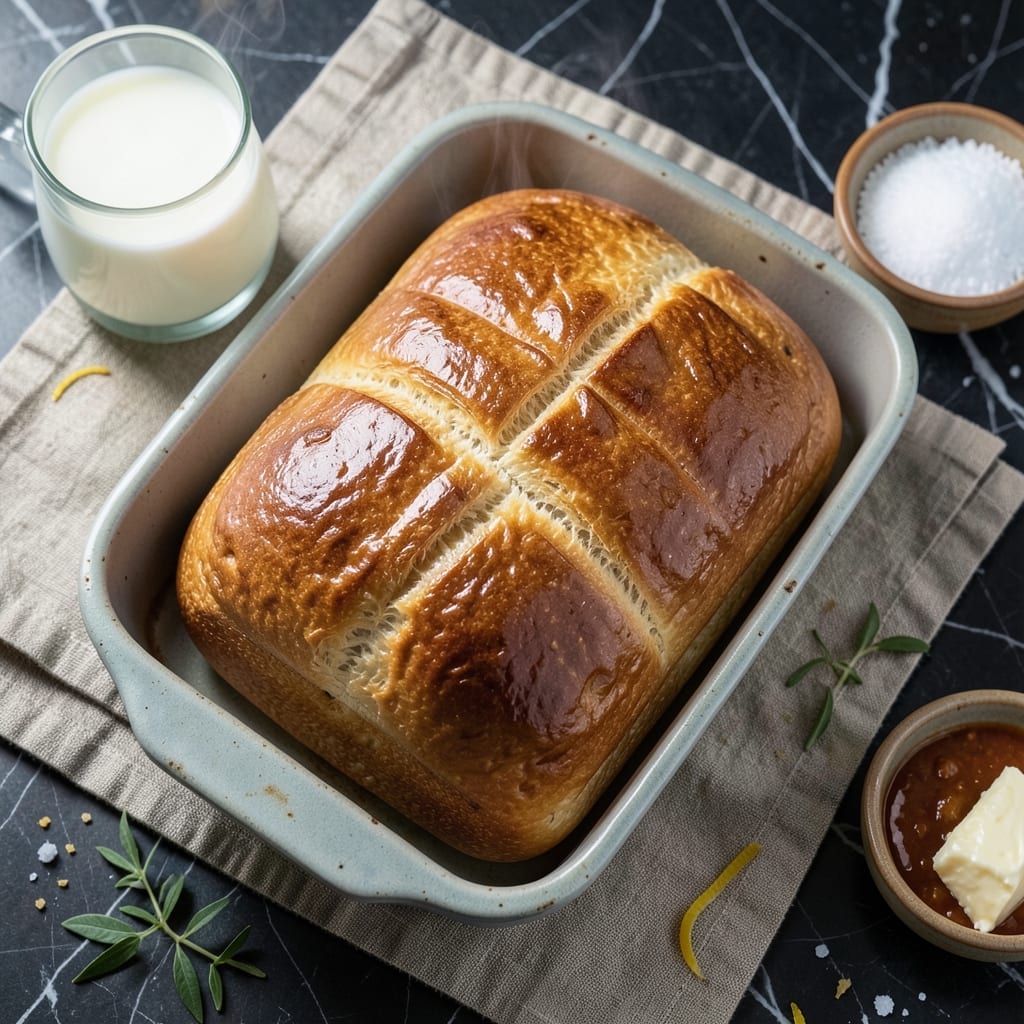
This Japanese milk bread recipe transforms simple ingredients into pillowy soft loaves with a tender crumb. The tangzhong method, a cooked flour and liquid paste, creates exceptional moisture and fluffiness that sets this bread apart.
I’ve tested this technique repeatedly, and the results are consistently outstanding. The pre-gelatinized starch in the tangzhong absorbs and holds more liquid, keeping the bread fresh for days longer than traditional recipes.
What emerges from the oven is a golden loaf with a delicate, slightly sweet flavor and a texture so light it nearly melts in your mouth. The crust stays soft, while the interior remains airy and moist.
Perfect for sandwiches, toast, or enjoying plain with a pat of butter. This method delivers professional bakery results in your home kitchen.
Ingredients for Japanese Milk Bread Recipe King Arthur
Transform simple pantry staples into bakery-quality loaves with this precise ingredient list.
| Ingredient | Amount | Notes |
|---|---|---|
| Bread Flour 🌾 | 4 cups | King Arthur preferred, all-purpose works |
| Whole Milk 🥛 | 1 cup | Warm to 110°F, full-fat recommended |
| Granulated Sugar 🍚 | ¼ cup | Fine granulated for even distribution |
| Active Dry Yeast 🍞 | 2 ¼ tsp | One packet plus 1/4 tsp extra |
| Large Egg 🥚 | 1 whole | Room temperature for best rise |
| Unsalted Butter 🧈 | ½ cup | Softened, European-style preferred |
| Salt 🧂 | 1 ½ tsp | Fine sea salt or table salt |
| Honey 🍯 | 1 tbsp | Light or dark, for subtle sweetness |
| All-Purpose Flour 🌾 | ¼ cup | For tangzhong paste only |
| Water 💧 | 1 cup | Divided for tangzhong and dough |
| Heavy Cream 🥛 | 2 tbsp | Optional, for enriched dough |
| Vanilla Extract 🌿 | 1 tsp | Pure extract for best flavor |
[recipe_ingredient_scaler]
The flour is non-negotiable for authentic texture. King Arthur Bread Flour delivers the perfect protein content (12.7%) for structure and softness. Most grocery stores carry it—look for the red bag. For the tangzhong, all-purpose flour works best (lower protein prevents gumminess). The milk should be whole and warm (110°F) to activate yeast without killing it. European-style butter adds richness that standard butter can’t match.
No bread flour? All-purpose plus 1 tbsp vital wheat gluten per cup gets close. Out of whole milk? 2% milk plus 1 tbsp melted butter per cup works. Honey can be swapped for equal parts maple syrup or sugar. The egg is key for structure—no great substitutes here. For yeast, instant yeast at the same amount skips the blooming step, but active dry gives better control for beginners.
Store flour in airtight containers to prevent stale flavors. The dough can rest in the fridge for up to 24 hours before shaping. Baked loaves stay fresh for 5 days at room temperature or freeze for 3 months. Slice before freezing for easy toasting later.
Why You’ll Love This Recipe
- One Bowl Wonder: I love that this recipe comes together in a single bowl—no fancy equipment, just bread flour, milk, and a little patience.
- Cloud-Like Texture: The egg and whole milk make this loaf so soft it practically melts. Honestly, it’s the fluffiest bread I’ve baked.
- Breakfast or Snack: I slice it thick for toast in the morning or use it for sandwiches at lunch—it’s that versatile.
- Keeps for Days: This bread stays fresh way longer than store-bought. I’ll be real: I’ve kept a loaf for nearly a week and it still tasted perfect.
Step-by-Step Instructions for Japanese Milk Bread
Master the tangzhong method with these precise steps for pillowy, cloud-like texture every time.
Step 1: Create the Tangzhong Paste
In a small saucepan, whisk together the 0.25 cup All-Purpose Flour with ½ cup of the 1 cup Water until completely smooth. No lumps should remain—this ensures even cooking and proper gelatinization.
Cook over medium heat, stirring constantly with a wooden spoon, until the mixture thickens to 65°C (149°F) or the consistency of thick pudding. The paste should leave a visible trail when you drag a spoon through it.
Remove from heat immediately and transfer to a clean bowl. Cover with plastic wrap pressed directly on the surface to prevent a skin from forming. Let it cool to room temperature while you prepare the remaining ingredients.
Step 2: Activate the Yeast and Combine Wet Ingredients
In the bowl of a stand mixer, combine the remaining ½ cup Water, 1 cup Whole Milk warmed to 110°F, 0.25 cup Granulated Sugar, 2.25 tsp Active Dry Yeast, 1 whole Large Egg, 1 tbsp Honey, and 2 tbsp Heavy Cream.
Whisk gently until the yeast dissolves and the mixture looks slightly foamy on top. This activation step takes about 5 minutes—you’ll see small bubbles forming, which confirms the yeast is alive and ready to work.
Add the cooled tangzhong paste and 1 tsp Vanilla Extract to the wet mixture and stir until fully incorporated. The tangzhong will make the liquid slightly thicker, which is exactly what you want for that signature soft texture.
Step 3: Form the Dough and Knead
Add the 4 cups Bread Flour and 1.5 tsp Salt to the wet ingredients. Using the dough hook attachment, mix on low speed for 2 minutes until the flour is fully hydrated and a shaggy dough forms.
Increase the speed to medium and knead for 8-10 minutes until the dough becomes smooth, elastic, and slightly tacky but not sticky. If it’s too wet, resist adding more flour—this dough should be softer than typical bread dough.
With the mixer still running on medium, add the 0.5 cup Unsalted Butter in 1-tablespoon portions, waiting until each piece is fully incorporated before adding the next. Continue kneading for another 6-8 minutes until the dough passes the windowpane test—it should stretch thin enough to see light through without tearing.
Step 4: First Rise and Shape
Transfer the dough to a lightly greased bowl, turning once to coat the surface. Cover with a damp kitchen towel and let rise in a warm, draft-free place for 1 to 1.5 hours, or until doubled in volume. The dough should spring back slowly when poked with a finger.
Gently deflate the dough and divide it into 4 equal portions. Shape each portion into a smooth ball by folding the edges toward the center and pinching to seal. Place each ball in a greased loaf pan (8×4-inch) or pullman pan, leaving space between them for expansion.
Step 5: Final Proof and Bake
Cover the pan with the damp towel and let the dough rise for another 45-60 minutes at room temperature, or until the loaves have risen to about 80% of the pan’s height. For an even better rise, refrigerate the covered pan for 12-16 hours—this cold proof develops more flavor.
Preheat the oven to 350°F. Bake the loaves for 30-35 minutes until the tops are golden brown and the internal temperature reaches 190-200°F. If the tops brown too quickly, tent loosely with foil.
Remove from the oven and immediately brush the tops with a little Whole Milk for a soft, shiny crust. Let the bread cool in the pan for 5 minutes, then transfer to a wire rack to cool completely before slicing. This resting period ensures the crumb sets properly for that perfect, fluffy texture.
Pro Tips For Making Japanese Milk Bread Recipe King Arthur
- Warm the Milk: Heat the whole milk to 110°F—any hotter and you’ll kill the yeast, any colder and it won’t activate properly. I learned this the hard way after a few loaves that never rose.
- Use Bread Flour: Skip the all-purpose and stick with bread flour for that signature soft, elastic texture. The higher protein content actually changes the outcome, giving you the right structure.
- Don’t Rush Proofing: Let the dough rise until it’s doubled in size, which can take up to 2 hours depending on your kitchen’s temperature. Resist the urge to speed it up with extra heat—patience pays off here.
- Egg Wash Last: Brush the loaf with a beaten egg just before baking for that golden, glossy finish. Sounds simple, but it’s the thing that matters most for that bakery-style look.
Flavor Customization for These Flavors
Sweet Flavor Boost
Add 1 extra tbsp honey or swap in brown sugar for the granulated sugar to create a caramel-like depth. I love this with a ½ tsp cinnamon sprinkle in the dough—it reminds me of Sunday morning toast. 💛
Citrus Brightness
Zest 1 orange or lemon directly into the dough during kneading. The bright citrus notes cut through the richness beautifully. Add 1 tbsp fresh juice to the wet ingredients for extra zing.
Rich Chocolate Swirl
After the first rise, roll each dough portion into a rectangle, spread with 2 tbsp Nutella, then roll up before placing in the pan. This creates a decadent marble effect that kids adore. 🔥
Savory Herb Twist
Mix 1 tbsp dried Italian herbs or 2 tbsp fresh chopped rosemary into the flour before kneading. This works surprisingly well for sandwich loaves. Add 1 tsp garlic powder for extra depth.
Tropical Infusion
Replace the water in the tangzhong with ½ cup coconut milk and add ¼ cup toasted coconut flakes to the dough. The subtle coconut flavor pairs perfectly with the bread’s soft texture.
Vanilla Bean Upgrade
Split 1 vanilla bean, scrape the seeds into the wet ingredients, and add the pod to the milk while warming. This gives a speckled look and intense vanilla aroma that elevates the bread to bakery quality.
Nutrition Facts
Frequently Asked Questions
What is tangzhong and why is it used?
Tangzhong is a cooked flour and liquid paste that helps retain moisture. It creates a softer, fluffier texture and extends the bread’s freshness for days.
Can I use all-purpose flour instead of bread flour?
Yes, but add 1 tbsp vital wheat gluten per cup of flour to compensate for the lower protein content. The texture may be slightly less chewy.
How do I know when the dough is kneaded enough?
Perform the windowpane test: stretch a small piece thinly. If it holds without tearing and light passes through, it’s ready. This usually takes 15-18 minutes total.
Why did my bread collapse after baking?
This often happens from underproofing or opening the oven too early. Ensure the dough rises to 80% of pan height before baking and avoid temperature fluctuations.

Trained in classic French technique but raised on slow-cooked ribs and spicy rubs, she blends culinary skill with smoke and soul.
- Energy Ball Recipe Peanut Butter: No-Bake Protein-Packed Bites - September 24, 2026
- Jerk Chicken Recipe Crock Pot: Slow-Cooked Caribbean Heat - September 24, 2026
- Japanese Curry Recipe Kenji: Chef-Tested Rich and Velvety Sauce - September 24, 2026