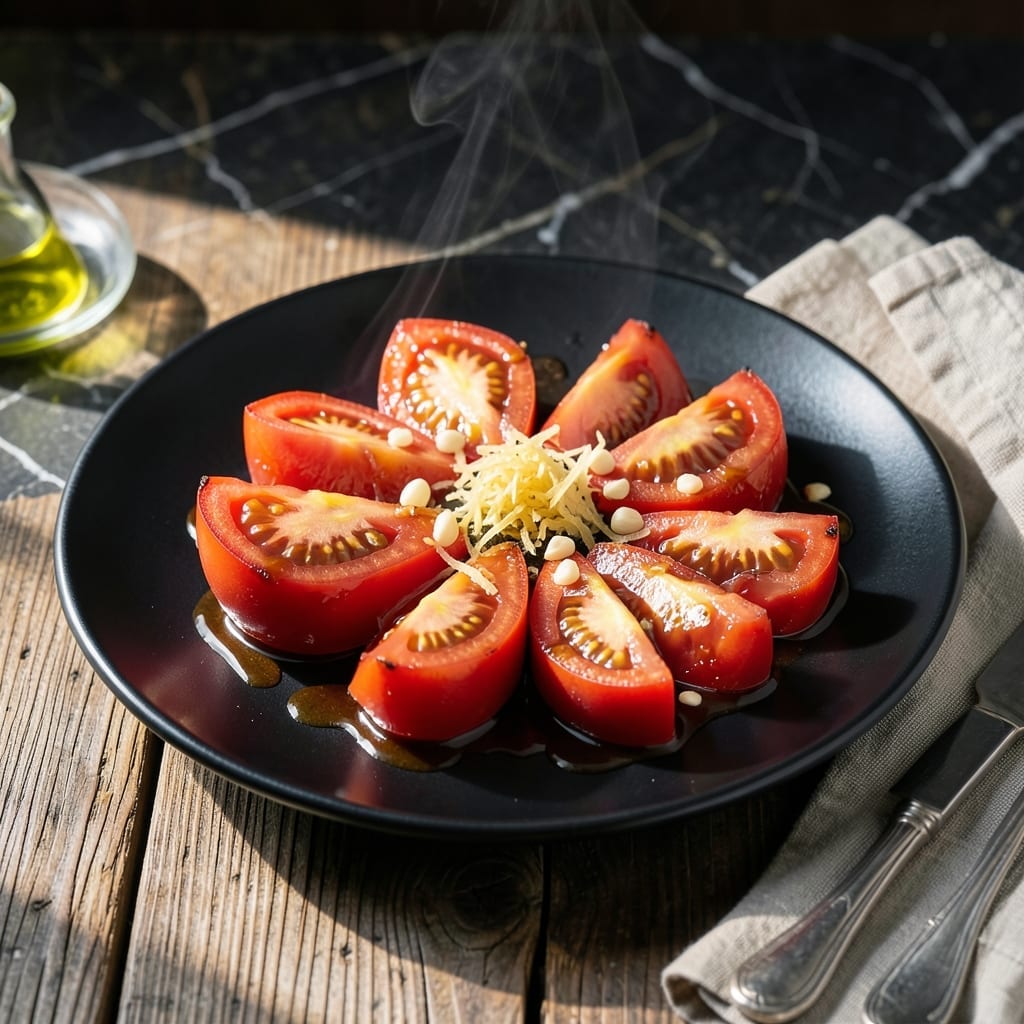
This Japanese tomato dish transforms simple ingredients into a sweet-tangy umami masterpiece with minimal effort. The secret lies in a light simmer that concentrates flavors without losing freshness.
I developed this method after discovering how heat intensifies tomatoes’ natural sweetness while balancing acidity. A touch of soy sauce and mirin adds depth, creating a versatile side that pairs with any protein.
You’ll achieve tender tomatoes with a glossy glaze, each bite delivering layered flavors that feel both comforting and sophisticated. The technique works with any tomato variety.
Serve warm or at room temperature for a dish that elevates everyday meals with authentic Japanese character.
Ingredients for Japanese Tomato
Fresh tomatoes and Japanese pantry staples create this sweet-tangy umami side dish with minimal effort.
| Ingredient | Amount | Notes |
|---|---|---|
| Ripe Tomatoes 🍅 | 2 lb | Medium vine-ripened preferred |
| Soy Sauce 🫒 | 3 tbsp | Low-sodium for balance |
| Mirin 🍶 | 2 tbsp | Sweet cooking rice wine |
| Sake 🍶 | 2 tbsp | Dry variety preferred |
| Granulated Sugar 🍚 | 1 tbsp | Balances acidity precisely |
| Fresh Ginger 🌿 | 1 tbsp | Finely grated, peeled |
| Garlic Cloves 🧄 | 3 cloves | Minced to fine consistency |
| Neutral Cooking Oil 🫒 | 1 tbsp | Vegetable or canola oil |
| Dashi Stock 🥣 | ½ cup | Vegetarian dashi if needed |
| Rice Vinegar 🍶 | 1 tbsp | Unseasoned variety required |
| Toasted Sesame Seeds 🌾 | 1 tsp | For garnish, optional |
| Green Onions 🧅 | 2 whole | Thinly sliced for garnish |
[recipe_ingredient_scaler]
The tomatoes are the foundation here. Vine-ripened varieties offer the best balance of sweetness and acidity. Farmers markets often have superior options compared to standard grocery stores. For the soy sauce, Kikkoman is widely available and reliable, but artisanal brands like Yamasa provide deeper umami. The dashi must be vegetarian-compliant—look for kelp-based versions at Asian specialty markets or Whole Foods.
No mirin? Substitute with 1 tbsp sugar plus 1 tbsp water. Sake can be replaced with dry white wine in a pinch. Vegetarian dashi not available? Light vegetable broth works, though the depth will be slightly different. The ginger can be pre-grated (from Trader Joe’s) but fresh always tastes brighter. For a gluten-free version, swap soy sauce for tamari.
This dish holds well at room temperature for 2 hours, making it perfect for potlucks. Store leftovers in the fridge for up to 3 days—reheat gently to preserve texture. The flavors deepen overnight, so it often tastes even better the next day. Freezing isn’t recommended as tomatoes become mushy.
Why You’ll Love This Recipe
- Five-Minute Prep: I just halve the tomatoes, mix the soy, mirin, sake, and sugar, then let them mingle—no fancy steps.
- Umami Bomb: The soy and mirin turn sweet ripe tomatoes into this savory-sweet glaze that’s ridiculously good.
- Bento Box Hero: I pack these cold or room temp—perfect in lunchboxes or as a quick side with rice.
- Pantry Savior: Between us, I always have these ingredients, so it’s my go-to when the fridge is nearly bare.
Step-by-Step Instructions for Sweet and Tangy Umami Tomatoes
This method delivers balanced flavors with minimal effort. The technique ensures perfect texture every time.
Step 1: Prepare the Aromatics and Tomatoes
Finely grate the 1 tbsp Fresh Ginger and mince the 3 cloves Garlic Cloves to a fine consistency. This uniformity ensures even distribution throughout the dish. Meanwhile, core the 2 lb Ripe Tomatoes and cut them into wedges—about 1-inch thick at the widest point.
Thinly slice the 2 whole Green Onions, keeping the white and green parts separate. You’ll use the white parts for cooking and reserve the green tops for garnish. This separation maintains color contrast and layered flavor in the final presentation.
Step 2: Sauté Aromatics in Oil
Heat the 1 tbsp Neutral Cooking Oil in a large skillet over medium heat until it shimmers. Add the grated ginger and minced garlic, stirring constantly for 30 seconds until fragrant but not browned. The moment the garlic starts to sizzle, you’re ready for the next step—don’t let it color or it will turn bitter.
Add the white parts of the green onions and cook for an additional 30 seconds. This brief cooking softens their sharpness while preserving their fresh allium notes. The oil should be visibly infused with the aromatics by this point.
Step 3: Cook Tomatoes with Seasoning Base
Increase heat to medium-high and add the tomato wedges to the skillet. Stir to coat them in the aromatic oil. After 2 minutes, when the tomatoes begin to soften and release their juices, add the 3 tbsp Soy Sauce, 2 tbsp Mirin, 2 tbsp Sake, and 1 tbsp Granulated Sugar.
Cook for 5-7 minutes until the tomatoes break down slightly but maintain their shape. The liquid should reduce to a syrupy consistency that coats the back of a spoon. This reduction concentrates the umami-sweet-tangy balance that defines this dish.
Step 4: Finish with Dashi and Vinegar
Pour in the 0.5 cup Dashi Stock and 1 tbsp Rice Vinegar. Simmer for 3-4 minutes until the tomatoes are tender but still hold their structure. The dashi adds depth without overpowering, while the vinegar brightens all the flavors, creating that signature harmony.
Taste and adjust seasoning if needed, though the measured ingredients should provide perfect balance. The tomatoes should glisten with a glossy, slightly thickened sauce that clings to each piece.
Step 5: Garnish and Serve
Transfer the tomatoes to a serving dish, arranging them to showcase their vibrant color. Sprinkle with the reserved green onion tops and 1 tsp Toasted Sesame Seeds. The sesame adds a nutty crunch that contrasts beautifully with the soft tomatoes.
Serve warm or at room temperature. This dish pairs equally well with steamed rice or as part of a multi-course meal. The flavors continue to develop as it sits, making it excellent for preparation ahead of time.
Pro Tips For Making Japanese Tomato
- Score the Tomatoes: Cut a shallow X on the bottom of each tomato before blanching—it makes peeling them a breeze and saves you from wrestling with slippery skins.
- Reduce the Sauce: Simmer the soy sauce, mirin, sake, and sugar for at least 5 minutes until it thickens slightly; I learned this the hard way after my first few batches were watery.
- Skip the Overripe: Use firm, deep red tomatoes—overripe ones turn mushy and make the dish look sad, no matter how good it tastes.
- Chill Before Serving: Let the tomatoes marinate in the cooled sauce for 30 minutes in the fridge; it lets the flavors sink in without making the tomatoes soggy.
Perfect Pairings for This japanese tomato
Protein Pairings
This dish shines alongside grilled salmon or miso-glazed cod. The sweet-tangy tomatoes cut through the fish’s richness beautifully. I often serve it with teriyaki chicken thighs for a complete meal that wows every time. 💛
Rice Variations
Steamed jasmine rice soaks up the glossy sauce perfectly. For texture contrast, try sushi rice with its slightly sticky consistency. Brown rice works too, though I prefer the shorter grain varieties.
Vegetable Sides
A simple cucumber sunomono adds refreshing crunch. I also love pairing it with blanched spinach dressed with sesame. The green veggies provide visual contrast and balance the tomatoes’ acidity.
Beverage Matches
Serve with cold green tea to cleanse your palate between bites. A crisp Sauvignon Blanc complements the dish’s brightness. For beer lovers, a light Asahi Super Dry works wonderfully. 🍵
Garnish Upgrades
Beyond sesame seeds, try sprinkling with nori strips for oceanic depth. A drizzle of sriracha mayo adds creamy heat. Fresh shiso leaves bring an herbaceous note that elevates the dish.
Serving Style
Present in a shallow bowl to showcase the glossy tomatoes. Family-style works great for sharing. I often serve it in the same skillet I cooked it in for rustic presentation.
Nutrition Facts
Frequently Asked Questions
What type of tomatoes work best?
Use vine-ripened tomatoes for the best balance of sweetness and acidity. Heirloom varieties add extra depth, but any ripe tomato will work. Avoid underripe ones as they won’t soften properly.
Can I make this without mirin or sake?
Yes! Substitute mirin with 1 tbsp sugar + 1 tbsp water. Replace sake with dry white wine or skip it entirely. The dish will still taste great, though the depth may vary slightly.
How long does this keep in the fridge?
Store leftovers in an airtight container for up to 3 days. The flavors deepen overnight, making it taste even better the next day. Avoid freezing, as tomatoes become mushy.
What’s the best way to serve this?
Serve warm or at room temperature. It pairs well with steamed rice or as part of a multi-course meal. The glossy sauce shines in a shallow bowl.

Trained in classic French technique but raised on slow-cooked ribs and spicy rubs, she blends culinary skill with smoke and soul.
- Octopus Recipe Pan Fried: Crispy Edges With Tender Bites - October 3, 2026
- Recipe For Fried Pork Chops In An Iron Skillet: Crispy Crust With Juicy Centers - October 3, 2026
- Recipe for Fully Cooked Spiral Ham: Sweet Glaze and Effortless Elegance - October 3, 2026