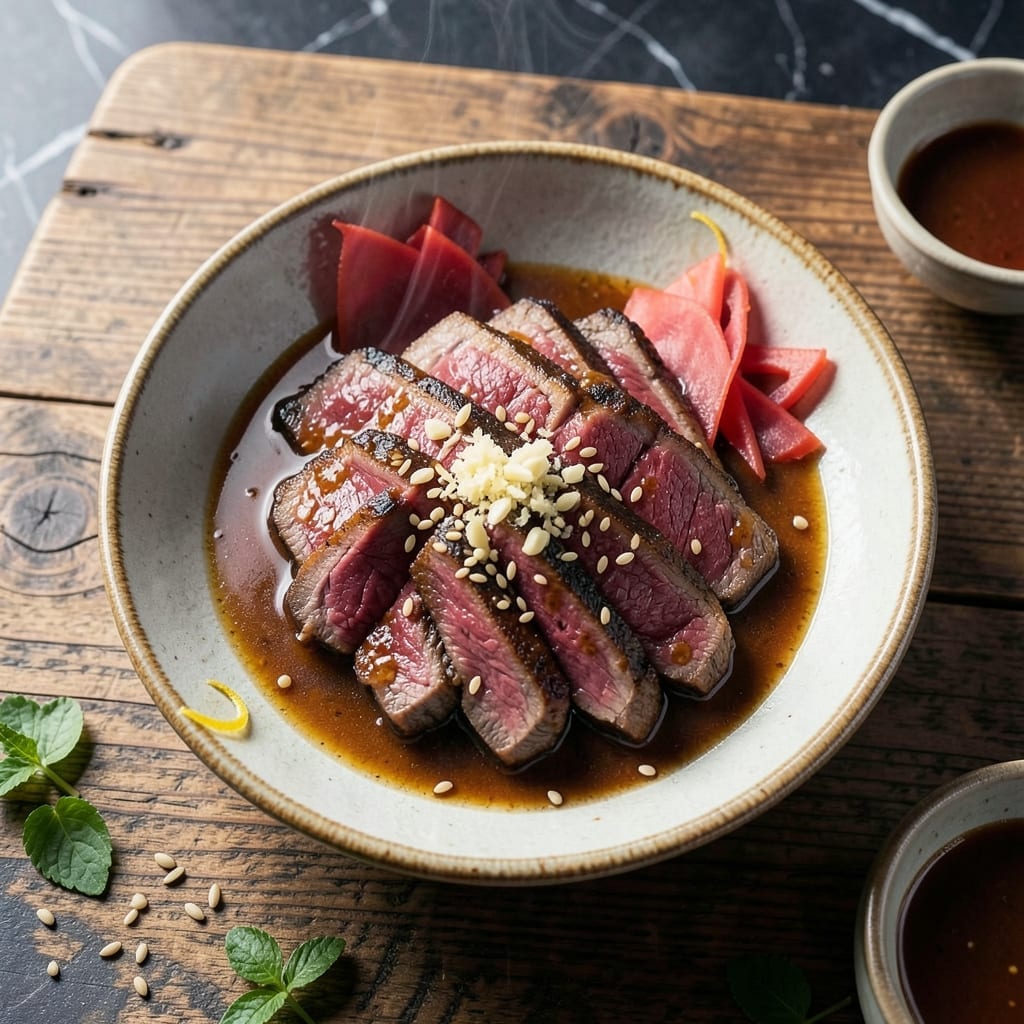
My journey into Japanese flavors began with a single bite of venison prepared with traditional techniques. This dish captures the deep umami of game meat paired with authentic seasonings that honor its origin.
Venison’s rich, lean profile finds its perfect match in a traditional preparation that balances soy, mirin, and ginger. The marinade transforms the meat, infusing it with layers of savory complexity that define Japanese cooking.
What emerges is tender, flavorful venison with a caramelized exterior that locks in juices. The technique respects cultural roots while making it accessible for home cooks seeking authentic results.
Serve with steamed rice and pickled vegetables for a complete experience. The process rewards patience with remarkable depth of flavor.
Ingredients for Japanese Venison
Traditional Japanese ingredients transform venison into a restaurant-quality dish with deep umami complexity.
| Ingredient | Amount | Notes |
|---|---|---|
| Venison Steak 🥩 | 1 ½ lb | Cut from hindquarter, 1-inch thick |
| Soy Sauce 🫒 | ½ cup | Japanese-style preferred, low-sodium acceptable |
| Mirin 🍶 | ¼ cup | Authentic hon-mirin for best results |
| Fresh Ginger Root 🌿 | 2 tbsp | Peeled and finely grated |
| Garlic Cloves 🧄 | 4 cloves | Minced to fine paste |
| Brown Sugar 🍚 | 2 tbsp | Light or dark, packed |
| Rice Vinegar 🍯 | 2 tbsp | Unseasoned variety required |
| Sesame Oil 🫒 | 1 tbsp | Toasted for depth of flavor |
| Green Onions 🧅 | 4 whole | Thinly sliced on diagonal |
| Dried Shiitake Mushrooms 🍄 | 4 pieces | Rehydrated and finely chopped |
| Neutral Cooking Oil 🫒 | 2 tbsp | High smoke point, for searing |
| Toasted Sesame Seeds 🌾 | 1 tbsp | For garnish, lightly toasted |
| Kosher Salt 🧂 | 1 tsp | Diamond Crystal preferred for consistency |
| Ground Black Pepper 🌶️ | ½ tsp | Freshly cracked for best aroma |
[recipe_ingredient_scaler]
The venison quality is paramount. Source from a reputable butcher or specialty game purveyor—look for deep red color with minimal fat marbling. Hindquarter cuts (top round or sirloin) work best for this preparation. Japanese markets or Asian grocery stores will carry authentic hon-mirin, which is essential for the proper sweet-savory balance. Avoid aji-mirin, which contains added salt and sugar that can throw off the marinade equilibrium.
No venison available? Beef sirloin at identical thickness makes an acceptable substitute, though the flavor profile will be milder. If hon-mirin is unavailable, combine 2 tbsp dry sherry with 1 tbsp sugar for a reasonable facsimile. For the soy sauce, Kikkoman or Yamasa provide consistent quality. The dried shiitake mushrooms are non-negotiable for authentic depth—fresh mushrooms lack the concentrated umami required for this traditional preparation.
Marinated venison keeps in the refrigerator for up to 24 hours before cooking. Completed dish holds well for 3-4 days refrigerated, though it’s best served immediately for optimal texture. Freezing is not recommended as it can compromise the venison’s delicate cellular structure. Always bring meat to room temperature before searing to ensure even cooking throughout.
Why You’ll Love This Recipe
- One Pan Wonder: I toss the venison with soy, mirin, ginger, and garlic, then let the pan do the work. Honestly, cleanup is almost nonexistent.
- Umami Bomb: The soy and mirin caramelize into this sticky, savory glaze that clings to every bite of venison. I’ll be real: it’s the reason I make this weekly.
- Dinner or Lunch: Leftovers taste even better the next day—cold over rice or reheated in a wrap. Between us, it’s my secret meal prep hack.
- Budget Stretcher: A little venison goes a long way with these bold flavors. One steak feeds my family of four, no problem.
Step-by-Step Instructions for Japanese Venison
This traditional preparation highlights the natural richness of venison with authentic Japanese flavors.
Step 1: Marinate the Venison
In a bowl, whisk together the 0.5 cup Soy Sauce, 0.25 cup Mirin, 2 tbsp Brown Sugar, 2 tbsp Rice Vinegar, 1 tbsp Sesame Oil, minced 4 cloves Garlic Cloves, and 2 tbsp Fresh Ginger Root. The sugar should dissolve completely, creating a glossy, fragrant marinade.
Pat the 1.5 lb Venison Steak dry with paper towels and season both sides with 1 tsp Kosher Salt and 0.5 tsp Ground Black Pepper. Place the steak in a resealable bag or shallow dish and pour the marinade over it, ensuring it is fully coated. Refrigerate for at least 4 hours, or preferably overnight, to allow the flavors to penetrate deeply.
Step 2: Prepare the Aromatics
While the venison marinates, rehydrate the 4 pieces Dried Shiitake Mushrooms in warm water for 20-30 minutes until softened. Drain, finely chop, and set aside. Thinly slice the 4 whole Green Onions on the diagonal, keeping the white and green parts separate for garnishing.
These elements will add texture and depth to the final dish. The shiitake mushrooms lend a meaty, umami-rich quality, while the green onions provide a fresh, crisp finish.
Step 3: Sear the Venison
Remove the venison from the marinade, reserving the liquid for later use. Heat 2 tbsp Neutral Cooking Oil in a heavy skillet over medium-high heat until shimmering. Add the venison and sear for 3-4 minutes per side until deeply browned and a crust forms. The steak should release easily from the pan when ready to flip.
Transfer the seared venison to a cutting board and let it rest for 5-10 minutes. This resting period allows the juices to redistribute, ensuring the meat remains tender and moist.
Step 4: Reduce the Marinade and Finish
Pour the reserved marinade into the same skillet and bring to a boil. Reduce the heat to medium and add the chopped shiitake mushrooms. Simmer for 5-7 minutes, stirring occasionally, until the marinade thickens slightly and coats the back of a spoon.
Slice the venison against the grain into thin strips and return it to the skillet, tossing to coat in the reduced marinade. Cook for an additional 2 minutes to heat through. Garnish with the sliced green onions and 1 tbsp Toasted Sesame Seeds before serving immediately.
Pro Tips For Making Japanese Venison
- Sear High, Finish Low: Start with a screaming hot pan to lock in the venison’s juices, then drop to medium-low to let the soy-mirin glaze reduce without burning—after ruining two batches with scorched garlic, I learned this the hard way.
- Slice Ginger Thin: Fresh ginger can overpower if not prepped right; use a spoon to peel it, then slice paper-thin so it infuses the marinade without leaving fibrous bits in the final dish.
- Skip the Overcrowding: Venison releases moisture as it cooks, so sear in batches if needed—steam is the enemy of that perfect crust, and I’ve watched too many good steaks boil in their own juices.
- Rest Before Slicing: Give the venison a full 8-10 minutes under foil after cooking; it stays juicier and soaks up the residual soy-mirin glaze instead of bleeding it all over the cutting board.
Flavor Customization for This Recipe
Sweet and Spicy Glaze
For a sweet-spicy twist, add 1 tbsp gochujang and 1 tbsp honey to the reserved marinade before reducing. The Korean chili paste deepens the umami while adding a subtle kick. I love how the heat complements venison’s richness. 🌶️
Miso-Infused Depth
Stir in 2 tbsp white miso paste with the shiitake mushrooms during the reduction. This adds a fermented complexity that’s authentic to Japanese flavors. Miso Master brand works well here.
Citrus Brightness
Zest 1 small yuzu or substitute 1 tsp orange zest into the marinade. The citrus lifts the dish’s richness without overpowering. I forage wild yuzu when I can find it.
Herbaceous Notes
Finish with 2 tbsp chopped shiso leaves alongside the green onions. This Japanese herb adds a refreshing, slightly minty aroma. Look for it at Japanese markets or grow your own.
Smoky Variation
For a campfire touch, grill the venison over binchotan charcoal instead of searing. The high heat and clean smoke enhance the meat’s natural flavors. This reminds me of my coastal rides. 🔥
Sesame Crust
Press 2 tbsp toasted sesame seeds onto the venison before searing to create a nutty crust. The texture contrasts beautifully with the tender meat. Use a heavy skillet for even browning.
Nutrition Facts
Frequently Asked Questions
Can I use beef instead of venison?
Yes! Beef sirloin at 1-inch thickness works well. The flavor will be milder, but the Japanese marinade still delivers great results.
How long should I marinate the meat?
Marinate for at least 4 hours, but overnight is ideal. This allows the flavors to penetrate deeply into the meat.
What if I don’t have hon-mirin?
Combine 2 tbsp dry sherry with 1 tbsp sugar for a good substitute. It won’t be identical, but it’ll work in a pinch.
Can I skip the shiitake mushrooms?
Not recommended. They add essential umami depth. If you must, add 1 tbsp mushroom powder to the marinade instead.

Trained in classic French technique but raised on slow-cooked ribs and spicy rubs, she blends culinary skill with smoke and soul.
- Recipe for Boneless Pork Chops in Cast Iron Skillet: Sear and Baste to Juicy Perfection - October 3, 2026
- Recipe for Boneless Cross Rib Roast: Slow-Roasted Beef with Herb Crust - October 3, 2026
- Hamburgers in Sauce Recipe Crock Pot: Slow-Cooked Savory Delight - October 3, 2026